The SpaceX Milestone: Navigating the Era of the Trillion-Dollar IPO
As SpaceX, Anthropic, and OpenAI redefine market expectations, financial advisors warn against the 'Nvidia Ache' and day-one FOMO.
The debut of SpaceX on the public markets has signaled a fundamental shift in investor sentiment, marking the arrival of what analysts are calling the “Magnificent Three.” On June 12, Elon Musk’s aerospace giant saw more than 500 million shares change hands, recording the second-highest first-day trading volume in Nasdaq history. Only Facebook’s 2012 debut, which saw 580 million shares traded, remains ahead in the record books.
This surge reflects a broader market phenomenon driven by the “Nvidia Ache”—the lingering regret among investors who missed the meteoric rise of the semiconductor giant. A $10,000 investment in Nvidia a decade ago would today be worth approximately $1.8 million. Seeking the next generational winner, capital is now flooding toward SpaceX, Anthropic, and the anticipated public offering of OpenAI.
Despite the initial euphoria, financial advisors are urging a more calculated approach. SpaceX priced its shares at $135, but they opened at $150 and closed their first day at $160.95—a 19% jump. While retail investors scrambled for a piece of the action, the company’s early private backers held shares with an average cost basis of just $6.48. This stark disparity highlights a growing trend: companies are staying private longer, capturing a significant portion of their value creation before the general public can participate.
SpaceX reached a $2 trillion valuation as a private entity before raising $85.7 billion in its IPO. However, the path to further growth remains open. In 2018, Apple became the first company to reach a $1 trillion market capitalization; today, 16 companies have crossed that threshold, with Nvidia approaching $5 trillion.
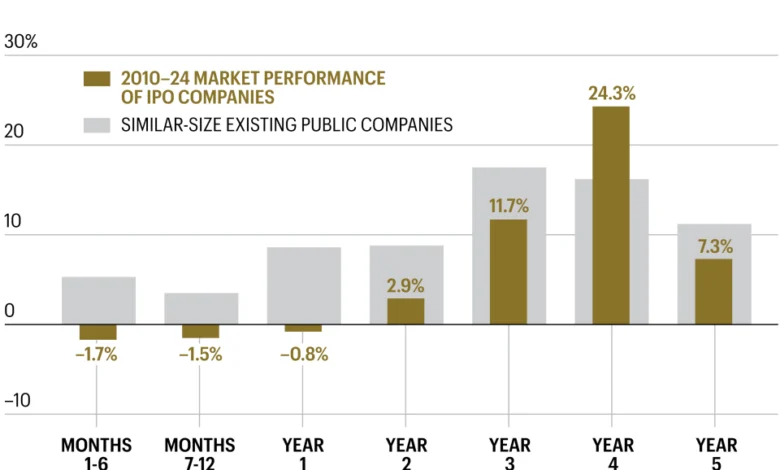
Market history suggests that the first day is rarely the best time to buy. Newly public stocks are considered “unseasoned” for their first three years, a period often characterized by extreme volatility and structural transformation. The median IPO typically trades 26% lower three years after its debut compared to its first-day close. SpaceX itself illustrated this volatility, spiking to $225 shortly after its IPO before retreating to the $160 level.
Institutional investors prioritize revenue over narrative. Unlike the dotcom bubble, where valuations were often based on “eyeballs” rather than income, the current crop of AI and aerospace leaders shows significant financial traction. By early 2026, OpenAI reported an annualized run rate of $25 billion, while Anthropic guided toward more than $50 billion by mid-year.
Critical to evaluating these opportunities is the S-1 filing, a mandatory disclosure required by the U.S. Securities and Exchange Commission. These documents often reveal risks that headlines ignore. For SpaceX, the prospectus clarifies the firm’s governance structure, where Elon Musk maintains absolute control through Class B super-voting shares. It also provides a reality check on long-term goals, such as Mars colonization, which the document treats with significantly more caution than Musk’s public statements.
For those wary of the volatility associated with high-profile debuts, some advisors suggest a “picks and shovels” strategy. This involves investing in the infrastructure and tooling companies that support these giants. By focusing on the broader ecosystem, investors may find more stable entry points into the technologies defining the next decade of economic growth.