Volvo ES90: High-End Electric Ambitions Meet Harsh Fiscal Realities
Range and tax realities for Volvo's new flagship.
The transition from internal combustion to electrification in the executive sedan segment is proving to be a calculated gamble for Volvo. As the Swedish automaker prepares to replace the outgoing S90 with the all-electric ES90, the shift brings a new set of fiscal complexities for corporate buyers and private owners alike.
According to Volvo, the ES90 will be offered with two battery options: a 92kWh unit providing an official 411 miles of range, and a larger 106kWh pack reaching up to 426 miles. However, initial testing in chilly conditions suggests a real-world efficiency of 3.3 miles per kWh. For the 92kWh Extended Range model, this equates to approximately 290 miles—a significant 120-mile shortfall from the official quote.
The economic appeal for company-car drivers is also shifting. While the ES90 remains more tax-efficient than its fossil-fuel predecessor, the HM Treasury schedule for the 2026/27 tax year will see the Benefit-in-Kind (BiK) bracket for electric vehicles rise from three to four per cent. For higher-rate taxpayers, this increases the annual liability for an ES90 to £1,080, up from £810 in the previous year.
Furthermore, the vehicle’s high list price triggers the luxury car road-tax surcharge for years two through six, adding an annual cost of £640. This comes alongside depreciation forecasts that remain modest for the sector; the entry-level Plus variant is expected to retain 45.5 per cent of its value, while the flagship Performance version drops to 44 per cent.
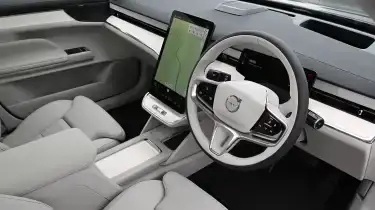
Technologically, the ES90 utilizes an 800-volt electrical system capable of a 310kW maximum charging rate. Volvo claims a 10-80 per cent top-up can be achieved in 22 minutes, provided a compatible DC chargepoint is available. Inside, the cabin mirrors the EX90 SUV, centered around a 14.5-inch portrait touchscreen and finished in Nordico artificial leather. While the interior is described as first-rate, early testing noted a minor clunk from the front seats during travel over harsh bumps.