Volvo Withdraws EX30 from US Market as Tariff Pressures Erode the Compact EV Value Proposition
Trade barriers and production shifts end the Swedish automaker's attempt at an affordable compact EV for American buyers.
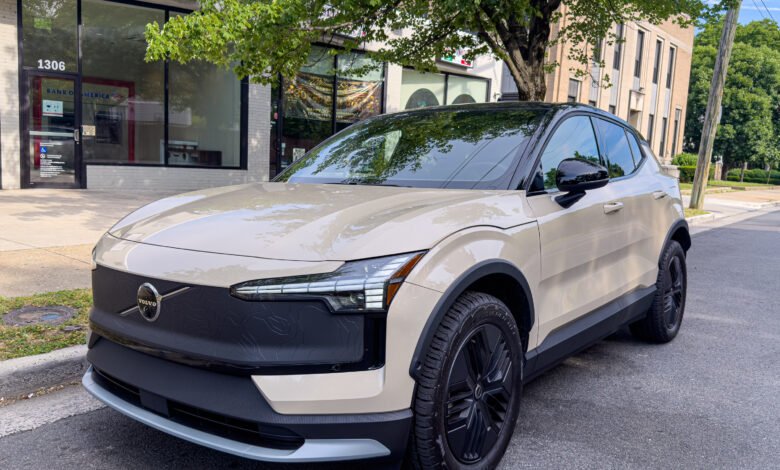
Volvo has effectively ended its attempt to introduce a high-volume, affordable electric crossover to the United States, confirming that it has stopped importing the EX30. With order books now closed, the Swedish automaker indicated that the remaining inventory of approximately 1,200 vehicles represents the final opportunity for American buyers to acquire the model.
The decision marks a significant retreat from Volvo’s 2023 ambitions, when the company debuted the EX30 with a starting price of $34,950. That figure was intended to position the vehicle as a premium yet accessible entry point into the EV market, countering a decade-long trend in which the average new vehicle in the US grew 22 inches longer and an inch wider. However, the economic viability of the EX30 was inextricably linked to its original production site in Zhangjiakou, China.
Geopolitical friction and subsequent trade barriers fundamentally altered the vehicle’s cost structure. Following the implementation of heavy tariffs on Chinese-made cars by the Biden administration in 2024, and continued under the Trump administration, Volvo attempted to salvage the US launch by shifting production for the American market to its facility in Ghent, Belgium.
This logistical pivot failed to insulate the vehicle from significant price hikes. Volvo reported that cars manufactured in Ghent remain subject to a 25 percent tariff, which forced the starting price of the rear-wheel drive version up to $40,345. The twin-motor all-wheel drive variant saw its price climb to $46,345.
This price inflation stripped the EX30 of its primary competitive advantage in a US market where smaller, efficient vehicles often struggle to compete against larger SUVs unless they maintain a distinct price lead. While the EX30 was designed to offer a minimal carbon footprint without compromising on safety standards, the cumulative impact of international trade policy has rendered its position in the US market untenable for the manufacturer.