OpenAI Shifts to Continuous Conversation with Full-Duplex GPT-Live Models
New "full-duplex" architecture allows ChatGPT to listen and speak simultaneously.
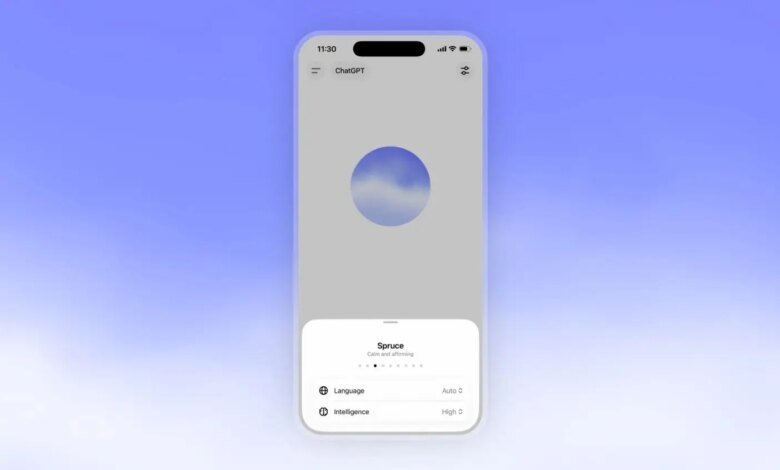
OpenAI has introduced GPT-Live, a new family of voice models designed to eliminate the awkward pauses and frequent interruptions that have characterized human-AI interaction since the inception of large language models. The release marks a transition to what the company describes as a “full-duplex architecture,” a technical standard that allows the system to process incoming audio while simultaneously generating speech.
Unlike previous iterations of ChatGPT’s voice mode, which functioned similarly to a half-duplex radio—where only one party can transmit at a time—GPT-Live is engineered to remain “attentive” during silences. According to OpenAI, this allows the model to distinguish between a user pausing to gather their thoughts and the actual conclusion of a statement.
The move toward more human-centric interaction includes the integration of non-verbal cues. The model will now utilize interjections such as “uh-huh” or “got it” to signal active listening. This mimics the natural linguistic patterns identified in human-to-human communication, where backchanneling serves to maintain social flow.
To handle complex reasoning or real-time information retrieval, GPT-Live delegates high-compute tasks to the company’s latest frontier models, starting with GPT-5.5. This delegation happens in the background, ensuring that the conversational interface remains fluid even when the underlying query requires extensive web searching or logical processing.
The rollout includes two distinct tiers. GPT-Live-1 is the default for subscribers of the Plus, Team, and Enterprise plans, while a streamlined version, GPT-Live-1 mini, serves the free user base. Both versions are currently available across web interfaces and mobile applications for iOS and Android.
While the initial release is optimized for the most widely spoken languages in the ChatGPT ecosystem, OpenAI has not yet detailed the specific performance benchmarks for regional dialects. Developers are expected to gain access to the technology via an API in the near future, though pricing structures for high-concurrency voice streams have not been finalized.