AI Developers Exploit Image Billing Loophole to Slash Claude Code Costs
New tool uses image conversion to bypass expensive text token billing.
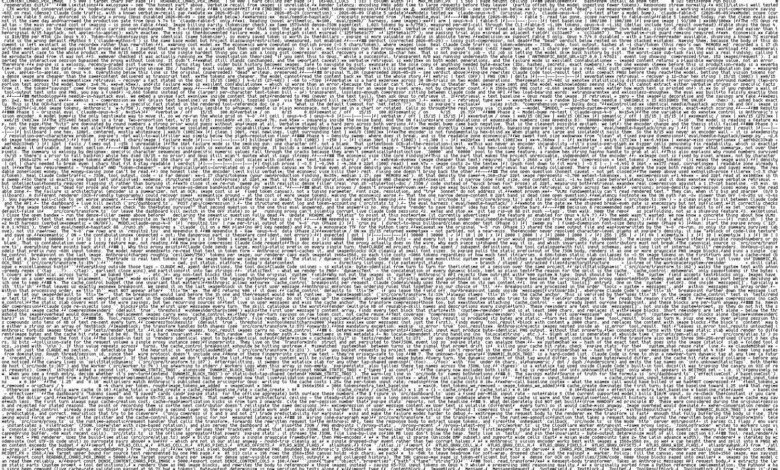
The economic burden of running high-performance Large Language Models (LLMs) has sparked a new wave of technical ingenuity aimed at ‘billing arbitrage.’ A new open-source project, pxpipe, has demonstrated that developers can reduce their API expenses by up to 70% by exploiting a specific quirk in how AI providers charge for multimodal data.
The tool functions as a local proxy situated between a developer’s terminal and the Anthropic API. Its primary mechanism involves converting dense blocks of text—such as long file reads, command outputs, and static system prompts—into PNG files before transmission. This strategy leverages a fundamental discrepancy in pricing: while text is billed per token, images are billed based on their pixel dimensions regardless of the complexity of the information they contain.
According to data from the project’s repository, this ‘visual compression’ results in a token consumption reduction of between 59% and 70%. The efficiency of this method relies on the high-quality optical character recognition (OCR) capabilities of modern vision-language models. In standardized testing using SWE-bench Lite, a benchmark designed to evaluate software engineering capabilities, the system successfully resolved 10 out of 10 problems while achieving a 65% reduction in request size.
However, the technique is not universally applicable across all models. Editorial testing and developer reports indicate that Claude Fable 5 handles these visual inputs with high reliability, correctly retrieving information in 13 out of 15 attempts. Conversely, Claude Opus 4.8 remains disabled by default within the tool because it misinterprets approximately 7% of the generated images. In complex programming tasks, the compressed version of the context solved 14 out of 19 cases in the SWE-bench Pro category, compared to 15 out of 19 for uncompressed text.
Despite the significant cost advantages, the developers of pxpipe warn against using this method for data requiring absolute precision. Because the process relies on the model’s ability to ‘read’ the image, sensitive strings such as cryptographic hashes or API keys are susceptible to minor OCR errors that could break functionality. The tool currently targets non-critical context, including tool documentation and older conversation history that has moved out of the immediate active window.
To implement the system, users point Claude Code toward the local proxy via an environment variable. A real-time dashboard then monitors the volume of tokens saved and allows users to toggle compression if accuracy issues arise during a session.