

China’s Oil Reserves Cushion a Middle East Energy Crisis as Trump and Xi Prepare to Meet
Trump and Xi face fragile oil markets as Hormuz disruptions continue
WASHINGTON — Brent crude has settled around $100 per barrel after reaching $126 in late April. The price remains well above last year’s average of $69 per barrel, but below the $150-plus peak projections issued when the United States began military operations against Iran in late February.
That relative price moderation has come as security across critical maritime trade corridors deteriorates. Operations along the Strait of Hormuz, the narrow waterway between Oman and Iran through which roughly one-fifth of the world’s petroleum supply typically flows, remain effectively halted because of ongoing hostilities.
China, the world’s largest oil importer and top buyer of Iranian crude, has drawn heavily on its strategic reserves. By tapping those supplies, Beijing reduced crude oil imports during the second quarter to an average of 8.1 million barrels per day, a 32% decline—nearly 4 million barrels per day less—than in the first quarter of the year.

The demand reduction from the world’s second-largest oil consumer effectively offset lost production from the Persian Gulf and eased global competition for available physical supply. “The Chinese deserve credit,” said retired U.S. Navy Rear Adm. Mark Montgomery, an analyst at the Foundation for Defense of Democracies. “They did in 10 years what took us 25 years after the 1973 oil crisis to do: really build a kind of Strategic Petroleum Reserve that could allow you to weather this.”
The reserve totaled approximately 1.4 billion barrels by the end of last year, according to data from the U.S. Energy Information Administration. Beijing established the energy stockpile framework over the past decade as part of a strategic push toward national energy self-reliance, a core pillar of Xi’s 14th Five-Year Plan.
Reserve accumulation was accelerated partly through contingency planning for potential military scenarios involving Taiwan, which Beijing claims as its territory. China’s domestic energy shifts have also curtailed baseline demand growth for refined transportation fuels through the rapid adoption of electric vehicles and expanded domestic renewable infrastructure.
“It’s remarkable how China managed the market,” said Michael Lynch, president of Strategic Energy and Economic Research. “They didn’t panic and by turning to their inventories they kept the price down for everybody.”
The United States created its Strategic Petroleum Reserve under the Energy Policy and Conservation Act of 1975, following the 1973-1974 Arab oil embargo. That crisis caused widespread supply shortages and severe inflation across Western economies. The U.S. reserve system took decades to develop across underground salt caverns along the Gulf Coast, while China constructed its storage network across mainland coastal facilities over a single decade.
Regional spillover has damaged alternative transit networks. Attacks by Iran-backed militias this month forced Saudi Arabia to temporarily shut down its East-West Crude Oil Pipeline, a primary bypass route designed to carry crude from Eastern Province fields to the Red Sea port of Yanbu.
Yemen-based Houthi rebels also seized two strategic islands in the southern Red Sea near the Bab el-Mandeb Strait, expanding their capacity to disrupt commercial shipping. Scheduled multilateral discussions among Persian Gulf nations on safety protocols for reopening the Strait of Hormuz were officially suspended earlier this week.
Bank of America analysts wrote in a market note published last week that Brent crude could average $83 per barrel through the second half of the year if shipping through the Strait of Hormuz gradually resumes. The bank said that if violence escalates and prolongs the blockade, prices could rapidly trade between $95 and $120 per barrel. Severe physical damage to primary Gulf oil production or export infrastructure could push prices to $150 per barrel.
“However, market analysts warn that the current supply balance remains precarious as China’s stockpile cushion faces extended demand pressures.”
“We’ve been free-riding off Beijing in a weird way,” said Rosemary Kelanic, director of the Middle East program at Defense Priorities. “China’s doing it because they understand that they’re on the train that Trump is driving off a cliff. If oil prices go way up, that hurts the global economy. If it hurts the global economy, it hurts them.”
President Donald Trump is scheduled to meet Tuesday with leaders of the Gulf Cooperation Council in New York during the annual United Nations General Assembly. The council includes Saudi Arabia, the United Arab Emirates, Qatar, Oman, Kuwait, and Bahrain.
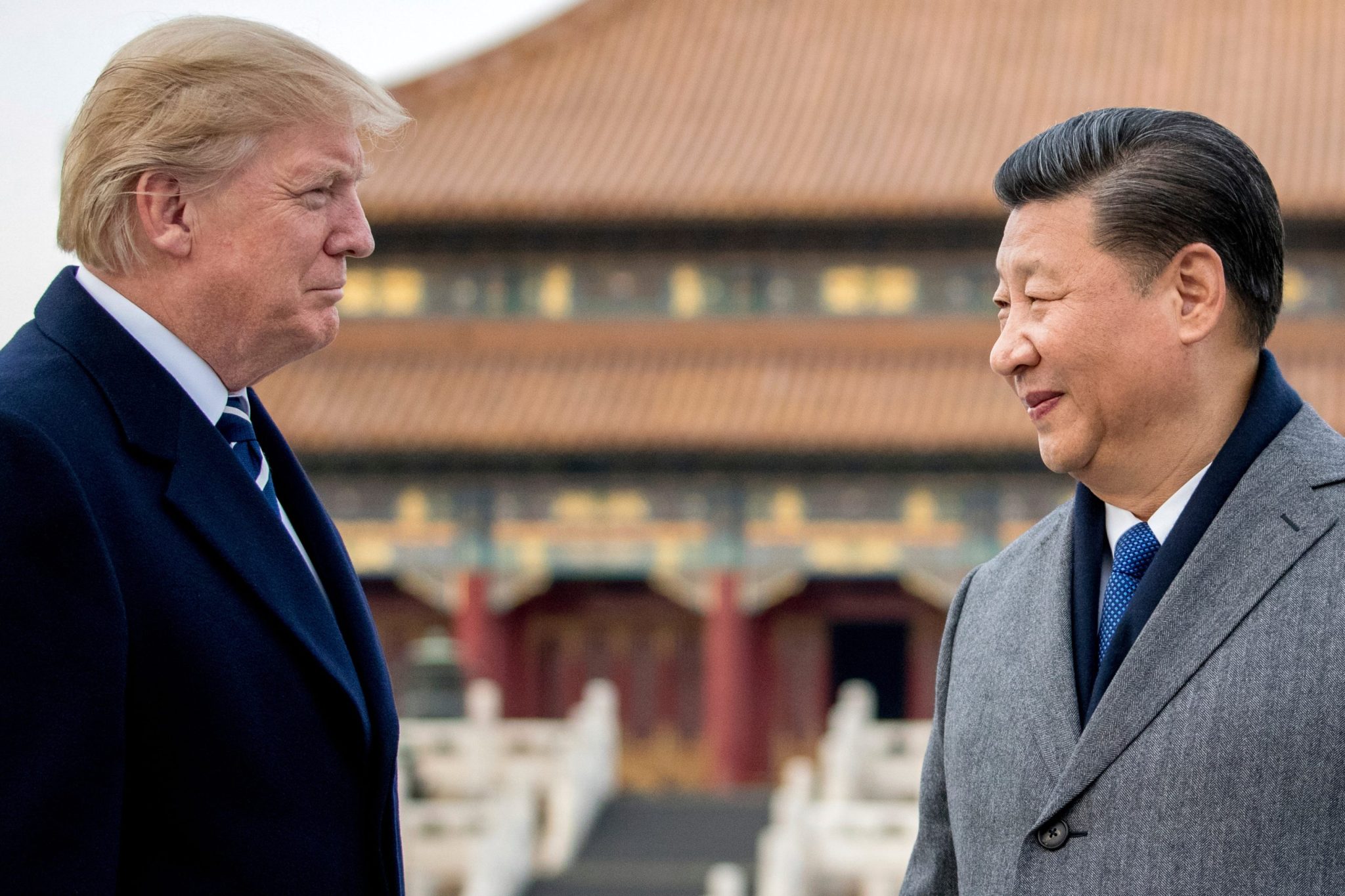
Chinese President Xi Jinping will arrive in Washington after those talks for a much-anticipated state visit. It will be the second direct meeting between Trump and Xi in four months, following their summit in Beijing in May.
The meetings will take place six months after the U.S. launched military operations against Iran and as expanding choke point disruptions and infrastructure attacks threaten to destabilize global oil markets. Trump initially characterized the conflict as a “little excursion” that would conclude within weeks.
Chinese leadership views Beijing’s handling of the energy volatility caused by the conflict as “a vindication of Xi’s last five-year plan and his focus on self-reliance,” according to Jonathan Czin, a former senior CIA analyst now at the Brookings Institution.
The Trump administration has repeatedly urged Beijing to use its substantial economic leverage over Tehran to force an end to the conflict and secure the reopening of the Strait of Hormuz. Chinese officials have resisted those requests while strongly criticizing U.S. military operations and opposing White House threats to impose secondary economic sanctions on third-country entities trading with Iran.
Tensions have also surfaced over intelligence sharing. Trump recently downplayed a Wall Street Journal report indicating that Chinese entities provided satellite imagery to Iranian forces before a July attack on a military base in Jordan that killed three U.S. service members.
“You know, when they say that China spies on us, I say you’re right, and we spy on them too,” Trump told reporters earlier this week.
At their previous summit in Beijing four months ago, Trump asserted that Xi agreed a nuclear-armed Iran was unacceptable and that the Strait of Hormuz must be reopened to international commerce. Chinese state media and diplomats have neither publicly confirmed nor denied Trump’s account of those discussions.
The White House declined to comment on whether Trump credits Beijing’s reserve deployments with preventing a larger global energy crisis.










2 Comments