

Iran Links Strait of Hormuz Opening to U.S. Blockade
A proposed Iran-Oman transit plan faces regional divisions and fresh attacks near the vital shipping route
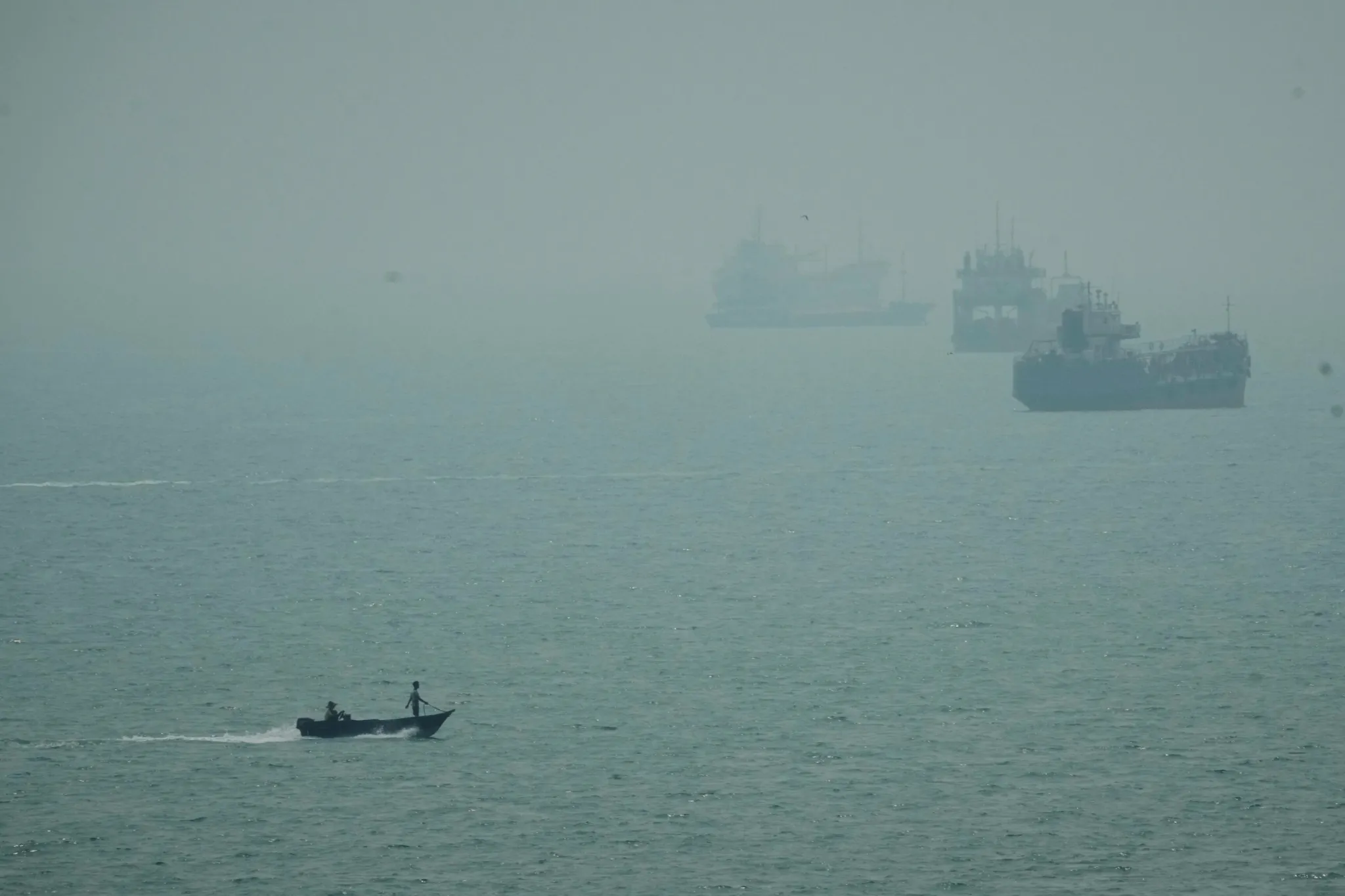
Commercial passage through the Strait of Hormuz has fallen sharply since late February. At its narrowest point, the waterway spans 21 nautical miles between Iran and Oman’s Musandam Peninsula and historically carries roughly one-fifth of global petroleum liquids consumption. It connects crude producers in Saudi Arabia, Iraq, Kuwait, Qatar, and the United Arab Emirates with international markets, primarily in Asia.
Iranian President Masoud Pezeshkian has tied the restoration of normal commercial navigation to Washington lifting its military blockade of Iranian ports. “The waterway would be opened up on the condition that the U.S. will terminate its blockade,” Pezeshkian said in an interview broadcast Saturday by India Today TV. In a separate public statement, he added, “Our people can’t be bullied into submission. Iran won’t surrender.”
The position comes as Tehran prepares to convene regional foreign ministers in Muscat on Monday. Iran is proposing a bilateral framework with Oman to regulate commercial navigation through the narrow passage separating the Persian Gulf from the Gulf of Oman. The plan would route inbound commercial traffic through Iranian territorial waters, while outbound vessels would use designated corridors divided between Iranian and Omani waters. Iran has also sought transit fees for commercial vessels using the route.


Participation in the talks is uneven. Iraq confirmed through its state-run news agency that it would send a delegation, while Bahrain said it would boycott the meeting because it does not have formal diplomatic relations with Iran. Other Gulf nations have weighed the initiative amid concerns over recurring Iranian attacks on U.S. military installations hosted on their territories.
“Oman is hoping that by presenting this agreement with a reasonable level of regional buy-in, the Trump administration will be forced to recognize that the future of the strait will be decided by regional countries,” said Esfandyar Batmanghelidj, head of the Bourse & Bazaar Foundation, an economic think tank.
Security risks around the proposed transit regime were underscored Sunday by a projectile strike against an Iranian cargo vessel near Qeshm Island. The Iranian landmass lies 14 miles (22 kilometers) off Bandar Abbas, the major port city. Iranian state media said one crew member was killed and four others were injured, while the governor of Qeshm, quoted by the state-run Islamic Republic News Agency (IRNA), blamed a “terrorist enemy.”
The United Kingdom Maritime Trade Operations (UKMTO), an information conduit operated by the British Royal Navy, separately reported that a vessel in the strait had been hit by a projectile. The strike caused an onboard blaze, and local emergency services evacuated the crew. The U.S. military did not issue an immediate statement regarding the Qeshm Island strike.
U.S. naval forces have enforced a blockade targeting Iranian-flagged maritime traffic while countering Iranian ballistic missile launches aimed at American warships in the theater. To maintain energy exports, the U.S. military has helped guide commercial tankers along the Omani coastline, outside the primary shipping lanes heavily monitored by Iran.
The wider maritime friction extends south to the Bab el-Mandeb Strait, the narrow passage linking the Red Sea with the Gulf of Aden and the Indian Ocean. Iran-aligned Houthi forces in Yemen recently seized an island along the Yemeni Red Sea coastline, expanding their operational reach over the waterway leading to the Suez Canal. Houthi leadership claimed its operations were limited to targeting Saudi Arabia, while the heightened threat environment across both strategic chokepoints has raised global shipping insurance rates and renewed volatility in crude oil markets.