

Gas Prices Put Republican Midterm Hopes Under Pressure
Economic strain tests Trump, Republicans and working-class voters before November
WASHINGTON — Early voting is beginning for pivotal November midterm elections as a compounding cost-of-living crisis threatens to upend Republican electoral prospects. Surging energy costs linked to the ongoing military conflict with Iran are adding pressure while control of Congress hangs in the balance.
A Fox News national survey released Wednesday found that voters trust Democrats over Republicans to handle inflation and prices by a 15-percentage-point margin. Nearly two-thirds of voters, or 63%, said the Trump administration has made the economy worse, up sharply from the 52% recorded in September 2025.
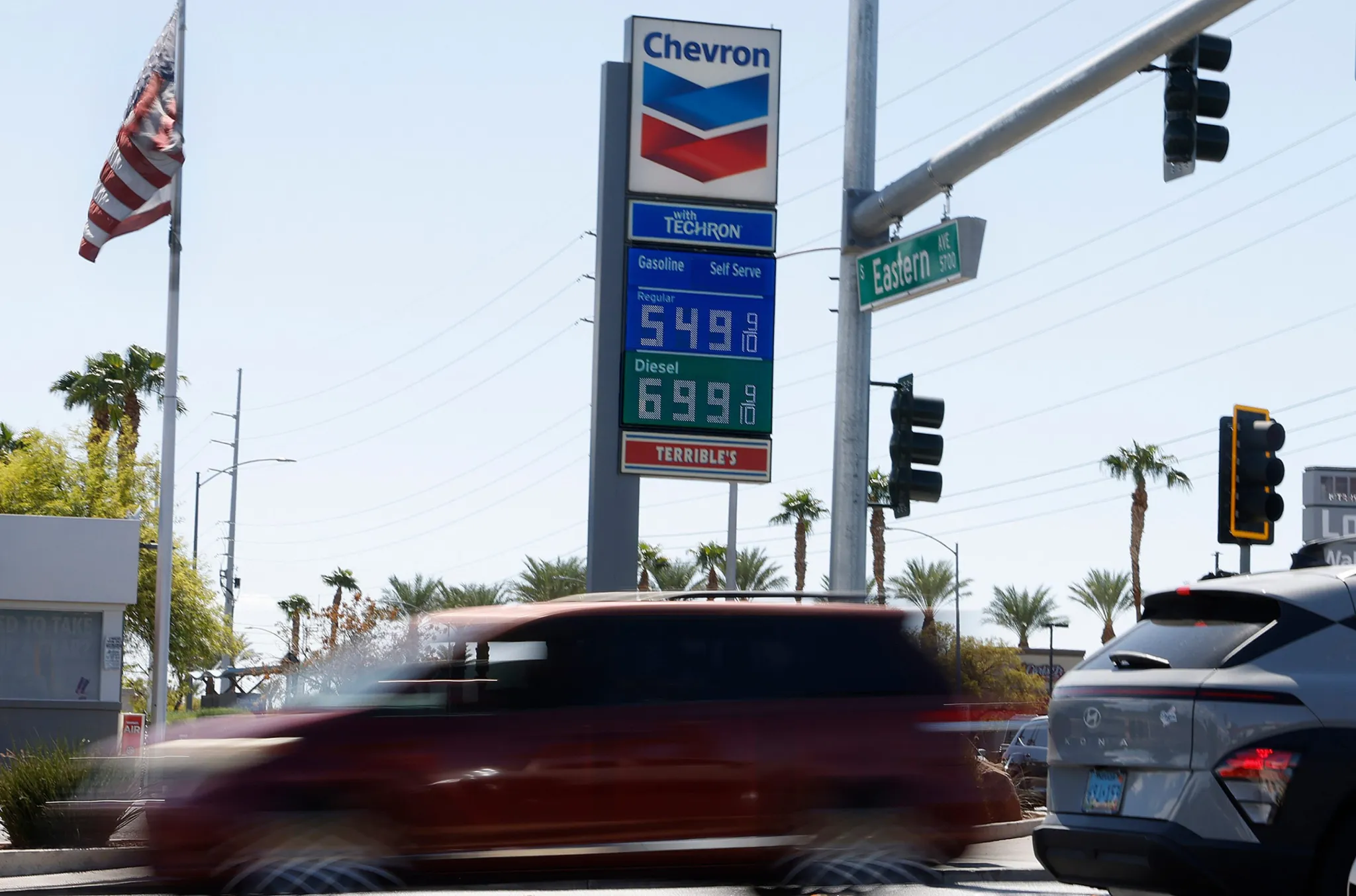
The same poll found that 61% of voters now classify gas prices as a major household problem, compared with 48% two years ago in 2024. Healthcare costs were identified as a major problem by 52% of respondents, up from 44% in 2024. Majorities also flagged housing costs and grocery prices as major burdens, even though neither index has shown recent increases. Nationwide, more than three times as many voters report falling behind financially as those who say they are getting ahead.


Republican dissatisfaction has also increased inside the party’s base. A quarter of self-identified Republicans said the administration’s policies have damaged the economy, while only 46% said the administration has improved it. Another quarter reported seeing no economic impact at all.
According to AAA data, the national average price for a gallon of gasoline reached $4.48 on Friday. The figure was 17 cents higher than the previous week, 40 cents above the level from a month earlier, and $1.27 higher than during the same period last year.
Geopolitical analysts say military conflicts involving Iran have historically produced immediate shocks in global energy markets because of concerns about the Strait of Hormuz. Roughly 20% of the world’s petroleum supply passes through the vital transit chokepoint. When maritime security in the Persian Gulf is threatened, global crude oil benchmarks such as Brent and West Texas Intermediate spike, quickly translating into higher prices at domestic retail pumps.
At a campaign rally in North Carolina on Wednesday, President Donald Trump defended his foreign policy agenda and minimized the domestic impact of the energy spike. He described the higher prices as a necessary compromise to neutralize Iran’s nuclear ambitions.
“You have a little higher. It’s a very inexpensive price to pay for what we’ve done,” Trump told the crowd. “Remember that. It’s a little more. Frankly, even if it was a lot more.”
Chris Wilson, a veteran Republican strategist, said retail prices create particular political risks. “Gas prices matter because they’re one of the few economic indicators voters experience and see in real time,” Wilson said. “The price is literally staring them in the face several times a week. So I wouldn’t minimize the frustration we’re seeing, particularly among working- and middle-class voters.”
Midterm elections have historically served as a referendum on the sitting president. In modern political history, first-term presidents with approval ratings below 50% have seen their parties lose an average of dozens of House seats, including during the wave elections of 2010 and 2018. Republican candidates at all levels are facing those same headwinds this year, along with public discontent over foreign policy and an affordability crisis that has continued despite party promises to curb inflation.
In Virginia, where early voting for the midterms commenced on Friday, Alan Johnson, a 60-year-old engineer, cast his early ballot for Democratic candidates in both the U.S. Senate and House races. He criticized the president’s posture as gas prices continued to rise.
“With the gas prices being what they are and continuing to grow, we’ve got to do something,” Johnson said. “Hopefully the Democrats can get into office and turn the ship around.” He added that the president appears to have “no empathy” for Americans facing financial difficulties.
Similar frustrations are surfacing in North Carolina and Michigan, both critical swing states with highly competitive congressional districts that will decide the balance of power in Washington. In Raleigh, independent voter Brittney Bivins said the cost of fuel showed that the administration was disconnected from working-class realities.
“He really doesn’t care about everyday people,” said Bivins, a 45-year-old teacher. “He can afford the gas, but most of us can’t.” Bivins said she plan to vote for Democrats this autumn and expressed particular interest in the party’s democratic socialist wing.
In central Michigan, Garth Johnson, 35, operates a deep-cleaning business that depends on a fleet of gas-powered vehicles and one diesel-fueled machine. When he filled his SUV on Friday, diesel cost $6.79 a gallon. He previously voted for Trump and hesitated to criticize the administration’s military strategy, but the financial burden has left him undecided about how he will vote in November.
“I like a lot of the things he’s done,” Johnson said, but noted, “I’m a little guy and I’ve got to live my life.” At a gas station in Lansing, Rina Risper said she was shocked after spending $50 for only eight gallons of premium fuel. She warned that high energy prices combined with the administration’s tariff policies would disproportionately harm Midwestern communities.
“We’re not in Miami. We’re in Lansing, Michigan,” Risper said. “It’s really going to impact our people.”
In South Texas, where the Republican Party has spent millions of dollars in recent cycles trying to win historically Democratic, working-class Hispanic communities, 28-year-old Amazon delivery driver Quinten Martinez described the daily choices required to manage his household budget under the hot sun.
“Is it going to be groceries this week?” Martinez asked. “Is it gonna be getting gas in our tank to go to work?”
Martinez rejected the administration’s defense of the current economic climate and pointed to what he called a disconnect between Washington rhetoric and rural realities. Trump “likes to tout that we are the best economy in the world,” Martinez said. “But you don’t see any of the winning, you don’t see any of the ups that he’s talking about. You just see struggles for day to day life.”
The economic strain is also testing voters who intend to remain with the Republican Party despite their financial grievances. In Mesa, Arizona, a key battleground in a state defined by razor-thin margins, 63-year-old carpenter Dan Lloyd filled his pickup truck at $4.39 a gallon. He expressed deep disappointment with Trump’s handling of the energy crisis but still plans to support Republican candidates.
“He hurt himself stepping into this,” Lloyd said of Trump’s foreign policy moves. “Where’s all this oil from Venezuela? I thought we were flush with gas and everything, but no. The American people eat it every time, whether it’s interest rates, food, gasoline.” Lloyd ultimately said he would vote Republican because he feels “the Democratic Party has lost its way.”
In Edinburg, Texas, small business owner Kristin Jimenez dismissed the idea that fuel costs would influence her vote after filling her Mercedes. Jimenez, 52, said, “We’ve paid the same price under Republican presidents, we’ve paid this price under Democrat presidents,” and called the GOP the “lesser of two evils.”
“We don’t mind paying $8 for a cup of coffee at Starbucks, but we have a problem paying four bucks at the pump? Make it make sense,” Jimenez said.









One Comment