

Why Apple’s MagSafe Means Two Different Things
MagSafe connects Apple laptops and iPhones through two different charging systems
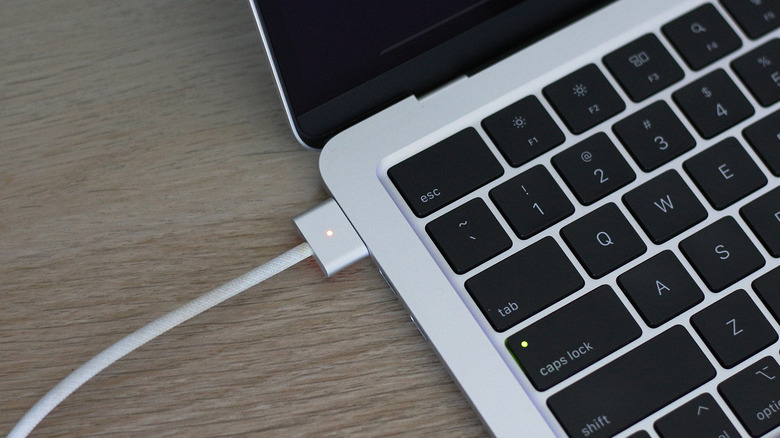
CUPERTINO, Calif. — Apple Inc. is balancing its proprietary hardware ecosystem with universally adopted industry standards. The MagSafe brand sits at the center of that strategy, referring to two different magnetic charging technologies across Apple’s laptop and smartphone lineups as USB-C becomes increasingly dominant in the marketplace.
The approach combines brand-specific conveniences with compliance with global regulatory shifts and consumer demand for cross-device compatibility. On MacBook, MagSafe began as a safety feature rather than a wireless system.
Late Apple co-founder Steve Jobs introduced the brand in January 2006 alongside the original Intel-based MacBook Pro. Its magnetic connector secured the power cable to the laptop while allowing it to disconnect cleanly if someone tripped over the cord, preventing the expensive computer from being pulled off a desk.


Apple began phasing out the connector in 2015 with the ultra-thin 12-inch MacBook and moved its entire laptop lineup to USB-C by 2016. Long-time users criticized the decision because it removed the breakaway safety mechanism. Apple responded to customer feedback in October 2021 by bringing the technology back as MagSafe 3 with redesigned 14-inch and 16-inch MacBook Pro models.
The charging choice remains divided even on current MacBooks. Apple packages a proprietary USB-C to MagSafe cable with every new MacBook, and the computers can charge at identical speeds through either the MagSafe port or their standard USB-C ports.
A bundled MagSafe cable provides magnetic convenience and safety but remains a single-purpose proprietary accessory. A standard USB-C cable, which users must purchase separately if they want to charge through that interface, can power a wide range of non-Apple electronics, transfer data, connect external monitors, and link high-speed storage drives.
Apple reused the MagSafe name for the iPhone 12 series in October 2020, but the iPhone system works differently. Instead of a physical plug inserted into a port, it uses inductive, completely wireless charging, with a ring of magnets built into the back of the phone to align compatible accessories.
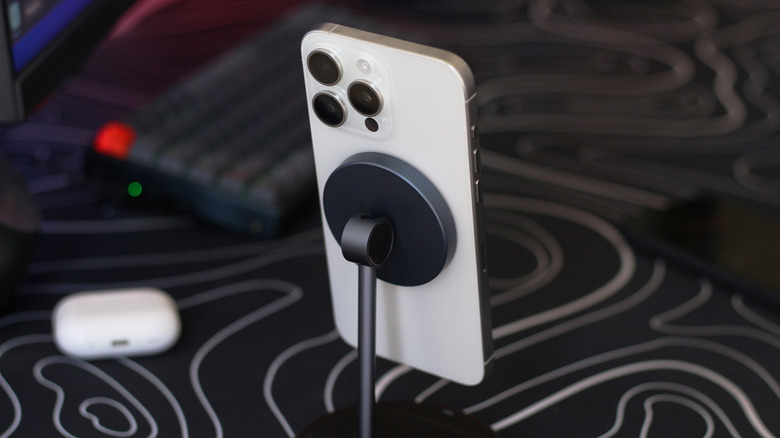
Wireless charging is inherently less efficient than a direct wired connection, and iPhone MagSafe speeds are therefore below those of traditional cables. On the iPhone 15, the budget-friendly iPhone 17e, and older compatible models, MagSafe wireless charging peaks at 15 watts. Newer iPhone models can charge at up to 25 watts with compatible power adapters.
For users who need rapid power delivery, wired charging remains much faster. With a compatible high-wattage power brick and a USB-C cable, flagships such as the iPhone 18 Pro can reach wired charging speeds of up to 60 watts.
Unlike the MacBook lineup, Apple does not include a MagSafe charger with its smartphones. The company stopped including charging bricks and wireless accessories with the iPhone 12, citing environmental initiatives to reduce electronic waste and packaging sizes. Users who want the magnetic wireless experience must buy the necessary pucks or stands separately as aftermarket purchases.
The European Union added pressure to the charging market in 2022 by passing a mandate requiring a common charger standard for mobile phones, tablets, and cameras by the end of 2024. The directive forced Apple to retire its proprietary Lightning connector on the iPhone 15 series in favor of the universal USB-C port.
While wired charging moved toward standardization, Apple’s magnetic wireless ecosystem spread beyond the company. In 2023, the Wireless Power Consortium, or WPC, introduced the Qi2 wireless charging standard. Developed with direct technical input from Apple, Qi2 uses a magnetic ring system modeled closely on MagSafe and brings the same alignment and charging advantages to the Android ecosystem.
The magnetic ring in modern iPhones also supports accessories beyond power, including clip-on leather wallets, car mounts, camera tripods, and desk stands. Apple has extended the charging technology to its audio lineup as well: several AirPods wireless charging cases can now magnetically snap onto the same MagSafe chargers used for iPhones.










One Comment