

Floqer to open-source its AI sales database in early 2027
The B2B startup surpassed $1.2M in annual recurring revenue and counts Perplexity and Wise among its enterprise users.
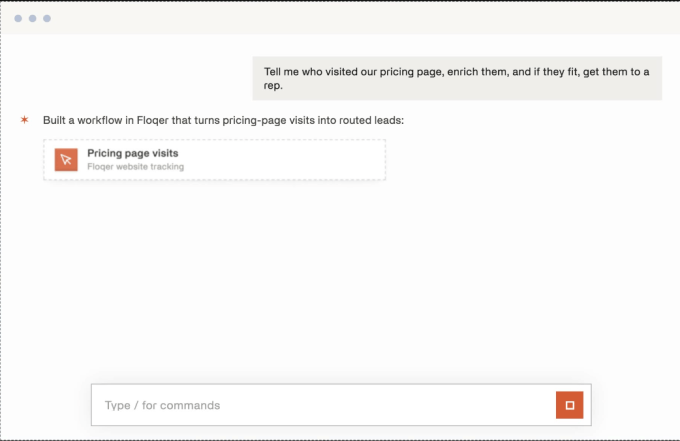
Floqer plans to release the underlying technology of its autonomous customer knowledge database as open source in early 2027, a move designed to let enterprise buyers host and modify prospecting infrastructure internally rather than relying on a proprietary vendor cloud.
The San Francisco-based startup disclosed the timeline Wednesday while pitching on the Startup Battlefield stage at TechCrunch Disrupt 2026. The release remains contingent on completing security reviews, a necessary step given that the system processes sensitive corporate records for more than 1,000 customers, including fintech firm Wise, search company Perplexity, and startup platform AngelList.
Open-sourcing B2B data infrastructure is unusual. The market for sales intelligence and contact enrichment has long been dominated by closed ecosystems such as ZoomInfo, Apollo.io, and Cognism, which monetize tightly controlled proprietary databases. By releasing its code, Floqer is betting that self-hosted flexibility will attract revenue operations teams restricted by strict data residency requirements or internal compliance policies that prevent uploading customer relationship management (CRM) records to third-party software-as-a-service platforms.


Chief Executive Shivam Mahajan said the decision was driven directly by buyer demand. Enterprise clients requested the ability to deploy the database within their own environments and build custom modifications on top of the core architecture. Mahajan noted that the company’s current capacity limits how many users it can onboard properly, and an open-source model would remove that bottleneck.
The platform operates using a fleet of artificial intelligence agents that continuously scan the web to compile and update lists of target companies and contacts. Rather than relying on a single data broker, Floqer pulls from more than 100 third-party sources. To verify direct email addresses and phone numbers, the system uses a waterfall enrichment method, querying one provider after another in sequence until it secures usable contact details. This sequential verification technique reduces bounce rates compared to single-source lookups, a persistent pain point in outbound sales.
Beyond initial prospecting, the agents monitor for structural changes. If a target executive changes roles, receives a promotion, or if their employer announces new funding, the platform automatically updates the corresponding CRM record. Sales and marketing teams typically spend hours manually cross-referencing LinkedIn, job boards, and corporate websites to maintain this level of accuracy. Floqer claims its users have reduced that prospecting workload by up to 70%.
The company reports $1.2 million in annual recurring revenue, with overall revenue growing roughly tenfold over the past year. Founded in 2024 by Mahajan and Chief Technology Officer Zaaheda Islam, who met at university, the eight-person team previously raised $2 million in pre-seed funding. Investors include Perplexity co-founder Denis Yarats, the F7 Fund, N49P, and Tidal Venture Partners. Before starting the company, Mahajan worked as a software engineer at IT services provider Kyndryl, while Islam served as a senior data scientist at Axis Capital.
Floqer did not begin as a database company. Its first product was Super Chat, a Chrome extension allowing users to log in via their ChatGPT accounts to summarize information and take notes. Early enterprise adopters began repurposing the browser tool to clean up messy CRM data. Conversations with those users revealed that maintaining accurate customer records remained a largely manual process lacking standardized workflows across most sales organizations, prompting the founders to abandon the extension and pivot entirely to automated data infrastructure.
The startup continues to limit access to its hosted platform while it scales its engineering team to support the broader user base anticipated by next year’s public release.









