AMD RDNA 5 GPUs Targeted for Late 2027 Launch
Supply chain signals point to a mid-range-first strategy and a potential Computex 2027 debut ahead of Nvidia's next architecture.
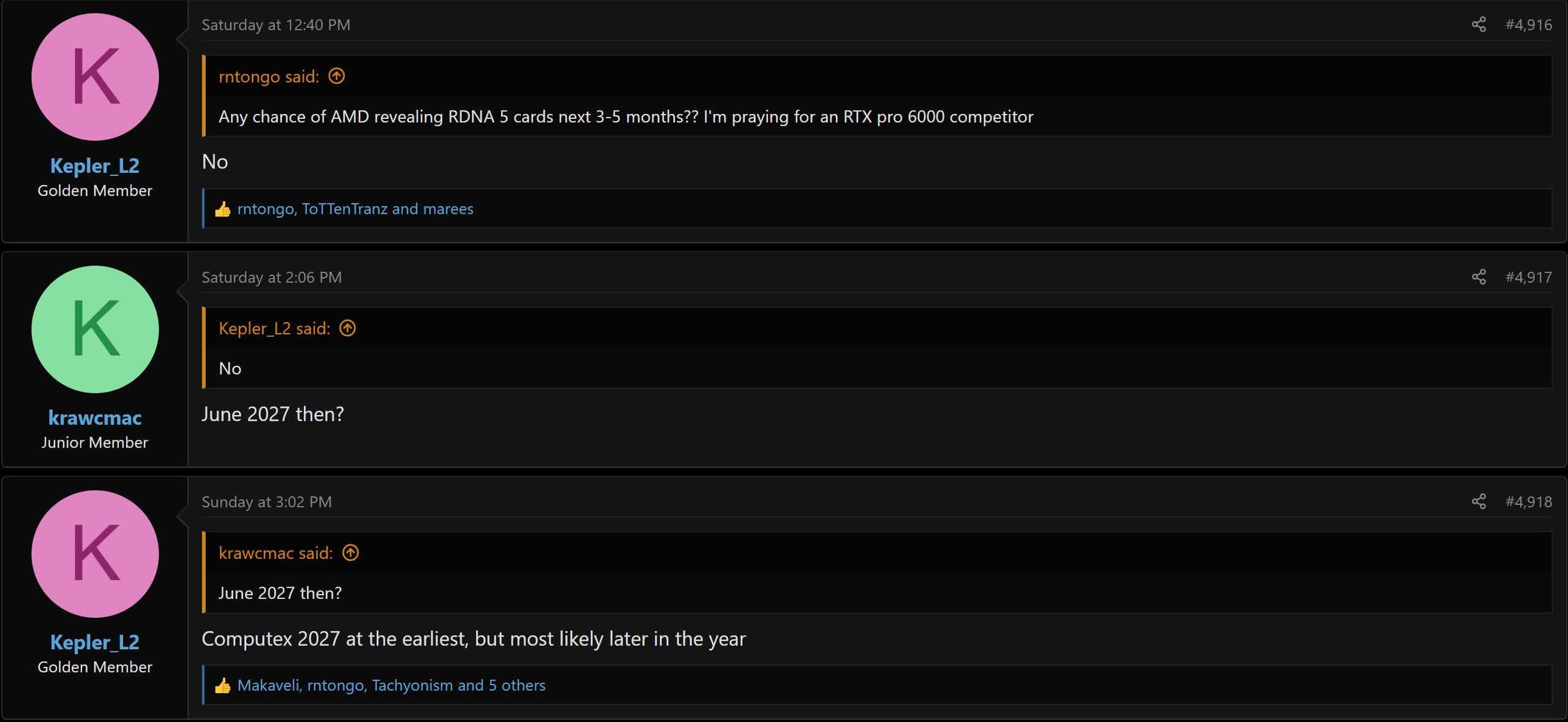
AMD is positioning its next-generation RDNA 5 graphics architecture for a release in the second half of 2027, a timeline that would see the company lead with mid-range silicon rather than its traditional flagship-first strategy. The schedule points to Computex 2027, which begins June 1, as the earliest possible venue for an unveiling, though supply chain indicators suggest a formal launch will materialize later in the year.
The projected arrival date maintains AMD’s recent cadence of roughly two-year generational cycles. The Radeon RX 9000 series, built on RDNA 4, reached retail in March 2025. Prior to that, the gap between the RX 6000 and RX 7000 families sat at just over two years. A late-2027 debut keeps the engineering rhythm intact while giving AMD time to finalize its transition away from the RDNA 4 design.
What distinguishes this generation is the rumored product stack sequencing. Industry tracking indicates the mid-tier GPU die, internally referenced as AT2, will anchor the initial 2027 wave. The enthusiast-class AT0 chip, alongside lower-tier AT3 and AT4 variants, would follow in 2028. This reverses AMD’s historical playbook. Since the RDNA 2 era, the company has consistently debuted its most expensive, highest-performance silicon first—such as the RX 7900 XTX in late 2022—before filtering down to budget options months later. Leading with the mid-range suggests a strategic pivot aimed directly at volume sales and mainstream market share recovery.


Memory specifications remain a critical variable for both performance and pricing. While 4GB GDDR7 memory modules are entering mass production within the next two years alongside denser 6GB chips, these high-capacity modules are expected to bypass consumer graphics cards entirely. Instead, 4GB GDDR7 density will likely be reserved for enterprise accelerators and AI-focused hardware, where massive VRAM pools are mandatory for large language model inference and training workloads. Consumer RDNA 5 cards will almost certainly rely on standard-density GDDR7 or advanced GDDR6 configurations to manage costs.
Pricing pressure continues to define the broader discrete GPU market. The ongoing memory cost crisis has fundamentally altered the economics of graphics card manufacturing, pushing former mid-range products into premium price brackets and driving flagship MSRPs to unprecedented levels. Whether component costs stabilize by late 2027 remains uncertain, but the shift toward a mid-range launch priority reflects an industry-wide acknowledgment that volume segments require immediate attention after years of inflated entry prices.
The competitive landscape adds further context to AMD’s scheduling. Nvidia’s successor to the RTX 5000 Blackwell lineup, widely presumed to be the RTX 6000 series, is not expected until 2028 based on current hardware tracking. Furthermore, indications from the supply chain suggest Nvidia will skip releasing any RTX 5000 Super refresh models altogether. This leaves a prolonged window where AMD’s RDNA 5 mid-range offerings could compete without facing an immediate generational response from its primary rival, potentially allowing the Radeon brand to consolidate ground in the PC gaming market before Nvidia’s next architecture arrives.