

U.S. Energy Midstream M&A Surges as Geopolitical Risk Freezes Upstream Deals
Public pipeline giants are rapidly absorbing private equity assets to meet soaring natural gas demand from AI data centers and Gulf Coast LNG terminals.
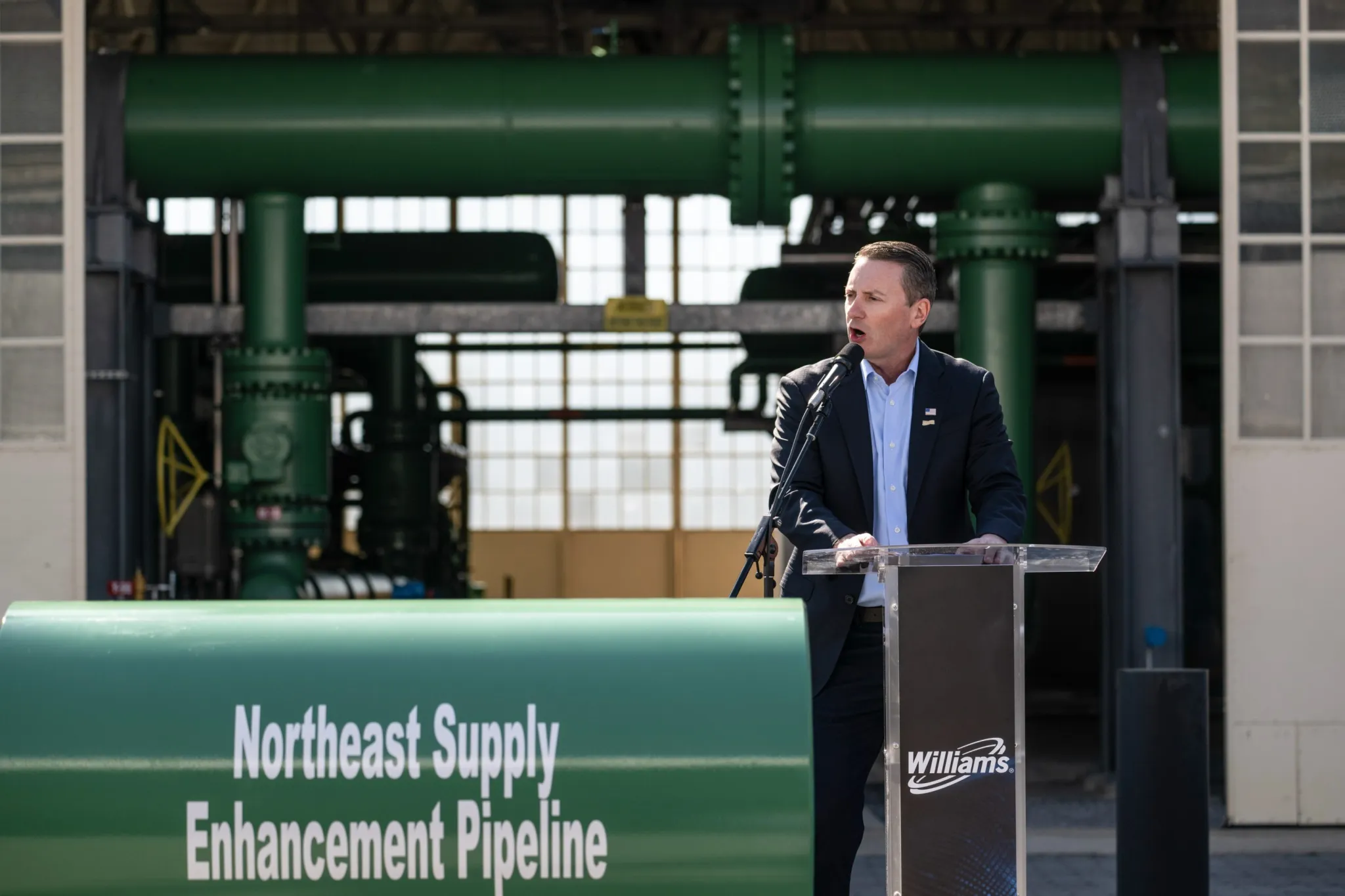
A widening valuation gap driven by Middle East conflict and elevated crude prices has stalled multibillion-dollar oil and gas production acquisitions, but the infrastructure connecting wellheads to export terminals is experiencing a historic consolidation wave.
Since Devon Energy completed its $26.5 billion acquisition of Coterra Energy in early February—weeks before the onset of the Iran war—the upstream sector has seen no comparable transactions. The largest subsequent production deal was Magnolia Oil & Gas paying $4 billion for WildFire Energy’s Eagle Ford shale assets from Warburg Pincus and Kayne Anderson. Sellers are pricing assets against inflated commodity benchmarks, while buyers are modeling returns on long-term supply curves that do not support those premiums.
Pipeline operators face no such standoff. A structural deficit in gathering, processing, and transportation capacity has triggered a rapid series of buyouts dominated by publicly traded giants absorbing private equity-backed platforms.


Williams recently acquired Momentum Midstream and its Texas and Louisiana facilities for $5.5 billion. ONEOK purchased Brazos Midstream’s Permian Basin assets for $4.42 billion, while Western Midstream paid $1.6 billion for Brazos’s separate Delaware Basin operations. Crude logistics have moved at a similar pace: Enbridge bought Tallgrass Energy’s crude assets for $2.55 billion, and Plains All American Pipeline spent $585 million on Wyoming-based Silver Creek Midstream.
The driver is physical necessity rather than speculative positioning. U.S. natural gas demand is being reshaped simultaneously by liquefied natural gas export terminals coming online along the Gulf Coast and unprecedented power requirements from artificial intelligence data centers. Building new pipeline networks from scratch takes years of regulatory navigation, making existing integrated systems scarce, premium assets.
Legislative developments could accelerate this timeline. A bipartisan infrastructure permitting reform bill introduced in the Senate Wednesday aims to streamline approvals across energy sectors. If enacted before year-end, it would expedite fossil fuel pipelines alongside wind, solar, and electric transmission projects—a significant shift given the Trump administration’s historical resistance to renewable energy infrastructure. Faster permitting lowers the risk profile for midstream expansions, further justifying current acquisition multiples.
This infrastructure boom has inverted traditional capital flows. As domestic shale basins mature and tier-one drilling inventory shrinks, major U.S. producers are increasingly deploying exploration capital internationally. Simultaneously, global majors are paying premiums to secure U.S. onshore acreage, primarily to guarantee long-term feedgas supplies for LNG contracts.
BP recently evaluated Devon Energy’s Eagle Ford assets, which Devon is marketing to reduce debt assumed during the Coterra merger. BP ultimately withdrew from the process, but its participation signaled a strategic pivot. European supermajors retreated from U.S. shale over the past decade following costly missteps in the 2010s, making renewed interest from London a notable indicator of how competitive American rock remains despite inventory scarcity concerns.
Beyond hydrocarbons, venture capital continues flowing heavily into the industrial and computing layers supporting this energy transition. GMI Cloud raised $223 million in Series B funding led by ARCHIV with participation from NVIDIA to expand GPU infrastructure for AI workloads. CScale secured $145 million in Series C capital to develop optical interconnect technology for data centers. In heavy industry, Hertha Metals raised $133.7 million in a Series A round backed by Khosla Ventures, Gates Frontier, Toyota Ventures, and Siemens Financial Services to produce high-purity iron and steel for rare-earth magnets.
In broader private markets, Nuveen agreed to acquire London-based asset manager Schroders for £9.9 billion ($13.3 billion), marking one of the largest financial services buyouts of the year.









