

Organized Crime Syndicates Target Permian Basin Oil Fields as Prices Hover Near $100
Federal cases expose sophisticated networks moving stolen crude across state lines
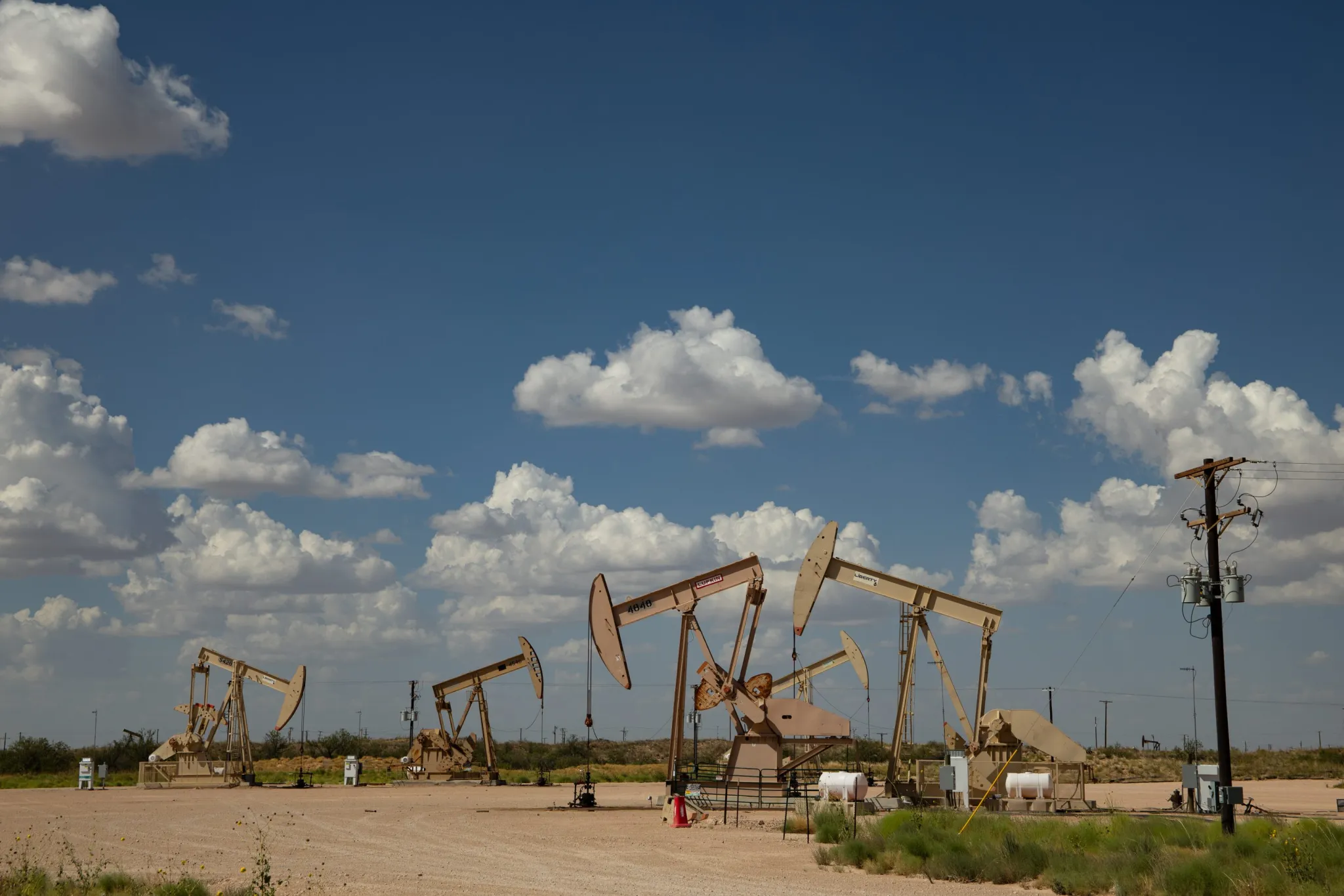
DALLAS — A surge in organized petroleum theft is sweeping the Permian Basin, driven by crude prices that have climbed roughly 60% this year and created a lucrative black market for stolen hydrocarbons across West Texas and southeastern New Mexico.
Nearly half of the exploration and production firms operating primarily in the Permian — the world’s most prolific shale play, pumping more than 5.6 million barrels a day — reported that theft has disrupted their operations, according to the Federal Reserve Bank of Dallas’ latest quarterly energy survey. By contrast, 86% of companies working outside the basin said they were unaffected.
The data confirms what law enforcement has warned for months: the theft is no longer dominated by opportunistic thieves siphoning a few barrels from tank batteries. Forty-seven percent of executives who experienced losses described the activity as “targeted and organized,” while only 42% characterized it as petty theft.


“We’re seeing criminal enterprises with logistics networks, not kids with siphon hoses,” said a senior investigator with the Texas Railroad Commission, which regulates the state’s oil and gas industry. “They know the midstream infrastructure, they know the schedules, and they move product across state lines fast.”
In August, federal and state authorities unveiled Operation Black Market Basin, a multi-state investigation that led to felony charges against executives of a wastewater disposal company for oil theft, money laundering, and organized crime. The operation seized more than $12 million in petroleum products, vehicles, cash, and other assets across Texas, New Mexico, and Oklahoma.
Two months earlier, federal prosecutors in New Mexico announced charges in a separate conspiracy to transport stolen crude across the Texas-New Mexico border for resale — a scheme that exploited the jurisdictional seams between state regulatory regimes.
Howard County Sheriff Stan Parker, whose jurisdiction abuts the Midland-Odessa hub, told Texas Public Radio in May that his department fields reports of 1,000 to 1,500 barrels stolen monthly. “Our problem is we don’t know who’s supposed to be there and who’s not,” Parker said. “If I pull up on a tank battery, I don’t know if you’re drawing water or pulling oil. It’s gotten very complicated.”
The complexity is by design. The Permian’s 86,000 square miles host more than 130,000 active wells, thousands of miles of gathering lines, and hundreds of unmanned tank batteries — a target-rich environment where a single truck can haul 180 barrels worth roughly $18,000 at current prices.
West Texas Intermediate has hovered near $100 a barrel since spring, up from the mid-$60s in January, as global refining capacity tightened amid Middle East conflicts and the Russia-Ukraine war. Fuel prices have risen even faster, amplifying demand for discounted black-market product.
The Dallas Fed survey found that 32% of affected executives said theft increased slightly over the past year, while 47% said it held steady and 22% reported a decline. Despite the prevalence, 84% characterized the financial impact as low — a reflection, analysts say, of the sheer volume of legitimate production that dwarfs losses.
A year ago, the same survey broke down what was being stolen: 61% reported crude oil taken, 58% cited piping, valves, and wiring, 39% lost equipment, 27% reported tool theft, and 12% had construction equipment or vehicles stolen. The shift toward crude-focused theft tracks with price appreciation.
Industry response is accelerating. Major operators have deployed satellite-based monitoring, fiber-optic acoustic sensing along pipelines, and drone patrols over remote tank batteries. The Railroad Commission has expanded its enforcement division and now coordinates with the FBI and Homeland Security Investigations on cross-border cases.
Insurance underwriters, meanwhile, have begun pricing theft risk into policies for Permian midstream assets, adding a new cost layer for operators already contending with labor shortages and equipment inflation.
The latest federal indictment, unsealed last week in Midland, charges six defendants with conspiracy to transport stolen crude across state lines — the third major federal case in the basin this year.









