
Hyundai Shifts Screen Strategy: Blind-Spot Camera Moves to Center Display
Hyundai brings blind-spot video to the center screen and keeps physical knobs in its latest cockpit overhaul.
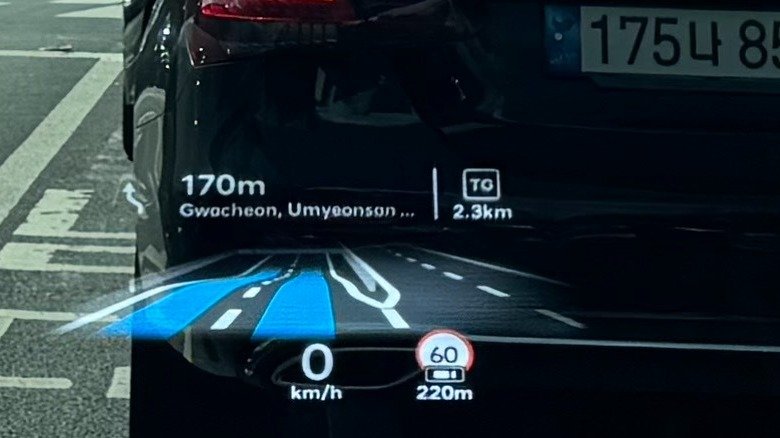
SEOUL — Hyundai Motor Group is recalibrating its vehicle cockpit architecture, deploying an updated user interface and digital display system that attempts to balance touch-driven software features with dedicated physical controls. At the core of the layout is a multi-tier visual configuration consisting of a high-mounted, compact digital driver’s gauge cluster, a full-color head-up display projected onto the windshield, and a widescreen central touchscreen.
The updated interface, showcased in the company’s domestic flagship Grandeur sedan during driving evaluations in South Korea, reflects a broader automotive industry effort to refine in-cabin technology as digital screens replace traditional instrument panels and center-stack hardware. To accommodate the elevated gauge cluster, Hyundai integrated a small, squircle-shaped steering wheel with flattened top and bottom sections designed to prevent the rim from blocking driver sightlines.
The system also introduces a redesigned implementation of Hyundai’s Blind-Spot View Monitor. Crucial operating metrics, including vehicle speed and turn-by-turn navigation prompts, are mirrored across all three screens to maintain line-of-sight visibility for the driver regardless of eye position. In earlier iterations across Hyundai, Kia, and Genesis models, activating a turn signal projected a live camera feed directly within the circular digital tachometer or speedometer on the instrument cluster.
In the newer configuration, driven by the slimmer dimensions of the standalone driver’s display, the video feed has moved to the central infotainment touchscreen. The software allows drivers to reposition the floating camera window across the display surface, keeping primary mapping or media functions unobstructed while aligning the camera view closer to the physical side-view mirrors. Software navigation within the central display utilizes a persistent vehicle settings shortcut positioned at the bottom left of the panel, alongside a configurable dynamic dock.
The digital transition extends to climate distribution, where the Grandeur utilizes electronically controlled air vents integrated into the horizontal lines of the dashboard. The bottom dock tracks and stores recently used applications, allowing motorists to switch between multimedia, communication, and navigation menus with fewer inputs. Directional airflow is adjusted entirely through graphic sliders on the touchscreen, mirroring similar digital vent systems used by manufacturers such as Tesla, Rivian, and Porsche.
Despite the shift toward touchscreen-based functions, Hyundai has confirmed an ongoing corporate commitment to preserving dedicated physical switchgear for key operational tasks. Directly beneath the central display, the cockpit retains an array of tactile buttons and mechanical toggle switches for primary audio and heating, ventilation, and air conditioning (HVAC) adjustments. The Grandeur, previously marketed in North America as the Azera until its departure from the U.S. lineup after the 2017 model year, continues to serve as an engineering and technology benchmark for the automaker’s global vehicle architecture.
While domestic Korean flagship models like the Grandeur incorporate digital airflow direction, Hyundai’s high-volume global models bound for North America—including recent updates to the Elantra sedan and Tucson crossover—retain conventional manual directional tabs on their air vents alongside physical controls.
![Image]