
Elizabeth Holmes Planned Successor Venture Before Prison, Documentary Reveals
Nathan Fielder Documentary Reveals Holmes Planned New Venture Weeks Before Prison

Just weeks before surrendering to federal authorities to begin a decade-long prison sentence for corporate fraud, Theranos founder Elizabeth Holmes was actively exploring the creation of a successor technology venture, according to details revealed at the premiere of an upcoming documentary. The film, titled “You Can See Everything” and produced by studio A24, documents the final 34 days of freedom for Holmes before she reported to federal prison. Directed by filmmaker Nathan Fielder, the project captures candid interactions inside Holmes’s leased California residence, revealing that she and her partner, William “Billy” Evans, discussed concepts for launching a “new and improved Theranos” despite the total collapse of her previous medical startup and her federal conviction.
Holmes met Evans, an heir to the California-based Evans Hotel Group, in 2017 while Theranos was under federal investigation. The couple married in 2019 and have two children together, born in July 2021 and early 2023. The births of her children contributed to multiple delays in her trial start date and the eventual execution of her prison sentence.
The documentary, which debuted at the Telluride Film Festival ahead of its scheduled public release next month, features extensive conversations between Fielder and Holmes in which she consistently defends her actions and character. “I’m not that person, I can promise you that,” Holmes tells Fielder in footage included in the film’s trailer. “I don’t have anything to deceive you on. Of course, I’m not deceiving you. I’m engaging with you as a human being. Why would I deceive you? There’s no reason for me to do that.”



During a post-screening panel at Telluride, Fielder stated that he repeatedly gave Holmes and Evans opportunities to halt filming during the 34-day shoot, but the couple chose to continue. Fielder expressed lingering confusion regarding the couple’s motivations for granting such unrestricted access on the eve of her incarceration. “I don’t know why I’m there,” Fielder said during the festival Q&A. “I’m really struggling to this day to understand what I experienced. I’m excited for this movie to come out and for people to help me with what I experienced.”
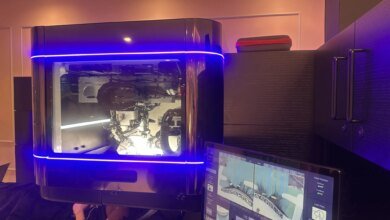
The revelations in the film follow a dramatic multi-year downfall for Holmes, who dropped out of Stanford University in 2003 at age 19 to found Theranos. Holmes built the Silicon Valley company around claims that its proprietary analyzer, named the “Edison,” could perform hundreds of comprehensive medical tests—ranging from cholesterol checks to cancer detection—using only a few drops of blood drawn from a finger prick. On the promise of disrupting the $75 billion blood-testing industry, Theranos raised more than $700 million from high-profile investors, including media mogul Rupert Murdoch, the Walton family of Walmart, and former Education Secretary Betsy DeVos. At its peak, the private company reached a valuation of $9 billion, briefly making Holmes the youngest self-made female billionaire in the world. Theranos also cultivated a high-profile board of directors that included former Secretaries of State Henry Kissinger and George Shultz, former Defense Secretary Gen. James Mattis, and retired Navy Adm. Gary Roughead.
When Fielder asks if she is being honest with him, Holmes responds: “I’m always being real.” The company began to unravel in October 2015 following an investigative series by Wall Street Journal reporter John Carreyrou. The reports exposed that the Edison technology was unreliable and incapable of performing the vast majority of tests offered by the company. Instead, Theranos was secretly running patient samples on modified commercial analyzers purchased from third-party manufacturers like Siemens, often diluting samples to meet volume requirements and producing inaccurate results. Subsequent investigations by the U.S. Food and Drug Administration (FDA) and the Centers for Medicare & Medicaid Services (CMS) led to sanctions, including the revocation of the company’s laboratory cap certificate and a two-year ban preventing Holmes from operating a medical lab.
Theranos officially shut down its operations in September 2018. In June 2018, a federal grand jury indicted Holmes and former Theranos chief operating officer Ramesh “Sunny” Balwani on multiple counts of wire fraud and conspiracy to commit wire fraud. Federal prosecutors alleged the pair orchestrated a scheme to defraud investors, doctors, and patients about the capabilities of the company’s blood-testing technology.
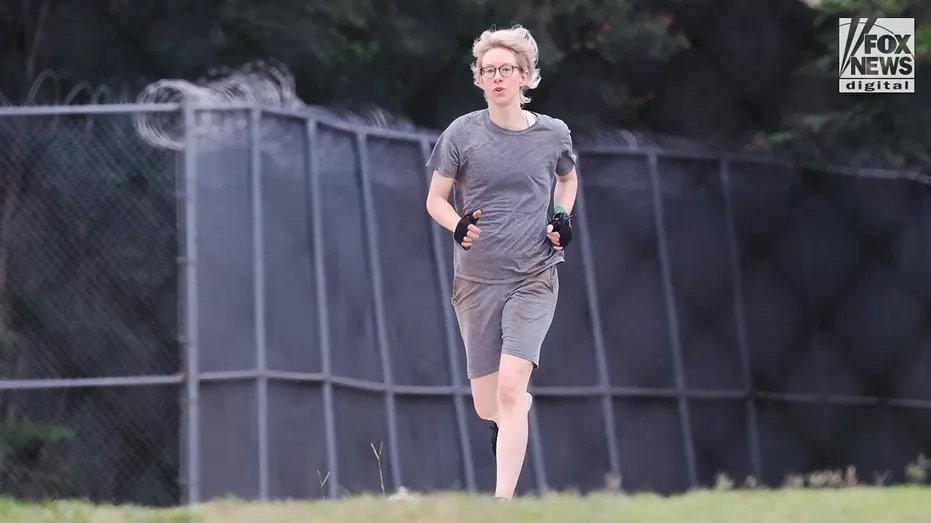
Following a four-month trial in San Jose, California, before U.S. District Judge Edward Davila, a jury found Holmes guilty on January 3, 2022, on three counts of felony wire fraud and one count of conspiracy to commit wire fraud involving investors. She was acquitted on counts related to patient fraud. In a separate trial, Balwani was convicted on all 12 federal fraud charges and sentenced to nearly 13 years in prison. In November 2022, Judge Davila sentenced Holmes to 135 months—11 years and three months—in federal prison, and later ordered her and Balwani to pay $452 million in restitution to victims of the fraud scheme.
Holmes surrendered to federal custody on May 30, 2023, to begin serving her sentence at Federal Prison Camp Bryan, a minimum-security facility for female inmates located in Bryan, Texas, approximately 100 miles northwest of Houston. Federal Bureau of Prisons records updated in March reduced Holmes’s expected prison term by roughly one year, reflecting standard policy adjustments under federal good conduct time provisions and the First Step Act.