
Bentley Hires Drummers to Create Engine Sounds for Its Coming EVs
Bentley Uses Human Drummers to Recreate Its V8 Engine Sound for Electric Vehicles
As the ultra-luxury automotive sector prepares for an electric future, manufacturers are facing a unique challenge: how to replace the visceral, mechanical identity of internal combustion engines without relying on artificial, digital synthesizers. Bentley’s design team began by benchmarking competitor electric vehicles but ultimately decided to look inward, mining the brand’s own archives.
Bentley executives chose to bypass standard digital audio synthesis to retain the brand’s signature character for passengers. “These are luxury items, an emotional purchase,” said Robin Page, Bentley’s Director of Design. “So we wanted to make sure that we maintained this kind of emotional connection to the car. And sound, we felt was really important.”
The sound design initiative comes as Bentley navigates a complex transition toward electrification. Under its “Beyond100” business strategy, first launched in 2020, the Volkswagen Group-owned brand initially aimed to offer a fully electric lineup by 2030. However, Bentley adjusted this timeline, delaying its goal for an all-electric fleet to 2035 while continuing to invest in plug-in hybrid electric vehicles (PHEVs) in the interim.

Bentley’s approach avoids high-volume external speakers, focusing instead on internal engagement. For example, Dodge has outfitted its Charger Daytona EV with a “Fratzonic Chambered Exhaust” system, which utilizes physical chambers and speakers to produce external exhaust notes measuring up to 126 decibels—matching the volume of a traditional supercharged Hellcat V8. Similarly, BMW collaborated with Academy Award-winning composer Hans Zimmer to craft synthetic, futuristic soundscapes for its electric portfolio, while Porsche offers an “Electric Sport Sound” that amplifies the natural high-frequency whine of its electric motors.
Global safety standards, including regulations in the United States and the European Union, require all hybrid and electric vehicles to emit an acoustic warning sound at low speeds to protect pedestrians. While these mandates dictate the presence of sound, they leave luxury manufacturers with a blank canvas to define their specific acoustic signatures.
The company’s first fully electric model is scheduled to be revealed in late 2026, with customer deliveries expected to begin in 2027. Bentley’s design team focused on the low-frequency, high-torque characteristics of historic powerplants from iconic models like the Continental and Turbo series. “We came back to the engines out of the Continental and Turbo; quite a heavy, low-revving, high-torque [engine],” Page said.
Instead of using software to mimic these engines, Bentley hired human artists to recreate the auditory patterns. “We chose to use artists, humans to recreate the pattern,” Page said. “So they play the firing order, the V8 on drums.” According to Page, this acoustic methodology captures the inherent irregularities of a physical, mechanical engine. “If you think about the actual mechanical engine itself, it is imperfect. It has tolerances in it. So it has natural variation in the idle beat,” Page said. “And the people we’ve used to do the drumming, they’re experts in the field, but again, they’re humans. So they have natural imperfections in the way they have gone through the percussion.”
The resulting sound is designed to be subtle and seamlessly integrated into the driving experience. Unlike high-performance competitors that employ aggressive external acoustics, Bentley is prioritizing cabin refinement. The drum-recreated engine rhythm is mapped dynamically to the vehicle’s powertrain load. Page noted that this mapping ensures a natural auditory response under different driving conditions, such as climbing a steep incline or accelerating rapidly, providing a visceral level of engagement without becoming intrusive.
The engine sound inspiration draws heavily from Bentley’s legendary L-Series V8, a 6.75-liter engine that remained in continuous production for over 60 years. First introduced in 1959 in the Bentley S2, the pushrod V8 was refined over decades—adding turbocharging in the 1980s—before finally being retired in 2020. The engine was celebrated for its immense low-end torque and effortless, quiet power delivery—qualities Bentley seeks to replicate in its silent electric era.
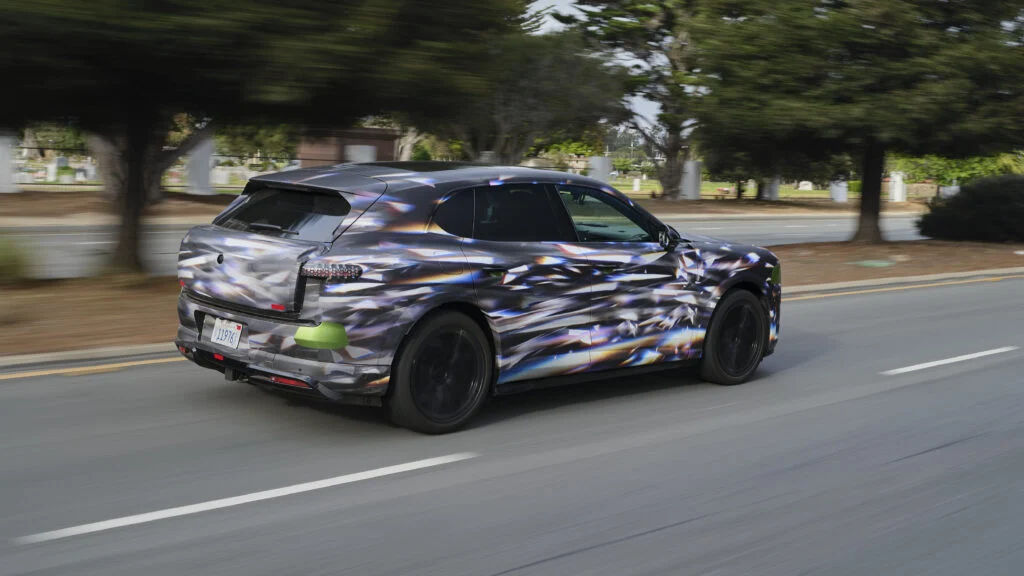
This acoustic design operates in tandem with the vehicle’s visual themes. During developmental testing, the camouflage wrapping applied to early prototype test mules has been designed to mirror a shimmering backlight pattern utilized within the cabin’s luxury interior surfaces. Bentley Motors is addressing this transition by taking an unconventional, analog route for its upcoming electric vehicles. Rather than digitally sampling its historic powertrains or generating futuristic, synthetic tones, the British luxury marque has employed professional human percussionists to replicate the physical firing order of its famous combustion engines on drums.