
Stellantis revives the Vauxhall Frontera as a low-cost electric SUV for UK fleets
Stellantis targets UK fleet buyers with revived Vauxhall Frontera Electric SUV

Stellantis is targeting the entry-level electric vehicle market with the revived Vauxhall Frontera Electric, a compact SUV built on the conglomerate’s cost-focused “Smart Car” platform. Underneath the bodywork, the standard-range version is equipped with a front-mounted electric motor delivering 83 kW (113 horsepower) and draws power from a 44 kWh lithium iron phosphate (LFP) battery pack. That setup provides an estimated driving range of up to 186 miles under the WLTP testing cycle, while a Long Range variant featuring a larger battery offers approximately 248 miles. The platform supports DC fast charging at rates up to 100 kW, enabling a 20% to 80% charge in roughly 26 minutes.
For corporate and fleet markets in the United Kingdom, the pure electric model holds a distinct financial advantage over its mild-hybrid sibling due to the UK’s Benefit-in-Kind (BiK) tax structure. Electric vehicles currently qualify for the lowest tax brackets—set at 2% for the 2024/25 tax year before increasing by one percentage point annually through 2028—making the battery-electric Frontera significantly cheaper for corporate drivers on a monthly tax basis. However, the vehicle faces steep initial depreciation compared to key competitors in the compact EV sector. Valuations project that after a standard ownership period of three years or 36,000 miles, the Frontera Electric SUV will retain between 33% and 35% of its original purchase price.

The Frontera nameplate originally designated an Isuzu-derived, body-on-frame off-roader sold in Europe between 1991 and 2004. It has been repurposed as a direct replacement for the outgoing Vauxhall Crossland, focusing on low purchase costs and tax efficiency rather than premium luxury. Rival entry-level electric crossover models fare better in secondary market retention; the BYD Atto 2 is projected to retain 39% to 41% of its original value, while the mechanically related Citroën ë-C3 Aircross is forecasted to hold between 45% and 49% over the same duration.
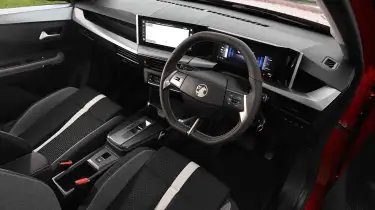
The interior layout features practical storage details, such as twin central cup holders fitted with an elasticated fabric strap designed to secure oversized drink bottles directly behind the drive selector binnacle. Small visual Easter eggs, including Vauxhall’s traditional molded “shark” motifs, are integrated into plastic trim components throughout the cabin. Vauxhall opted to retain physical switchgear for primary vehicle functions rather than embedding all controls into the touchscreen. Below the main display, entry-level “Design” trim models utilize three chunky rotary dials to operate the manual heating and ventilation system. Higher-spec models equipped with automatic climate control replace these with dedicated physical buttons and toggle switches.
The cabin prioritizes durability and functional ergonomics for family and commercial utility. Material selection reflects the model’s budget-conscious positioning, with extensive use of hard plastics across the lower dashboard and door panels, particularly in base trim levels which feature darker interior color palettes. Higher-grade “GS” trims mitigate the utilitarian feel by adding fabric upholstery inserts to the upper dashboard fascia and door cards. The seats are upholstered in hard-wearing, easily cleanable fabrics designed to withstand heavy daily use.
Built on the Stellantis “Smart Car” platform—a low-cost derivative of the modular CMP architecture shared with the Citroën ë-C3 Aircross and Fiat Grande Panda—the new Frontera Electric also targets fleet buyers seeking low tax burdens. To differentiate the Frontera from its Citroën platform sibling, Vauxhall designers incorporated distinct styling cues inside and out. The exterior features an upright, blocky silhouette with a high roofline that gives the crossover an MPV-like profile. Up front, it integrates Vauxhall’s signature blacked-out “Vizor” grille panel. Customization options include a £400 white contrast roof paint option, which gives the vehicle a visual aesthetic reminiscent of larger off-roaders like the Land Rover Defender.
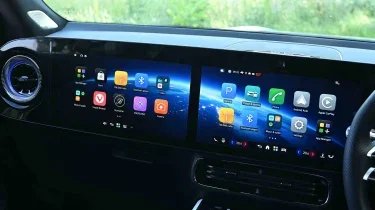
For non-electric buyers, the lineup also includes a 1.2-liter turbocharged three-cylinder gasoline engine paired with a 48-volt mild-hybrid system and a six-speed dual-clutch transmission. The dashboard features a clean, horizontal architecture anchored by twin 10-inch digital screens. The central infotainment touchscreen is slightly angled toward the driver for easier reach, while the driver’s digital instrument display is fitted with a small protective cowl designed to reduce glare and reflections. The driver’s display provides a relatively limited amount of customizable driving information compared to higher-end EV dashboards.