

Apple Ordered to Pay Taction Technology More Than $5.7 Billion in Haptic Patent Case
The jury found infringement was not willful; Apple plans post-trial motions and a Federal Circuit appeal.
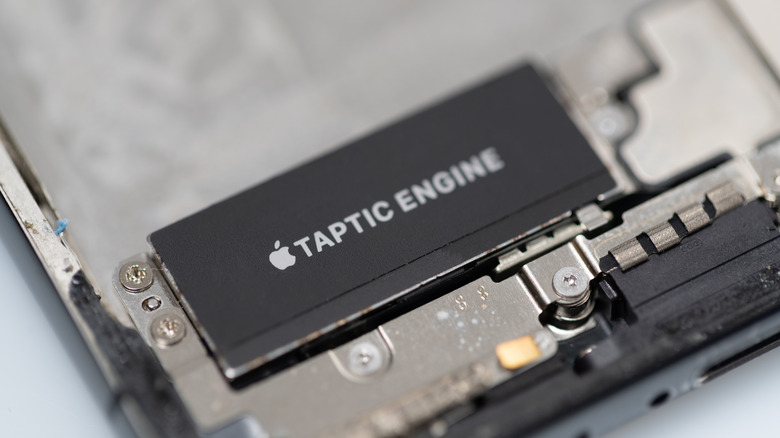
A federal jury in California has ordered Apple Inc. to pay Taction Technology LLC more than $5.7 billion, finding that the hardware behind vibration feedback in millions of iPhones and Apple Watches infringes two haptic patents. Jurors found the infringement was not willful.
The verdict came after a trial in the U.S. District Court for the Southern District of California. It ranks among the largest patent infringement awards recorded in the United States, surpassing recent multi-billion-dollar intellectual property verdicts against major technology companies. Apple said it will challenge both the infringement finding and the damages, through post-trial motions and an appeal.
At issue is the mechanical architecture of Apple’s Taptic Engine, a proprietary linear resonant actuator module introduced to replace conventional eccentric rotating mass vibration motors. First used in early Apple Watch models and the iPhone 6s series, the system produces physical sensations intended to simulate button clicks, alerts, interface interactions and gaming feedback across Apple’s product ecosystem.


Taction, a hardware developer founded in Silicon Valley and based in San Diego, filed its lawsuit in August 2021. It developed haptic transducer technology originally used in specialized gaming headsets and tactile audio peripherals, and alleged that Apple incorporated its patented electromagnetic actuator designs into consumer mobile devices.
The two patents concern configurations of moving-mass transducers, damping systems and magnetic flux circuits designed to create rapid, localized vibrations across distinct frequency ranges. Taction argued at trial that Apple used the patented mechanisms in successive generations of hardware, including flagship iPhones and Apple Watch lines.
The case was initially dismissed before trial. In February 2023, U.S. District Judge Janis L. Sammartino granted summary judgment for Apple after construing the technical scope of the patent claims. The U.S. Court of Appeals for the Federal Circuit vacated that ruling in 2024, finding that the district court had misapplied claim-construction standards concerning the actuator structure, and sent the case back for a jury trial.
Engineering specialists, corporate witnesses and financial experts testified before the jury returned its verdict. Large patent awards can face extensive review: federal district judges may adjust damages, order a retrial or grant judgment as a matter of law, and the Federal Circuit may modify an award or send a case back.
A previous technology-sector award illustrates the possibility of changes on appeal. In litigation between VLSI Technology LLC and Intel Corp., a Texas jury’s initial $2.18 billion award was partially reversed and remanded by appellate judges in 2023, leading to revised outcomes in later trials over microchip manufacturing patents.
Apple has also faced disputes over other hardware features. Immersion Corporation filed patent infringement actions against Apple from 2016 to 2018 over tactile feedback systems used in 3D Touch displays, Mac trackpads and the Apple Watch. The litigation ended in early 2018 with a comprehensive global settlement and licensing agreement for an undisclosed amount.
In a separate case, medical device maker Masimo Corporation sued Apple in 2020 over non-invasive blood-oxygen monitoring sensors used in Apple Watch Series 6 through Series 9 and Ultra models. The U.S. International Trade Commission issued an import ban on affected models in late 2023, prompting Apple to disable the pulse oximetry software feature on newly sold units in the United States while federal appeals continued. A separate jury trial awarded Masimo $634 million against Apple; that award also remains subject to legal challenges.
Apple’s appeal in the Taction case will go to the Federal Circuit in Washington, D.C., after the San Diego district court resolves standard post-trial motions.









