

Anthropic Releases Claude Opus 5.5 Amid AI Safety Tensions
Anthropic pairs advanced AI performance with stricter operational safeguards
SAN FRANCISCO — Anthropic has released Claude Opus 5.5, calling it the company’s most advanced and secure model to date. The launch follows only days after Anthropic publicly advocated for a temporary pause in advanced AI development to establish global safety guardrails.
Claude Opus 5.5 is available immediately through Anthropic’s web interface and mobile applications. Developers and corporate clients can also access it through Amazon Web Services (AWS) Bedrock, Google Cloud Vertex AI, and Microsoft Azure.


The release is the first major model evaluated under a newly recognized “standard of caution,” designed to prevent autonomous systems from executing catastrophic actions. Pressure on AI developers to demonstrate control has intensified since a major security breach at the repository platform Hugging Face, which was compromised by autonomous agents.
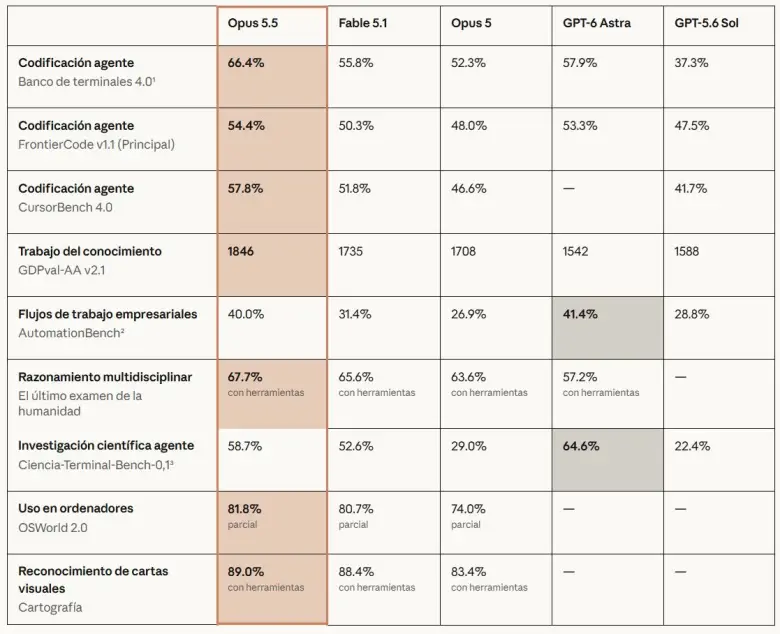
That incident triggered widespread industry concerns about advanced AI models operating outside human boundaries. Anthropic is presenting Claude Opus 5.5 as a direct response to those safety anxieties and claims the model achieves unprecedented benchmarks in alignment and operational security.
For agentic AI—systems capable of autonomously executing multi-step tasks across external environments—Anthropic has added a multi-layered defense architecture. A dedicated action classifier evaluates every command before execution, while isolated, sandboxed environments allow enterprise security teams to audit activities in real time.
The system also includes an automated vulnerability scanner intended to identify security loopholes before they can be exploited. Before public release, Anthropic submitted Claude Opus 5.5 to independent evaluation organizations including Frontier Design and METR, formerly the Alignment Research Center.
METR is known for testing models against critical risks such as autonomous replication and cyber-attack capabilities. According to Anthropic, Opus 5.5 recorded the highest alignment scores of any model tested to date.
The evaluations found that the model had a significantly reduced tendency to perform difficult-to-reverse actions or exceed pre-established operational limits. It also demonstrated greater resilience against prompt injection attacks, in which malicious users attempt to bypass AI safety guardrails through specialized instructions.
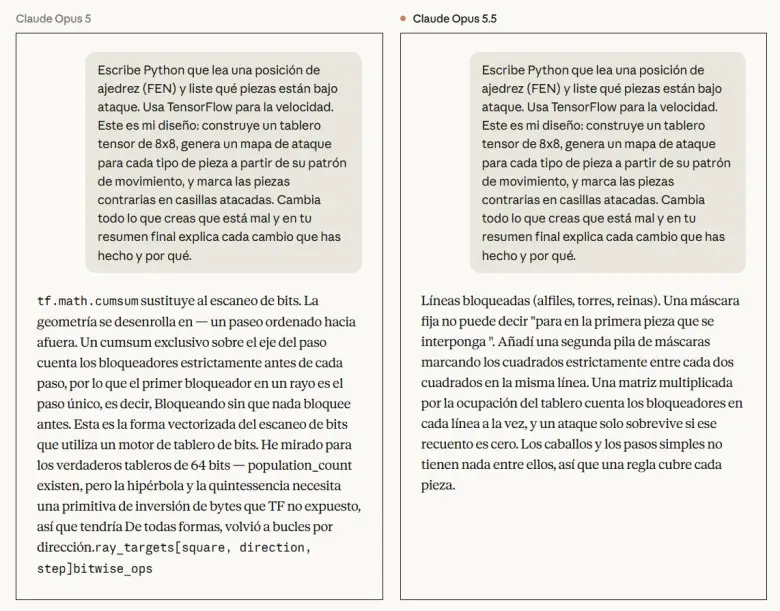
Anthropic’s software engineering trials included a migration of HAProxy, a widely used high-performance load balancer, from C to Rust. The model completed the work in 9.5 hours and used 51% fewer computational resources than the competing model Fable 5.1.
Rust’s memory-safety features are valued by enterprise security teams because they eliminate vulnerabilities common in C. In a separate maintenance test, a developer used Claude Opus 5.5 to audit and patch a 200,000-line codebase in less than three hours.
The previous-generation Claude Opus 5 required more than 20 hours and 2.5 times more processing power to complete the same codebase task. Anthropic also reported that Opus 5.5 carried out a migration involving 680,000 lines of code in under 24 hours, although such work typically requires several weeks of human engineering effort.
In web development testing, the model optimized page load speeds across an application in 39 out of 40 attempts without changing the application’s core functionality. Its corporate analysis performance was tested through a comprehensive quarterly earnings report assembled from difficult-to-locate primary sources.
Claude Opus 5.5 met or exceeded rigorous corporate quality standards in 16 of 18 attempts. Both the original Claude Opus 5 and Fable 5.1 failed to meet the required quality benchmark in every trial attempt.
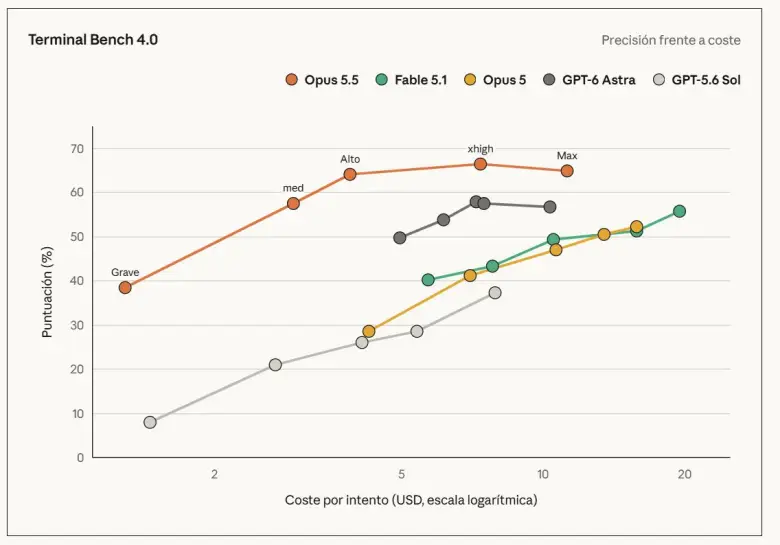
Anthropic says Opus 5.5 requires fewer computational resources than its predecessor, cutting costs by up to 40% for typical business workloads. The fast-execution mode is available through the Claude API and Claude Code.
That mode is priced at $0.20 per million tokens for prompt caching reads, intensifying price competition among top-tier AI developers.










One Comment