Xbox Series X and Series S Prices Rise Mid-Generation: Value Calculation Shifts for Buyers
Both consoles cost more than at launch — here's what that means for your wallet and your TV
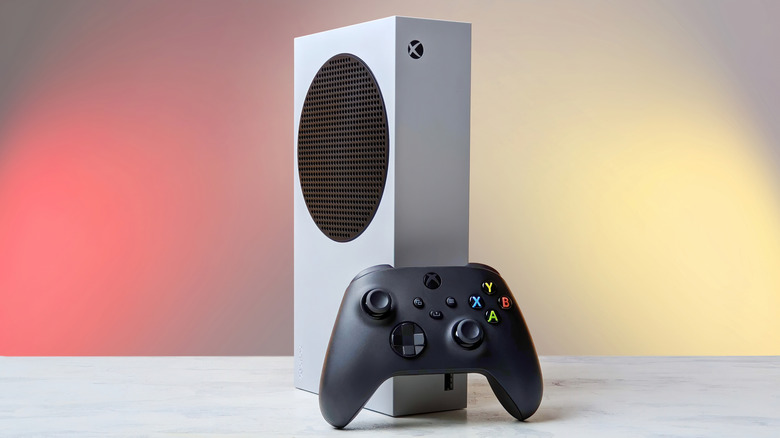
Microsoft’s Xbox Series X and Series S have both grown more expensive since their 2020 launch, complicating the value proposition that once made the Series S the most affordable entry point into current-generation gaming. The Series X now carries a $499 list price — up from its original $399 — while the Series S has climbed from $299 to $349 for the 512 GB model, with the 1 TB variant priced at $449. A disc-less Series X variant exists at $449, narrowing the gap with the larger Series S model to just $50.
The price increases arrive roughly halfway through a console generation that industry analysts expect to stretch into 2028 or beyond. Microsoft has confirmed that alpha hardware for its next-generation platform, codenamed Project Helix, will reach developers in 2027, suggesting a consumer release no earlier than 2028. That timeline means buyers today are investing in hardware with at least three to four years of primary support remaining — but also means they risk purchasing near the end of a cycle rather than the beginning.
The fundamental hardware divide remains unchanged. The Series X targets native 4K resolution with 12 teraflops of GPU performance across 52 compute units, backed by 16 GB of GDDR6 memory split between a 10 GB portion running at 560 GB/s and a 6 GB portion at 336 GB/s. The Series S tops out at 1440p native — with 4K upscaling — delivering 4 teraflops across 20 compute units and 10 GB of memory (8 GB at 224 GB/s, 2 GB at 56 GB/s). Both consoles share the same custom AMD Zen 2 CPU architecture, though the Series X runs at higher clock speeds. Both support 120 frames per second in compatible titles, and both use the same proprietary storage expansion slot, where 1 TB Seagate cards currently retail around $149.


The disc drive remains the most visible differentiator. The Series S is digital-only, locking owners into the Microsoft Store ecosystem and eliminating the used-game market, physical media sales, and backward compatibility with Xbox One, Xbox 360, and original Xbox discs. The Series X includes a 4K UHD Blu-ray drive, preserving those options. For subscribers to Xbox Game Pass Ultimate — currently $19.99 monthly — the digital-only limitation matters less, since the service provides day-one access to first-party titles and a rotating library of hundreds of games. But players who prefer buying discounted physical copies weeks after launch, sharing discs with friends, or reselling completed games will find the Series X’s drive essential.
Storage economics further complicate the comparison. The base Series S ships with 512 GB of usable space — roughly 364 GB after system overhead — which fits perhaps four to six modern AAA titles before requiring an expansion card. The 1 TB Series S at $449 effectively matches the disc-less Series X price while delivering half the GPU performance and a third of the memory bandwidth. The 1 TB Series X at $499 includes the disc drive, double the GPU compute units, and 60 percent more RAM. Expansion cards work identically on both consoles, but the cost-per-gigabyte penalty hits Series S owners sooner and harder.
Physical footprint favors the Series S, which occupies roughly 60 percent less volume than the Series X’s tower design. The smaller console fits easily in cramped entertainment centers and runs quieter under load, though both use similar vapor-chamber cooling architectures. Power draw differs substantially: the Series X peaks around 315 watts versus the Series S at roughly 165 watts, a consideration for players monitoring electricity costs or using uninterruptible power supplies.
Microsoft’s backward compatibility program functions identically on both consoles for digital titles, with FPS Boost and Auto HDR enhancements applied automatically to hundreds of older games. However, the Series X’s superior horsepower allows more titles to hit their performance targets — 4K/60 fps or 120 fps modes — where the Series S may remain locked to 1440p/30 fps or 60 fps with dynamic resolution scaling. Digital Foundry testing across 2023-2024 releases shows the Series S increasingly struggling to maintain stable frame rates in CPU-bound scenarios, a trend likely to accelerate as developers optimize for the Series X/PS5 baseline.
For buyers weighing a purchase today, the decision hinges on three variables: display resolution, game acquisition habits, and tolerance for diminishing returns. On a 1080p or 1440p display, the Series S delivers 90 percent of the experience for 70 percent of the Series X’s price. On a 4K TV, the Series X’s native resolution advantage becomes visible, especially in texture detail and draw distance. Players committed to Game Pass and digital purchases can justify the Series S; those with physical libraries or who hunt disc sales should spend the extra $150. And anyone willing to wait 18-24 months for Project Helix hardware — accepting that its pricing will likely start above $599 — can skip this generation entirely.