

Base PS5 Gets AI Upscaling via QSSR in Wolverine Update
Machine-learning reconstruction arrives on standard hardware, challenging the necessity of dedicated AI accelerators for console gaming.
Sony has quietly erased one of the primary technical justifications for buying a PlayStation 5 Pro. A free update released Thursday for Marvel’s Wolverine and Ghost of Yōtei introduced Quick Spectral Super Resolution (QSSR), bringing machine-learning-based image reconstruction to the standard base console for the first time.
Until now, neural network upscaling was considered hardware-prohibitive on the original 2020 PS5. The console lacks dedicated artificial intelligence accelerators, forcing developers to rely on older spatial or temporal techniques like Temporal Anti-Aliasing (TAA) and AMD FidelityFX Super Resolution (FSR) 3.1. QSSR changes that baseline by running ML inference directly on the console’s RDNA 2 graphics architecture, delivering visibly cleaner frames with minimal impact on overall performance.
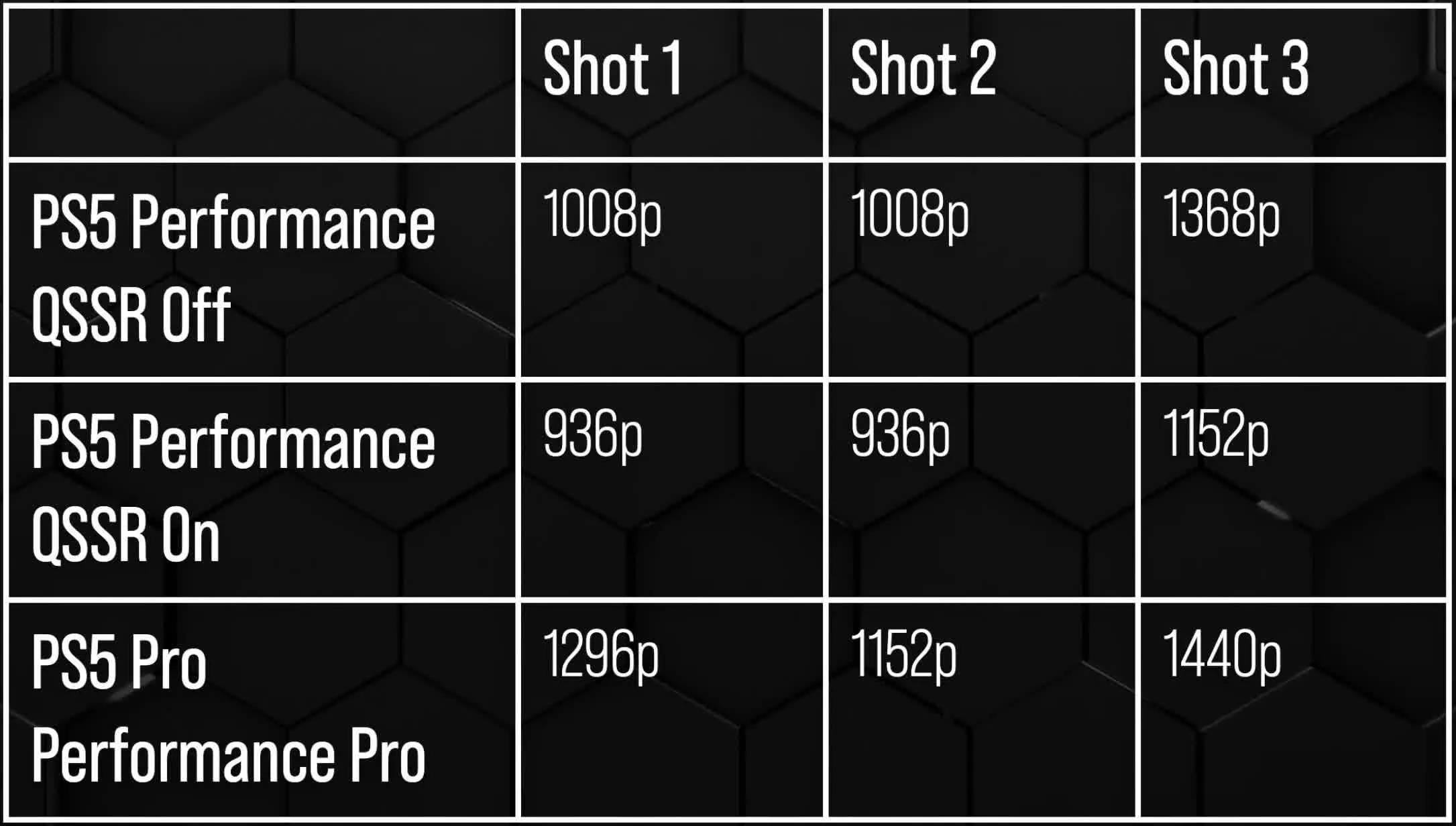
The technical reality of achieving this without dedicated silicon dictates strict operational limits. Digital Foundry’s analysis reveals that QSSR operates using FP16 floating-point math, which is significantly more computationally expensive than the INT8 integer operations handled natively by the PS5 Pro’s custom AI cores. Because of that overhead, QSSR in Marvel’s Wolverine lifts an internal resolution of roughly 936p to a 1440p output. The premium PS5 Pro, utilizing its proprietary PSSR technology and INT8 support, easily scales from 1200p all the way to native 4K.

Despite the lower target resolution, the visual gains over legacy methods are substantial. Side-by-side evaluations show QSSR drastically reduces the shimmering, ghosting, and temporal instability that have plagued base PS5 titles since launch. Even when reconstructing from a sub-1080p source—specifically 936p—the resulting 1440p image surpasses the quality of Insomniac Games’ previous bespoke upscaler, which started from a higher 1080p base.
There is a measurable framerate trade-off. Running QSSR at identical resolutions costs approximately nine frames per second compared to Insomniac’s prior solution in Wolverine. However, because the ML algorithm produces superior results from much lower internal resolutions, developers can drop the rendering resolution to reclaim those lost frames entirely, effectively gaining image clarity without sacrificing fluidity.
For Sony’s broader software library, the integration path appears frictionless. The company indicates that QSSR functions as a near drop-in replacement for any title already patched to support PSSR on the PS5 Pro. Testing with Ghost of Yōtei suggests the computational cost aligns closely with FSR 3.1, meaning studios could swap out their existing non-ML upscalers for QSSR and achieve sharper visuals while maintaining identical performance targets.
This development shifts the competitive dynamics across platforms. PC gamers have relied on Nvidia DLSS and AMD FSR 4 to leverage tensor cores and AI accelerators for years. Recently, community modders successfully ported AMD’s FSR 4 to older Radeon graphics cards, prompting AMD to confirm official RDNA 2 support arriving next year—a move made possible specifically by FSR 4’s efficient INT8 implementation.
Microsoft’s Xbox Series X and Series S share the same underlying RDNA 2 architecture and INT8 math capabilities as the base PS5. While neither Microsoft nor AMD has announced a comparable machine-learning upscaler for current-generation Xbox consoles, the successful deployment of QSSR proves the hardware ceiling for AI reconstruction on that silicon is far higher than previously assumed.
Marvel’s Wolverine and Ghost of Yōtei updates containing QSSR support are available now for all PS5 owners.









