iPhone Duo Pre-Orders Open at 5 AM PT: What to Expect
The $2,000 foldable drops Face ID and variable aperture but introduces a nearly seamless 7.6-inch inner OLED display.
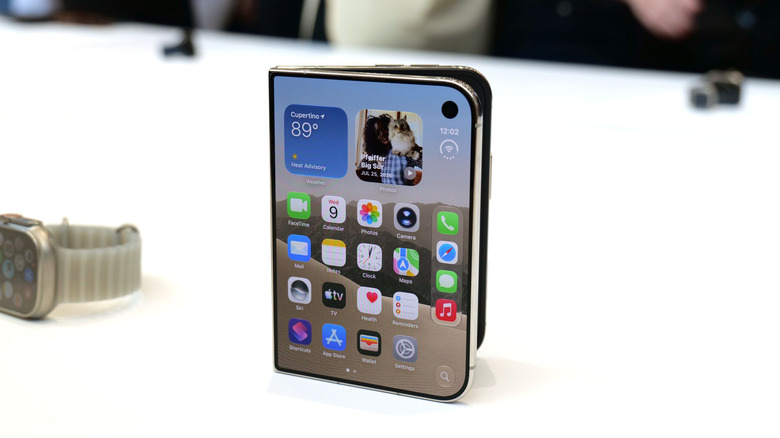
Apple’s first foldable smartphone, the iPhone Duo, opens for pre-orders Friday at 5 a.m. Pacific time, entering a market that competitors have dominated for seven years. The device carries a $2,000 starting price and ships October 23.
Buyers attempting to secure units during the initial window face tight availability. Apple briefly replaced its online storefront with a countdown page ahead of the launch, a standard procedure the company reserves for products it expects to generate immediate heavy traffic. Historical precedent with high-tier iPhone launches suggests initial allocations will clear within minutes rather than hours.
The hardware centers on two OLED panels: a 5.4-inch outer display for standard phone operation and a 7.6-inch inner matte widescreen that activates when unfolded. Apple engineered the interior panel to minimize the visible crease that has plagued folding devices since Samsung introduced the original Galaxy Fold in 2019. Depth-of-field rendering and gradient effects mask the hinge area, producing a near-seamless viewing surface that functions closer to a compact iPad than a traditional smartphone.


That form factor comes with specific engineering trade-offs absent from Apple’s conventional lineup. The iPhone Duo lacks Face ID entirely. Fitting the TrueDepth camera array required for facial recognition into a folding chassis proved unfeasible without compromising the thinness necessary for the hinge mechanism. Users will rely on alternative authentication methods, likely a side-mounted Touch ID sensor integrated into the power button, mirroring the approach Apple used on the iPad Air before transitioning those tablets to Face ID.
Photography hardware also diverges from the recently released iPhone 18 Pro models. The Duo omits the variable aperture system featured on Apple’s premium slab phones, relying instead on a fixed-lens configuration optimized for the thinner internal dimensions of a folding body. The front-facing FaceTime camera sits beneath the inner display to preserve an uninterrupted screen. Under-display selfie cameras historically suffer from light diffusion through the pixel layer, resulting in softer image quality compared to traditional punch-hole sensors — a compromise manufacturers like Samsung and ZTE have navigated in earlier foldable and experimental devices.
At $2,000, the iPhone Duo occupies a pricing tier well above the standard iPhone 18 lineup and matches the upper echelon of current foldable competitors. Samsung’s Galaxy Z Fold series and devices from Chinese manufacturers such as Huawei and Honor have steadily pushed foldable prices downward while improving durability, making Apple’s entry notably expensive even by category standards. The premium reflects both the novelty of Apple’s first mechanical hinge design and the low initial manufacturing yields typical of new form factors.
Apple enters the foldable segment significantly later than rivals. Samsung has iterated through six generations of its Galaxy Z Fold line since 2019, refining hinge durability and software multitasking along the way. Motorola, Google, OnePlus, and Xiaomi have all shipped competing book-style foldables. Apple’s delayed entry allowed the company to observe persistent consumer complaints about fragility and creasing, engineering solutions specifically targeting those pain points rather than rushing to market.
Prospective buyers should access Apple’s order portal immediately when pre-orders activate. Those who miss the initial allocation window face a likely wait extending several weeks beyond the October 23 retail launch date.