

WiCi One Wireless eGPU: Does Wi-Fi 7 Finally Kill the Thunderbolt Bottleneck?
How WiCi Uses Wi-Fi 7 to Replace Thunderbolt Cables for Desktop-Class Gaming and AI Workloads
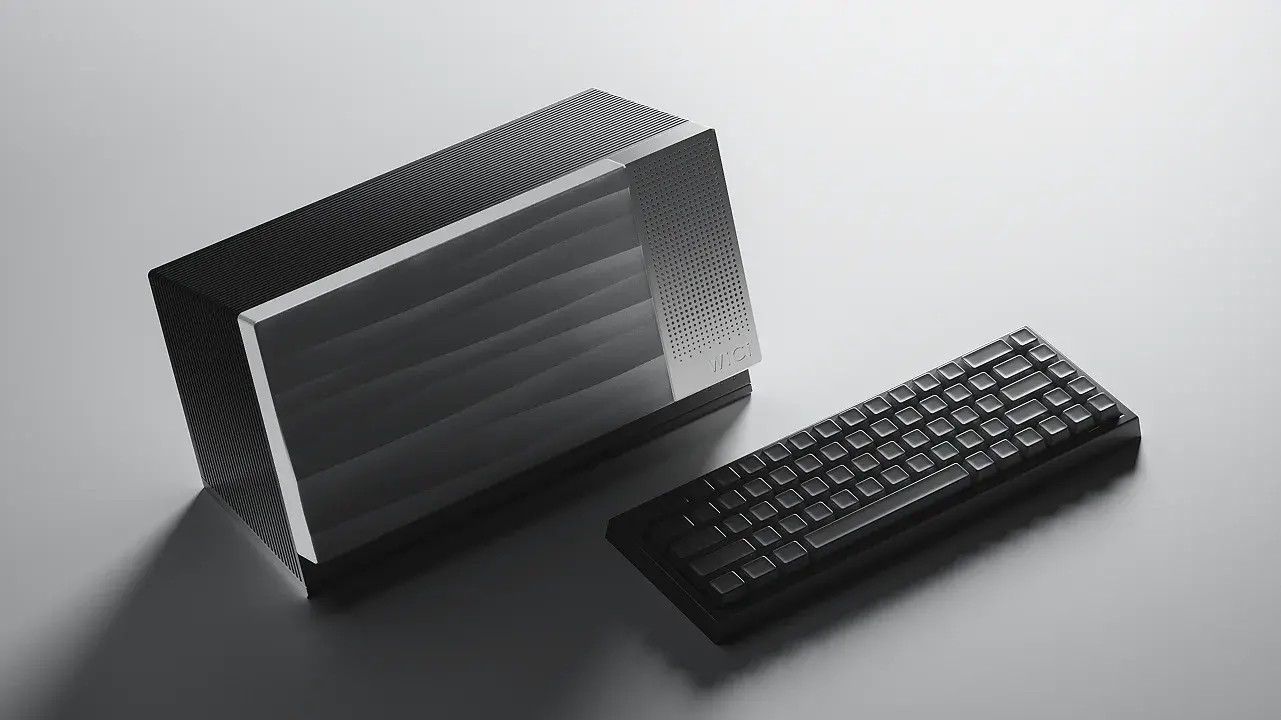
The physical tether has long been the defining constraint of external graphics processing. For years, achieving desktop-grade GPU performance on a slim laptop or tablet required sacrificing portability for bandwidth, forcing users to rely on rigid cables like Thunderbolt 5, USB4, or OCuLink. These connections were non-negotiable because PCIe lanes cannot simply be compressed into standard wireless protocols without catastrophic latency and throughput loss. That paradigm is now under direct assault by WiCi, a startup backed by Nvidia’s Inception Program, which claims to have solved the bandwidth problem using Wi-Fi 7 infrastructure.
WiCi’s approach diverges sharply from previous attempts at wireless computing. Rather than streaming video frames back to the client—a method plagued by input lag and compression artifacts—the company transmits raw GPU instructions over the local network. This distinction is critical. It allows the host device, whether it be a MacBook Air, an Android phone, or a Windows ultrabook, to act merely as a thin client for compute-intensive tasks while offloading the heavy lifting to a centralized box. The result is a system that supports native execution of demanding software without modification, including Unreal Engine, Blender, Ollama, and Hugging Face models.
The hardware itself, dubbed the WiCi One, is scheduled for release in Q4 2026. Early access pricing begins at $2,000 for the base model featuring an Nvidia RTX 5060 Ti, with a suggested retail price of $2,600. A higher-tier variant equipped with the flagship RTX 5090 will follow, though its final cost remains undisclosed until closer to launch. By eliminating the need for proprietary high-speed ports, WiCi effectively decouples GPU power from device form factor. Users no longer need to buy a new laptop every time they want better graphics; they upgrade the central node instead.


Benchmark data provided by WiCi suggests that the latency penalty of Wi-Fi 7 is negligible for practical applications. On the RTX 5060 Ti configuration, Cyberpunk 2077 runs at approximately 80 fps and Black Myth: Wukong hits 60 fps at 4K resolution with ultra settings enabled via DLSS. The RTX 5090 model pushes these numbers further, delivering 110 fps in Cyberpunk and 90 fps in Wukong. Crucially, these figures are achieved wirelessly, meaning the visual fidelity matches that of a wired connection without the cable clutter.
For AI developers and content creators, the implications extend beyond gaming frame rates. Large language model inference speeds vary significantly between tiers. The 5060 Ti edition processes DeepSeek V4 Flash at 8 tokens per second and Gemma 4 at 140 tokens per second. The 5090 variant nearly doubles this capacity, reaching 20 tokens per second for DeepSeek and exceeding 500 tokens per second for Gemma. Video editing workflows benefit similarly, with CapCut exporting 4K footage at 75 fps on the lower tier and 90 fps on the upper tier. Adobe Premiere Pro outputs 4K H.264 files at 70 and 90 fps respectively.
This technology addresses a persistent gap in the mobile market where thermal constraints limit sustained GPU performance. Traditional laptops throttle after minutes of heavy load due to heat buildup. An external unit placed on a desk can maintain peak clocks indefinitely, cooling efficiently away from the user’s lap. Furthermore, the multi-device capability means a single WiCi One can serve multiple endpoints simultaneously, sharing compute resources across a household or small office network. While competitors focus on faster wires, WiCi bets entirely on the sufficiency of next-generation wireless standards to carry uncompressed computational loads.









