

Steam Revenue on Track to Hit $20B in 2026 After Record Q3
Record Q3 earnings and diversified monetization strategies position Valve for historic annual milestone
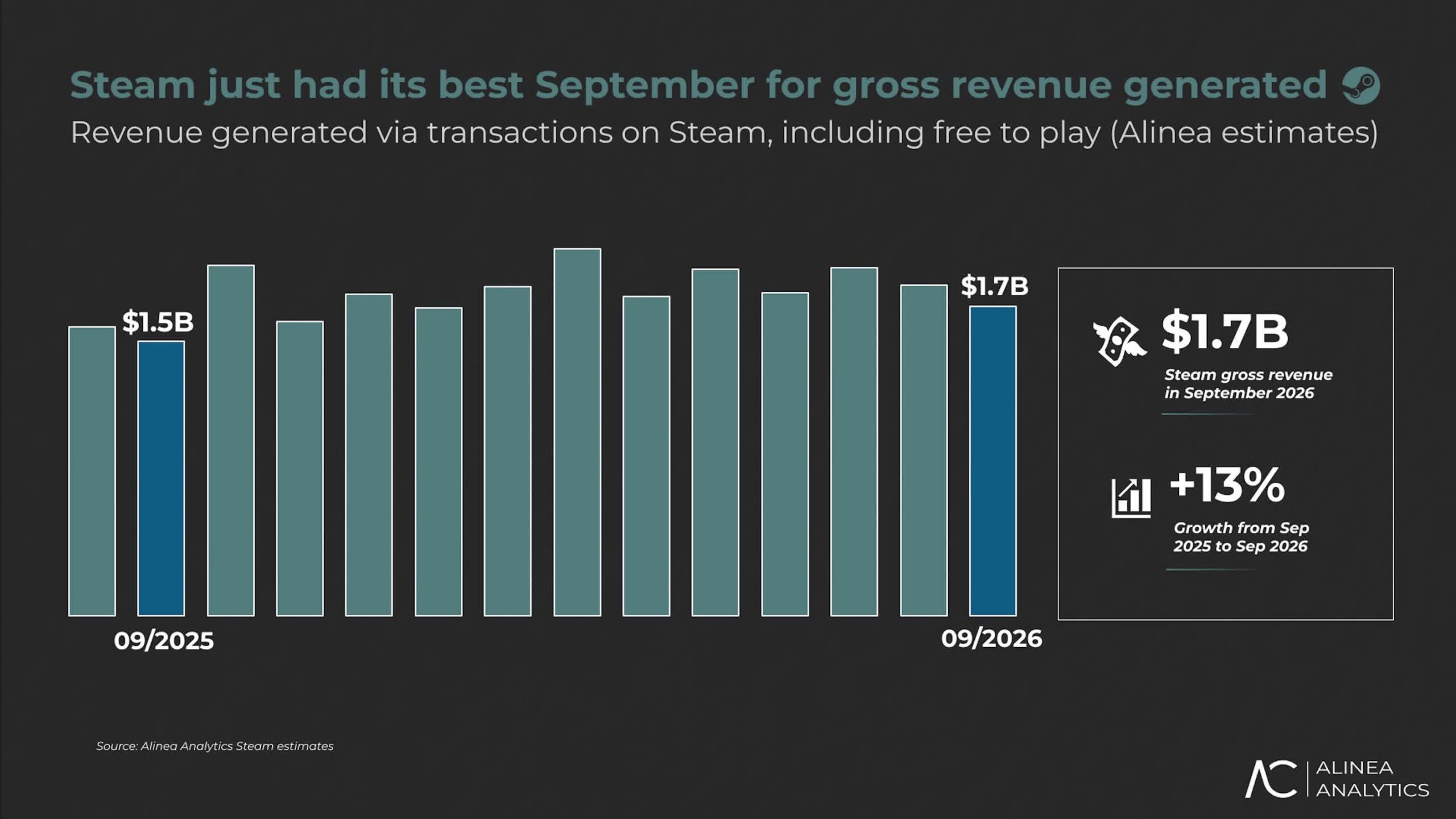
Valve’s Steam platform is poised to surpass $20 billion in gross revenue for the first time in 2026, driven by a diversified ecosystem that no longer relies on seasonal blockbuster launches alone. Estimates from Alinea Analytics indicate the marketplace generated $5.5 billion in the third quarter, a 12% year-over-year increase that places the annual milestone within reach pending a typical holiday sales period.
The platform needs approximately $3.5 billion in fourth-quarter gross revenue to cross the threshold. Given that Q4 historically accounts for 25% to 30% of annual PC gaming spend due to Black Friday discounts and winter promotions, the current trajectory suggests the record is highly probable barring an unprecedented market contraction.
September served as a critical stress test for this new revenue model, delivering an estimated $1.7 billion in gross sales. This figure represents a 13% increase over the previous September record set in 2025 and highlights a structural shift in how value is captured on PC. Unlike previous eras defined by unit sales of premium titles, current growth stems from three distinct pillars: new premium releases, legacy franchise engagement, and free-to-play microtransactions.


Free-to-play ecosystems have evolved into foundational revenue infrastructure rather than mere loss leaders. Counter-Strike 2, Dota 2, Apex Legends, and PUBG collectively generated nearly $168 million in September, accounting for roughly 10% of monthly gross revenue. These titles monetize through cosmetic items, battle passes, and digital assets, converting high concurrent user counts into recurring income streams independent of new content releases. This recurring revenue base provides Valve with significant downside protection during months lacking major AAA launches.
New intellectual property is simultaneously capturing market share without cannibalizing established brands. Titles released in 2026 accounted for 33.6% of revenue among the top 500 grossing games in September, with original IP comprising 20.5% of that segment. However, established franchises still dominate, representing nearly 80% of top-tier revenue when including remakes, remasters, and sequels. The data indicates a healthy coexistence where recognizable brands provide stability while new entries drive incremental growth.
The Early Access model has matured into a primary commercialization strategy for multiplayer titles. PvP shooter Wardogs exemplifies this trend, generating an estimated $86.9 million in just three weeks following its September 10 Early Access launch. By allowing developers to monetize pre-release versions, Early Access transforms development cycles into active revenue periods and builds community engagement before full release. This approach reduces financial risk for studios and creates immediate cash flow that contributes to platform-wide totals.
Premium single-player experiences continue to deliver substantial returns alongside live-service models. Onimusha: Way of the Sword earned $30.4 million in September, while The Blood of Dawnwalker added $26.9 million. Even console-centric franchises like EA Sports FC 27 contributed $20.7 million from PC sales alone, demonstrating Steam’s ability to capture secondary platform spending from multiplatform releases.
Through the first nine months of 2026, Steam has accumulated an estimated $16.5 billion in gross revenue, up from $14.5 billion during the same period in 2025. This $2 billion year-over-year gain reflects sustained expansion across all major monetization categories rather than dependence on any single title or genre.









