

NASA Advances Solid-State Batteries for Artemis Moon Missions, Targeting -328°F Lunar Nights
Ceramic and polymer electrolytes survive lunar thermal extremes that destroy conventional lithium-ion cells
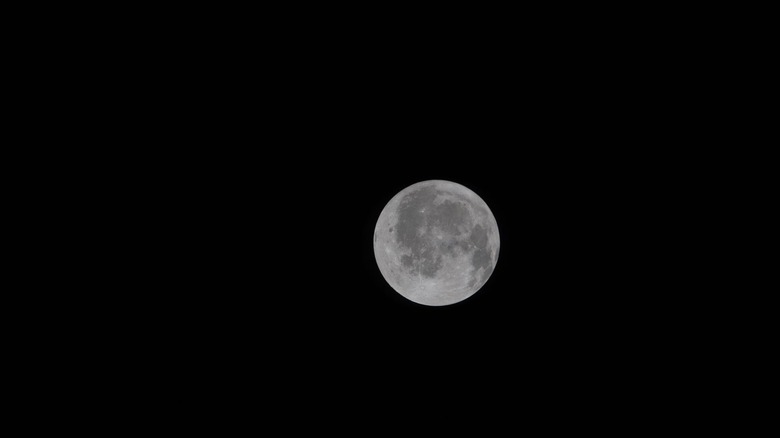
NASA is moving closer to flight-qualifying solid-state battery technology capable of surviving the brutal thermal swings of the lunar south pole, where temperatures plummet to minus 328 degrees Fahrenheit during the two-week lunar night. The agency’s SPEARS program — Solid Power for Extreme Environment Adaptability and Resilience in Space — has demonstrated that ceramic and polymer electrolyte cells avoid the catastrophic freeze damage that destroys conventional lithium-ion batteries, potentially solving the most persistent power challenge for sustained Artemis operations.
Conventional lithium-ion cells rely on liquid electrolytes that crystallize below roughly minus 4 degrees Fahrenheit, causing irreversible internal shorting and capacity loss. At the lunar south pole — the target for Artemis III and subsequent crewed landings — nighttime temperatures reach minus 328°F (minus 200°C), while equatorial regions still drop to minus 208°F. Daytime highs hit 212°F (100°C). No liquid-electrolyte chemistry survives that range without heavy, power-hungry thermal management.
SPEARS cells replace the liquid with either a sulfide-based ceramic or a polymer matrix that remains structurally stable across the full lunar thermal envelope. Testing at NASA’s Glenn Research Center in Cleveland and the Jet Propulsion Laboratory in Pasadena has shown the prototypes retain more than 80 percent of rated capacity after 100 thermal cycles between minus 328°F and 140°F. Crucially, the cells require only minimal “wake-up” heating — roughly 5 to 10 watts per kilogram — to initiate ionic conduction at cryogenic temperatures, compared with the 50 to 100 watts per kilogram needed to keep liquid-electrolyte packs above freezing throughout the lunar night.


That thermal-management savings translates directly to payload mass. Every watt of heater power avoided reduces the solar array and battery capacity required to survive the 354-hour darkness period. For a notional 10-kilowatt surface habitat, switching to SPEARS-class cells could shave 150 to 200 kilograms of battery and radiator mass — margin that can be redirected to science instruments or life-support consumables.
The program builds on a decade of terrestrial solid-state development by companies including QuantumScape, Solid Power, and Toyota, but spaceflight imposes additional constraints: radiation hardness, outgassing limits, vibration survival, and the need to operate after years of dormancy during transit. NASA’s approach uses a lithium-metal anode paired with a garnet-type ceramic separator (Li7La3Zr2O12 doped with tantalum) that suppresses dendrite growth even at high current densities. A parallel polymer-electrolyte track uses a polyethylene oxide matrix with ceramic filler particles to boost mechanical modulus.
Both chemistries eliminate the flammable carbonate solvents that make thermal runaway a persistent risk in crewed vehicles. The International Space Station’s current lithium-ion ORUs (Orbital Replacement Units) incorporate extensive fire-containment enclosures; solid-state cells could simplify that architecture.
SPEARS remains at Technology Readiness Level 5 — component validation in relevant environment — with a target of TRL 6 (system demonstration in space) by 2027 via a hosted payload on a Commercial Lunar Payload Services lander. If successful, the cells would be baselined for the Artemis Base Camp power architecture, which envisions 40-kilowatt fission surface power supplemented by solar arrays and battery storage for peak shaving and eclipse ride-through.
Beyond the Moon, the same platform is being evaluated for Mars sample-return fetch rovers, where nighttime temperatures reach minus 130°F and dust storms can block sunlight for weeks. JPL engineers note that the low self-discharge rate of solid-state cells — less than 0.5 percent per month at minus 40°F — makes them uniquely suited for multi-year dormant periods.
Terrestrial spin-offs are already emerging. Solid Power, a Colorado-based SPEARS partner, has licensed the ceramic-electrolyte formulation for automotive cells targeting 2028 production vehicles, promising 50 percent higher energy density and 15-minute fast-charge capability without the degradation seen in liquid-electrolyte fast-charging.









