

Colossal Biosciences Launches AI Platform to Accelerate Dodo De-Extinction
Platform identifies 2,300 gene edits; new delivery system tests changes in embryos without waiting for sexual maturity
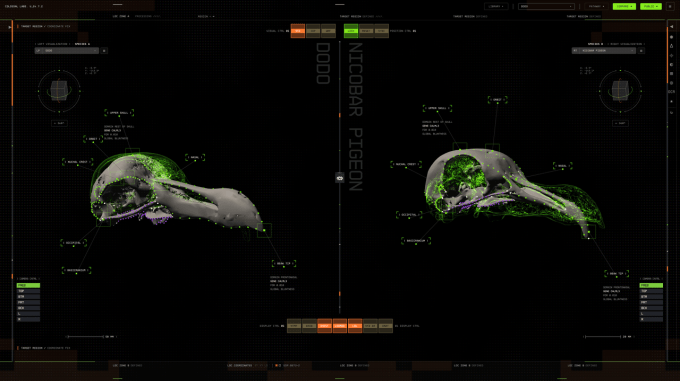
Colossal Biosciences unveiled a new artificial intelligence platform Wednesday designed to overcome one of the most persistent bottlenecks in de-extinction science: identifying which genetic changes actually matter when working from severely limited ancient DNA.
The platform, named GenoMorph, combines 3D morphological analysis, comparative genomics, and developmental biology to predict which genetic switches control physical traits in extinct species. The Dallas-based company is deploying it first on the dodo bird, a species for which researchers have only a single complete genome — compared to roughly 100 genomes available for the woolly mammoth, Colossal’s flagship project.
The disparity stems from preservation conditions. Mammoth remains frozen in Arctic permafrost yield relatively intact DNA, while the dodo’s tropical habitat on Mauritius accelerated genetic degradation. The flightless bird went extinct in the late 17th century, roughly 4,000 years after the last mammoths disappeared from Wrangel Island.


“Normally, scientists can compare many genomes to understand which genetic differences are responsible for certain traits,” said Ben Lamm, Colossal’s CEO and co-founder. “We don’t have that luxury with ancient DNA from extinct species whose DNA is severely limited.”
To compensate, Colossal spent more than a year building a training dataset from living birds. The company collected developmental data from chickens, quail, ducks, and pigeons, then layered in genetic sequences and 3D skull measurements from more than 70 avian species. The AI learned which DNA regions activate during beak and facial development across modern birds, then extrapolated which regulatory elements likely produced the dodo’s distinctive hooked beak and robust cranium.
The system flagged approximately 2,300 candidate editing targets for dodo cranial-facial morphology. But identification is only half the challenge. Birds lack the reproductive biology that makes mammalian cloning feasible — there is no avian equivalent of somatic cell nuclear transfer, the technique that produced Dolly the sheep. Instead, researchers must edit primordial germ cells (PGCs), the precursors to sperm and eggs, then inject them into developing embryos to establish a germline that transmits edits to offspring.
Colossal announced parallel progress on that front. Its colony of Nicobar pigeons — the dodo’s closest living relative — has grown to 36 birds, and the team has successfully derived and cultured PGCs from them. The company also developed a lipid nanoparticle delivery system to introduce gene-editing tools directly into developing bird embryos, bypassing the need to wait for birds to reach sexual maturity to test edits. Lipid nanoparticles, the same delivery vehicle used in mRNA COVID-19 vaccines, allow transient expression of editing machinery without integrating into the host genome.
“Identifying a potential edit doesn’t mean we immediately introduce it into an animal or assume it’s safe,” Lamm said. “The more precisely we can identify and validate these changes, the more informed our decisions become throughout the process.”
The announcement drew a vote of confidence from Peter Diamandis, founder of the XPRIZE Foundation and a Colossal investor. Diamandis revealed Wednesday he has launched NeoGenesis Capital, a venture firm backing companies that apply Colossal’s programmable biology platform across human health, agriculture, and conservation. The move signals growing commercial conviction that de-extinction tooling — multiplex genome editing, computational phenotype prediction, avian germline engineering — has applications far beyond resurrecting lost species.









