

Nike Turns to LVMH Heir Alexandre Arnault for Its Comeback
Alexandre Arnault joins Nike as the sportswear giant fights falling sales and lost cultural influence
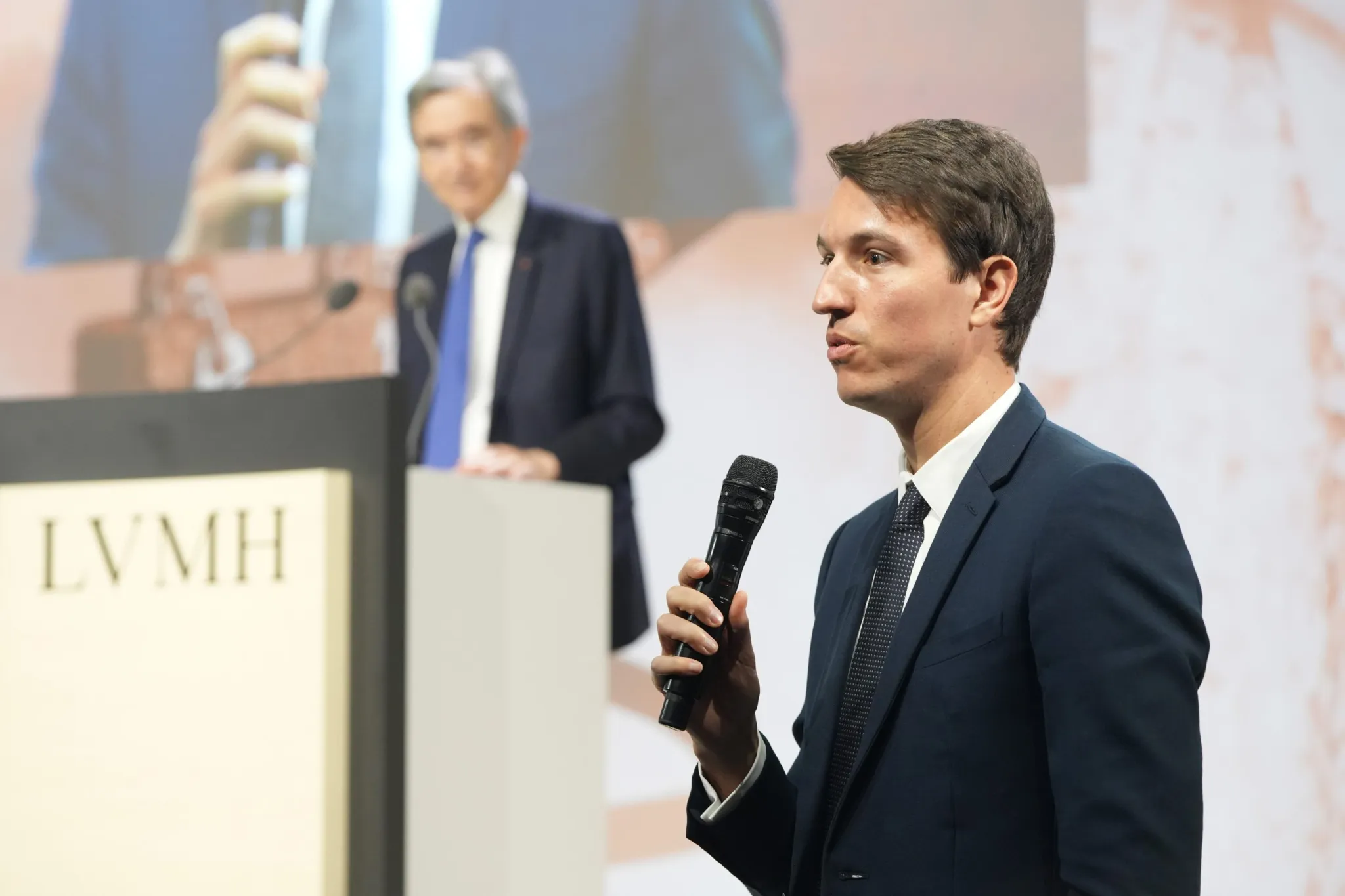
BEAVERTON, Ore. — Nike Inc. has appointed Alexandre Arnault, a senior executive and heir to the LVMH Moët Hennessy Louis Vuitton luxury empire, to its board of directors. The appointment is effective immediately, as the Oregon-based sportswear giant works to recover lost market share, restore wholesale partnerships and regain its cultural cachet.
At 34, Arnault is one of the five children of LVMH Chairman and CEO Bernard Arnault, the world’s most powerful luxury magnate. He recently transitioned to helping run LVMH’s wines and spirits division, which posted 5% organic revenue growth in the first half of the year. Chiara Battistini of JPMorgan described the result as “a nice surprise” compared with prior bank forecasts.
Nike’s fourth-quarter revenue fell 1% to $11 billion. Nike Direct, the direct-to-consumer arm once billed as the future of the company, fell 7%; digital sales dropped 12%, and sales at Nike-owned physical retail locations declined by 7%. Although Nike recorded modest growth in North America, sales in Greater China have declined for eight consecutive quarters as domestic competitors such as Anta Sports and Li-Ning capture local market share.


The company’s market capitalization has plummeted by approximately $200 billion since its peak in late 2021, pushing Nike out of the ranks of America’s 100 largest blue-chip companies. Much of the decline has been attributed to a direct-to-consumer strategy championed by former CEO John Donahoe, who stepped down in October 2024.
Under Donahoe, Nike aggressively pulled back from long-standing wholesale relationships with major retailers such as Foot Locker to prioritize its own digital sales and brick-and-mortar stores. The strategy alienated key retail partners, while digital sales proved less profitable than projected and left Nike vulnerable to rising competition.
Nike brought 32-year company veteran Elliott Hill out of retirement to assume the CEO role. Hill has tasked his executive team with repairing fractured wholesale relationships and refocusing capital on product innovation for everyday and elite athletes. In announcing Arnault’s appointment, Hill said, “Alexandre understands how some of the world’s most influential brands stay relevant, deepen consumer connections and drive long-term growth. His experience across innovation, digital transformation and brand building will be an asset.”
Arnault’s background includes a period as CEO of German luggage-maker Rimowa, which LVMH acquired in 2016. He revitalized the brand’s identity through high-profile collaborations with streetwear brands such as Supreme and Off-White. At Tiffany & Co., where he served as executive vice president of product and communications, he brokered a significant partnership between Nike and Tiffany & Co. in 2023.
LVMH acquired Tiffany & Co. in January 2021 for $15.8 billion. Arnault later spearheaded Tiffany’s “About Love” marketing campaign, featuring Beyoncé and Jay-Z alongside a rare Jean-Michel Basquiat painting, pushing the historic 19th-century jeweler deeper into modern pop culture.
For Nike, adding Arnault represents an effort to bring luxury-sector brand management and cultural relevance into its recovery plans. Over the past decade, the boundaries between athletic apparel and high-end luxury have largely dissolved, accelerated by landmark collaborations including the 2020 Dior x Air Jordan 1 collection and the 2022 Louis Vuitton x Nike Air Force 1 collection designed by the late Virgil Abloh.
Nike’s primary challenge is reclaiming its position as an arbiter of popular culture. The brand historically transformed elite athletic gear into coveted lifestyle fashion, but newer competitors have captured consumer attention. On Holding AG, Hoka, which is owned by Deckers Outdoor Corp., and New Balance have gained ground in technical running and lifestyle footwear, while Nike has struggled to produce a new breakout product line.
Arnault wrote on LinkedIn that he has “been a fan of Nike” for its sports, performance, creativity and innovation. “As a lifelong sports enthusiast and runner, these values resonate deeply with me,” he wrote. “Nike has been part of countless kilometres, races and personal goals over the years, which makes the opportunity to contribute to its next chapter especially meaningful.”
The board seat also gives Alexandre Arnault external governance experience as the Arnault family navigates a highly scrutinized, long-term succession process. His 77-year-old father has positioned his five children in key leadership roles across the LVMH conglomerate, which the family controls through a 50.2% shareholding and 66.4% of the voting rights.
All five children currently manage different arms of the luxury empire, and four sit on LVMH’s board of directors. Delphine Arnault serves as CEO of Christian Dior; Antoine Arnault heads image and communications for the group; Frédéric Arnault is the CEO of LVMH Watches; and Jean Arnault directs watchmaking at Louis Vuitton.
French newspaper Le Monde has previously reported on potential internal friction over who will eventually succeed the elder Arnault, although Bernard Arnault has publicly dismissed reports of a family dispute. “From Arnault’s perspective, getting experience on Nike’s board could help with his future at LVMH,” said David Swartz, a senior equity analyst for Morningstar.
The appointment comes during a broader period of market stabilization for LVMH, which has faced a post-pandemic slowdown in luxury demand. Its flagship Fashion & Leather Goods division, home to Louis Vuitton and Dior, recently posted a 1% organic revenue decline year-over-year and a 7% drop in profits. Analysts including Battistini have questioned whether high-end leather goods are experiencing fatigue after years of aggressive price increases and booming demand.
Whether the marketing and branding tactics Arnault used at Rimowa and Tiffany & Co. can be replicated at a mass-market athletic company like Nike remains to be seen. Analysts view his addition as a calculated move to secure outside expertise.
“Given Nike’s problems, it needs all the help it can get at this point,” Swartz said. “My presumption is that Nike will only make a move like this if it has some tangible benefit. It’s not like Nike needed more board members.”










One Comment