Tails 7.6 Released with Automated Tor Bridges, GNOME Secrets, and Critical Kernel Fixes
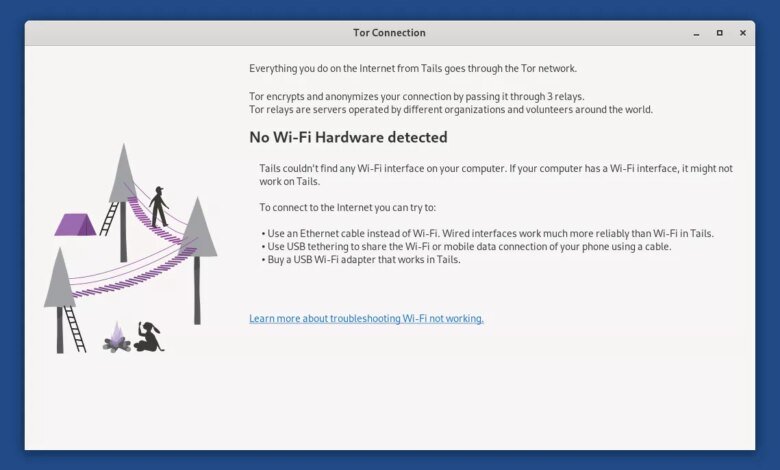
Privacy-focused live operating system Tails has deployed version 7.6, introducing an automated mechanism for bypassing network censorship alongside key updates to its default desktop utilities and underlying system security.
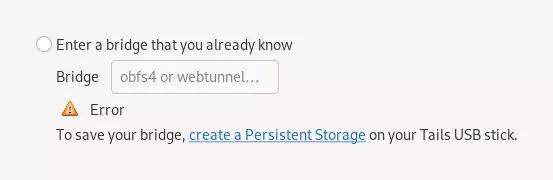
The updated distribution enhances the connection workflow for users operating under restrictive internet environments. Through an addition to the built-in connection assistant, the system can automatically request region-specific Tor bridges via the Tor Project Moat API. To prevent state censorship firewalls from intercepting these initial setup queries, the software employs domain fronting, disguising traffic to the bridge lookup server as standard requests to unrelated commercial web services.
Tor bridges function as unlisted entry points into the anonymizing network, preventing internet service providers and state apparatuses from recognizing that a device is attempting to establish a private connection through the Tor network.
Alongside networking improvements, Tails 7.6 updates several key application defaults. GNOME Secrets has replaced KeePassXC as the native password manager. The new application integrates with desktop accessibility features—such as screen keyboards and adjustable cursor sizing—while natively supporting the encrypted database format used by KeePassXC to allow seamless database unlocking.
Media playback has also seen an overhaul. GNOME Videos has been swapped out for Celluloid, a modern media player configured without network access permissions. Restricting local media utilities from accessing network interfaces prevents malicious media files from initiating out-of-band network calls that could expose a user’s real internet protocol address.
The release includes critical security updates to address potential privilege escalation vectors. Upgrades to Linux kernel 6.12.69 resolve security vulnerability advisory DSA 6126-1, which could theoretically allow an attacker who has already exploited an application sandbox to gain administrative root permissions and deanonymize the user session. The update also integrates OpenSSL 3.5.4 to address potential vulnerabilities outlined in DSA 6113-1.
System shutdown handling now aligns with standard GNOME desktop behavior, displaying interactive prompts if active applications require file saves before powering down. If unconfirmed, the system executes an automatic shutdown after 60 seconds. An immediate emergency power-off mechanism remains active for immediate wipe scenarios.
Built upon the Debian Linux distribution, Tails operates as a live environment entirely from computer RAM rather than hard drive storage. When powered down, volatile memory is flushed automatically, leaving no digital footprint on the host hardware. Recent architectural updates since version 7.0 have raised the system memory requirement to 3 GB of RAM, while utilizing zstd compression algorithms to accelerate operating system boot times by up to 15 seconds compared to earlier releases.
Additional components updated in this maintainer cycle include Tor Browser to version 15.0.19, Thunderbird to 140.7.1, and various underlying hardware firmware packages to broaden support for newer wireless interfaces and graphics hardware.