OpenAI Debuts $230 Micro Keypad in Hardware Expansion Amid Legal Pushback
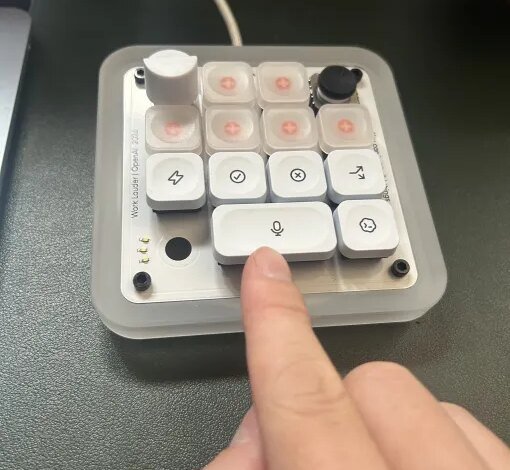
Artificial intelligence pioneer OpenAI has officially launched its first physical consumer hardware product, releasing a niche $230 desktop accessory designed to streamline interactions with its flagship conversational models and coding tools. Developed in partnership with boutique keyboard designer Work Louder, the device, dubbed “Micro,” functions as a dedicated macro keypad built specifically to navigate ChatGPT and the company’s autonomous coding environment, Codex.
The physical hardware release comes at a turbulent juncture for the San Francisco-based AI firm. OpenAI is currently navigating a high-profile legal dispute with Apple, which recently filed a lawsuit accusing the AI lab of trade secret theft. Despite the pending litigation, OpenAI continues to recruit hardware talent, with former Apple engineers reportedly heading a separate internal project to create a ChatGPT-powered smart home ecosystem. In recent years, major software platforms have increasingly sought to integrate dedicated silicon and custom peripherals to lock users into their service ecosystems, a strategy pioneered by legacy consumer tech giants.
Constructed with a heavy chassis encased in minimalist white packaging, Micro offers dual connectivity options through Bluetooth or USB cable. The top row features six frosted “agent” keys designed to trigger specific automated workflows within ChatGPT, while six lower command buttons allow users to manage execution parameters. A dedicated voice dictation key lets users press and hold to speak prompts directly to the system before submitting requests with an adjacent send key.
To manage the peripheral, OpenAI built a dedicated configuration panel directly into the ChatGPT web and desktop interface. Through this menu, users can adjust key backlighting brightness, remap commands, and tie individual hardware buttons to distinct project threads. The keycaps utilize a four-color visual status indicator system: white signals an idle state, blue denotes active processing, green confirms task completion, and red alerts users to an execution error.
Despite targeting software developers and power users, the peripheral has faced skepticism across technical communities. In developer forums on Reddit, programmers have questioned the necessity of dedicated hardware for software shortcuts, with some critics labeling the device an overpriced novelty. Independent technology publication Aftermath similarly criticized the $230 price point, arguing that existing custom mechanical macro pads and open-source hotkey controllers offer superior flexibility at a fraction of the cost.
Programmable auxiliary keypads—often called macropads—have long held a dedicated following among software engineers, video editors, and digital artists who rely on customized physical inputs to speed up complex digital workflows. However, for casual users, mastering Micro’s color codes and key mapping requires a noticeable adjustment period compared to standard keyboard and mouse navigation, making the device primarily appealing to deeply committed power users.