Iran Directs Houthi Forces to Target Red Sea Shipping Lanes Amid Escalating Regional Tensions
Tehran leverages Houthi proxies to target the Bab el-Mandeb Strait, risking a global energy crisis and military escalation.

Tehran has instructed Houthi forces in Yemen to prepare for the closure of the Bab el-Mandeb Strait, a critical maritime choke point, should the United States launch strikes against Iranian power infrastructure. The directive, reported by Reuters and confirmed by multiple regional sources, signals a significant escalation in the use of proxy forces to exert pressure on global energy markets and international security.
The Bab el-Mandeb, a narrow passage connecting the Gulf of Aden to the Red Sea and the Suez Canal beyond, is vital for global trade. It currently facilitates approximately 7% of the world’s energy supplies. The threat comes as Iran has already disrupted traffic through the Strait of Hormuz, which historically handles roughly one-fifth of global energy supplies. The resulting uncertainty in these vital waterways has already been felt in the markets, contributing to a 2% drop in crude oil prices as traders weigh the risks of supply chain volatility.
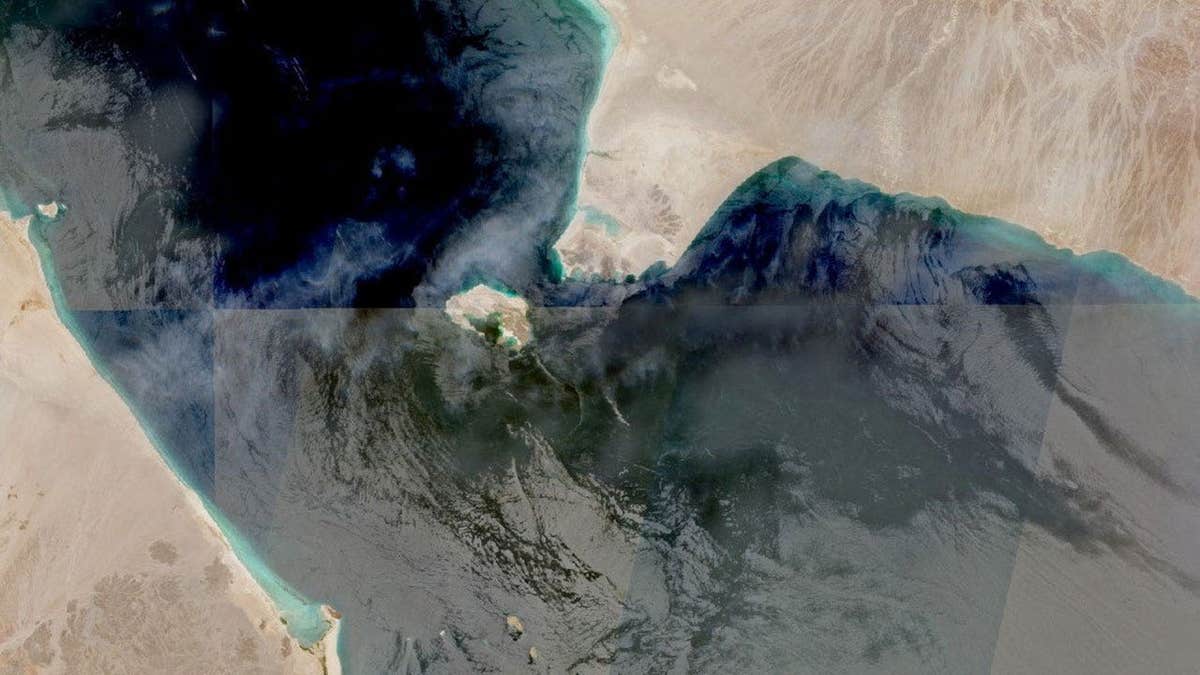
A satellite imagery shows Bab el Mandeb Strait, a key shipping waterway and the gateway to the Red Sea, in this handout picture dated July 12, 2026. (Nasa Worldview/Handout via Reuters)
Strategic Leverage and Proxy Coordination
According to three sources familiar with the discussions, Iranian leadership recently conveyed the request to the Houthi movement, formally known as Ansar Allah. A source close to the group indicated that missiles and drones have already been deployed near the waterway, with forces awaiting orders to commence attacks on commercial shipping.
“This threat should be taken seriously,” said Nadwa Al-Dawsari, a non-resident scholar at the Middle East Institute. She noted that Tehran has signaled the Bab el-Mandeb could become a central theater in its response to U.S. military pressure. Al-Dawsari emphasized that such strategic decisions are likely managed through a joint operations room under the oversight of the Islamic Revolutionary Guard Corps (IRGC).
While the Houthis may lack the conventional naval power to physically seal the strait, experts warn that physical control is unnecessary for disruption. The group’s previous campaigns demonstrated that even the credible threat of drone and missile strikes can force major shipping conglomerates to reroute vessels around the Cape of Good Hope in Africa, significantly increasing insurance, fuel, and freight costs.
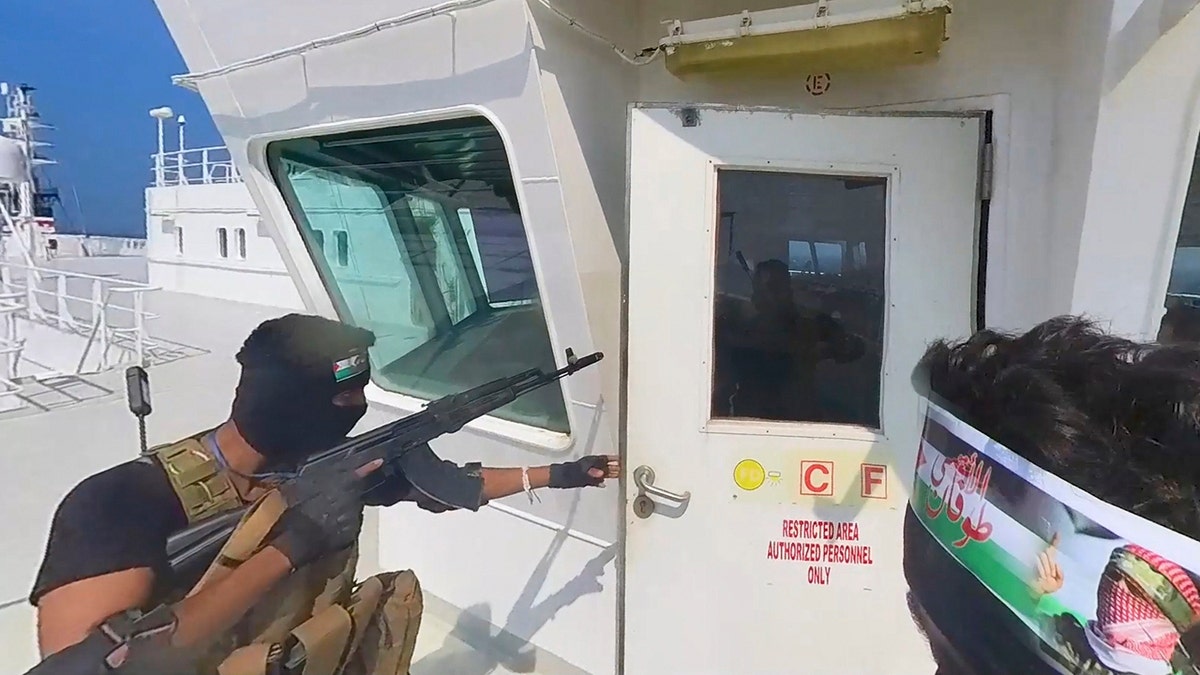
This photo released by the Houthi Media Center shows Houthi forces boarding the cargo ship Galaxy Leader on Nov. 19, 2023. (Houthi Media Center via AP)
Maritime Capabilities and Regional Impact
Despite a period of relative quiet over the past year, Houthi terrorists have reportedly spent the interim bolstering their maritime capabilities. “They have continued to advance their maritime capabilities, including missiles, drones and sea mines,” Al-Dawsari told Fox News Digital.
The geopolitical stakes are particularly high for Saudi Arabia, which has sought to bypass the volatile Strait of Hormuz by redirecting approximately 70% of its energy exports through the Red Sea port of Yanbu. A closure or sustained attack on the Bab el-Mandeb would effectively neutralize this alternative route, leaving Saudi exports vulnerable.
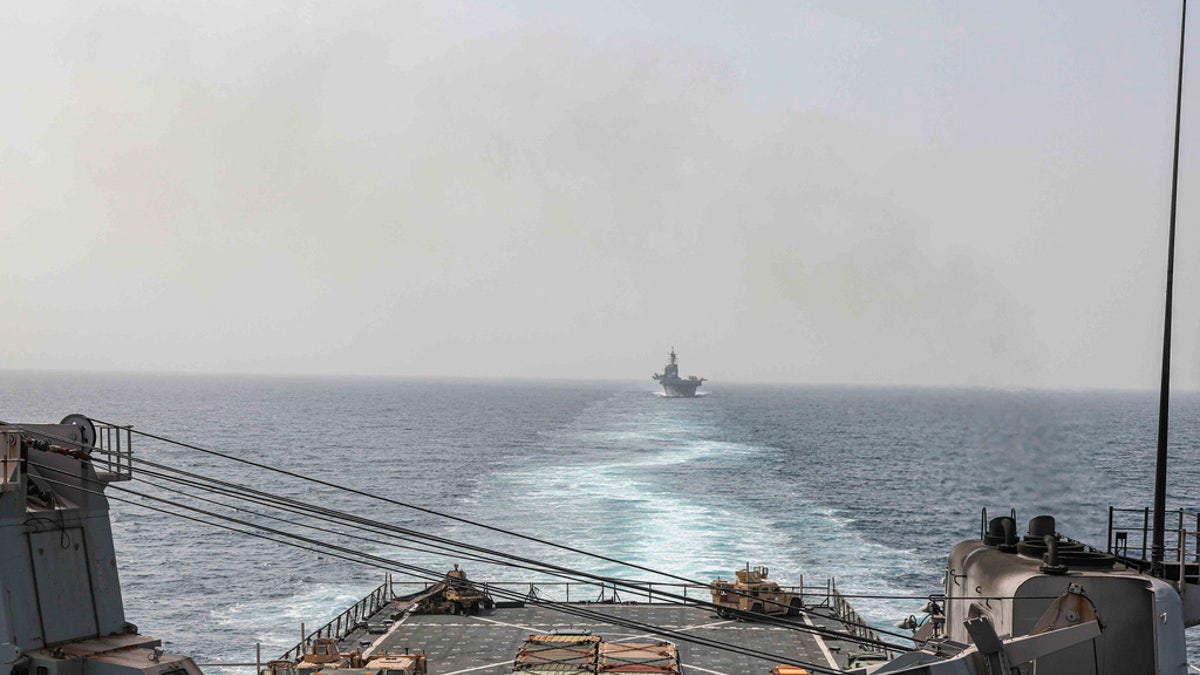
In this image provided by the U.S. Navy, the amphibious dock landing ship USS Carter Hall and amphibious assault ship USS Bataan transit the Bab al-Mandeb strait on Aug. 9, 2023. (Mass Communications Spc. 2nd Class Moises Sandoval/U.S. Navy via AP)
Edmund Fitton-Brown, a former British ambassador to Yemen and senior fellow at the Foundation for Defense of Democracies, warned that a full resumption of the Houthi maritime campaign would likely trigger a “general escalation.” He noted that while the U.S. and its allies maintain a clear military advantage, renewed attacks would almost certainly draw Israeli and U.S. strikes on Houthi-controlled Sana’a and Hodeida.
Diplomatic Friction and Security Concerns
The United Nations has expressed grave concern over the potential for renewed hostilities. Stéphane Dujarric, spokesperson for U.N. Secretary-General António Guterres, stated that any disruption would “endanger the safety and security of seafarers, freedom of navigation and the stability of global supply chains.” He called for full adherence to U.N. Security Council Resolution 2722, which condemns Houthi attacks on commercial vessels.

A Houthi follower during a pro-Iran demonstration, in Sanaa, Yemen, April 6, 2026. (Khaled Abdullah/Reuters)
Internal Yemeni politics have also complicated the security landscape. Amr Al-Bidh, foreign affairs chief of the Southern Arabian Transitional Council, criticized the management of the Yemen crisis, specifically a U.N.-brokered prisoner exchange deal. The council alleges the agreement includes individuals convicted of smuggling Iranian weapons, including drones and aviation fuel, to the Houthis.
The Office of the U.N. Special Envoy for Yemen, Hans Grundberg, clarified that the names of those released are agreed upon by the warring parties under the framework of the Stockholm Agreement of 2018, and that the U.N. does not determine the specific individuals selected for release.
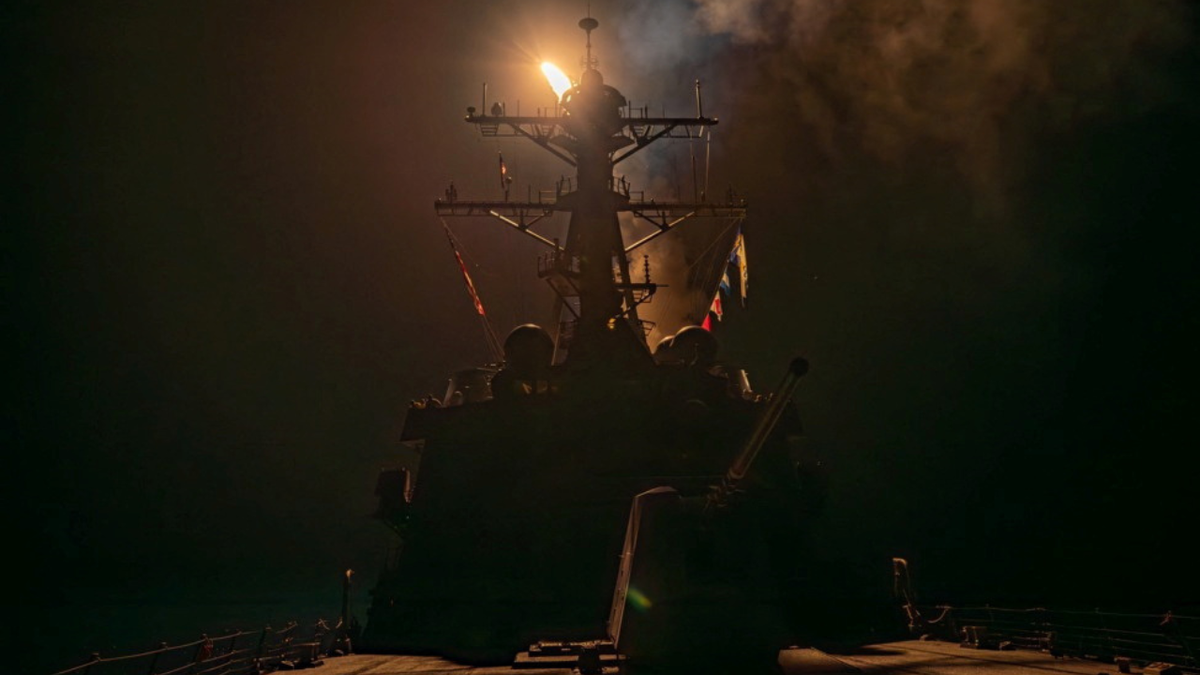
A missile is launched from a warship during the U.S.-led coalition operation against military targets in Yemen, aimed at the Iran-backed Houthi militia that has been targeting international shipping in the Red Sea, in this handout picture released on Jan. 12, 2024. (US Central Command via X/Handout via REUTERS/ File Photo)
As tensions mount, the international community remains on high alert. The State Department has previously labeled the actions of Iran and its proxies as “unacceptable” and “dangerous,” warning that further provocation will only serve to inflame an already volatile region.