The $70 Oil Illusion: Why Depleted Global Reserves Signal a Looming Price Spike
Why the current market calm masks a dangerous depletion of global petroleum stocks.

Crude oil’s recent retreat below the $70-per-barrel threshold is increasingly viewed by analysts not as a return to stability, but as a precarious “honeymoon phase” that ignores a massive depletion of global energy buffers. While the market has largely priced out the immediate threat of a total blockade in the Strait of Hormuz, the underlying fundamentals—including nearly 1 billion barrels of unreplenished petroleum reserves and a collapsed interim peace deal—suggest a return to $90 oil is imminent.
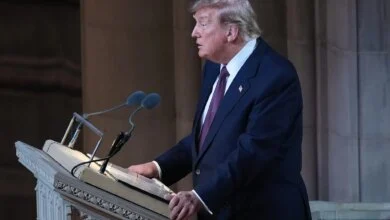
The fragility of the current market was underscored this week when President Donald Trump declared the interim peace agreement with Tehran to be “over.” Following a series of fresh drone and rocket exchanges, the administration’s rhetoric has shifted sharply from June’s description of Iranian leadership as “rational people” to a list of disparaging labels including “cheats” and “liars.” This geopolitical reversal comes as Israel reportedly warned the U.S. of specific threats against the president’s life, further complicating any path toward a long-term settlement.
For the White House, the timing is politically sensitive. The Strategic Petroleum Reserve (SPR) has already been drawn down to 300 million barrels—its lowest level since 1983—to combat price spikes earlier in the conflict. With the November midterm elections approaching, the administration is unlikely to begin the necessary process of refilling these stocks, even as commercial inventories at the Cushing, Oklahoma, trading hub have dipped below the critical 20-million-barrel threshold required for normal operations.
“There’s a bill that’s coming due,” warned Marshall Adkins, head of energy for Raymond James. Adkins noted that while the market currently assumes a return to normalcy, Iran’s historical modus operandi suggests otherwise. He anticipates that Iran will eventually demand a for-profit tolling system for passage through the strait, potentially keeping 5% of the world’s oil offline for months as Saudi Arabia and the UAE struggle to bring alternative pipelines online.
The current price suppression has been aided by China’s role as a “swing importer.” According to oil forecaster Dan Pickering, founder of Pickering Energy Partners, China did not significantly cut its oil consumption during the height of the conflict; instead, it aggressively tapped into its own world-leading strategic reserves, cutting imports by roughly 5 million barrels a day. As these reserves are exhausted, China is expected to return to the international market by late August, creating a sudden demand surge that could overwhelm current production gains in the Americas.
Refining bottlenecks add another layer of risk. Approximately 7 million barrels a day of global refining capacity remains offline due to mothballed facilities in Asia and damage to Russian infrastructure. While U.S. gas prices have eased from a May high of $4.56 to $3.88 per gallon, according to AAA data, veteran analyst Jim Wicklund of PPHB argues that the world’s fundamental dependence on oil remains unchanged. Wicklund suggests that a $5 “geopolitical risk premium” will likely remain baked into every barrel for the foreseeable future, regardless of short-term price fluctuations.