Oman Proposes Dual-Corridor Solution to Break U.S.-Iran Stalemate in Strait of Hormuz
A diplomatic solution emerges as U.S. and Iranian forces trade strikes over shipping lanes.
A diplomatic effort to bifurcate control of the world’s most sensitive oil chokepoint has emerged as the primary hope for ending a violent stalemate between Washington and Tehran. Oman has drafted a proposal to manage traffic in the Strait of Hormuz through two separately governed shipping lanes, sources told CNN on Saturday, effectively seeking a “Solomon-like” division of the waterway to satisfy competing claims of sovereignty and maritime freedom.
The Omani plan arrives as the Persian Gulf remains locked in a cycle of tactical strikes despite a standing ceasefire agreement. Under the proposed framework, a southern corridor would operate through Omani territorial waters, allowing for free navigation under prewar conditions. Conversely, a northern corridor passing through Iranian waters would require prior authorization from Tehran, though the proposal reportedly stipulates that no transit tolls would be imposed.
While Muscat attempts to formalize this dual-track system, the reality on the water remains volatile. Iran declared the strait closed again on Saturday, claiming its forces intercepted and struck a vessel utilizing what it termed an “unauthorized route.” This assertion of authority over the commercial vessels transiting the region remains Iran’s primary economic lever, as any sustained disruption threatens to trigger a global oil shock.
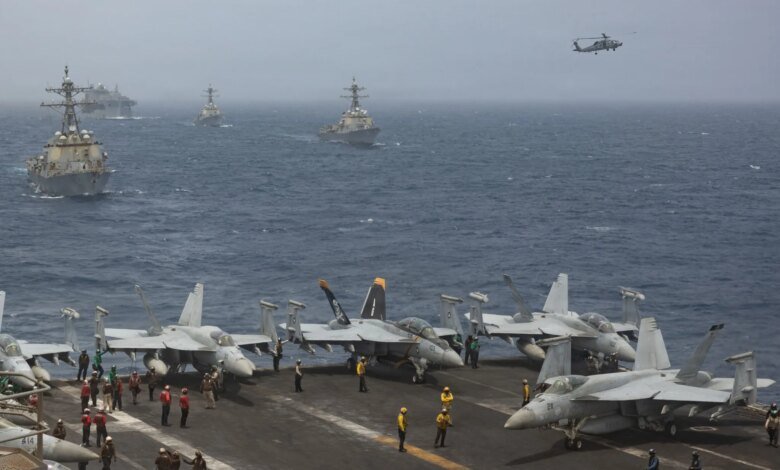
U.S. Central Command confirmed it launched retaliatory strikes on Saturday against Iranian sites used for drone and missile launches. In a statement released on X, U.S. Central Command accused Tehran of failing to adhere to a recently signed memorandum of understanding. The command stated that the United States is “imposing a heavy cost” to degrade Iran’s capacity to target civilian mariners who follow an alternate route hugging the Omani coast under U.S. Navy protection.
The diplomatic push intensified on Saturday in Muscat, where Iran’s foreign minister met with his Omani counterpart. Following the meeting, Oman’s foreign ministry indicated that both nations agreed to continue discussions regarding the Strait of Hormuz at both “technical and political levels.” However, the viability of any new corridor system rests less on official signatures and more on the confidence of global shipping companies and their insurers, who have seen weeks of U.S. bombardment fail to fully secure the passage.
The current friction is viewed by some analysts as a violent form of negotiation. Dan Alamariu, chief geopolitical strategist at Alpine Macro, noted that the ongoing strikes and counter-strikes serve as a way for both sides to establish leverage ahead of a potential new deal. Alamariu suggested that while the U.S. could theoretically attempt to pry the strait open by force or reimpose a naval blockade, both nations face domestic pressures—including the looming U.S. midterms and Iran’s internal economic fragilities—that make a diplomatic resolution within the next two months likely.
For now, oil markets remain in a state of high tension. Until a corridor is deemed safe for unescorted transit, consuming nations may be forced to continue depleting strategic reserves to offset the loading and delivery delays currently plaguing the Persian Gulf.