The ‘Amazon of Oil’: Why the Iran Conflict Failed to Trigger a Price Catastrophe
Technological logistics and Chinese reserves prevent a global energy shock.
Global energy markets are defying historical precedents of volatility, even as geopolitical tensions in the Middle East resurface. Despite President Trump’s recent declaration that the Iran ceasefire has ended, crude prices have remained remarkably resilient, trading near $74 per barrel—a sharp decline from the $112 peaks seen in mid-May.
The primary driver of this stability is a fundamental shift in how oil is moved and tracked. Jim Wicklund, managing director at PPHB, describes the current landscape as the “Amazon of oil,” where digital and satellite innovations allow traders to monitor and divert tankers in real-time. This “just-in-time” delivery system has significantly weakened the traditional correlation between physical inventories and market pricing.
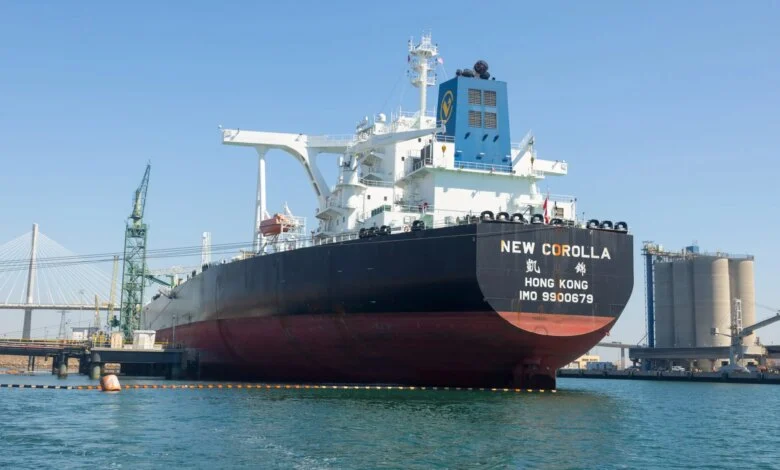
According to Wicklund, the ability to identify every tanker on the ocean—including its owner and cargo—allows for immediate procurement of supplies on the water, reducing the necessity for massive land-based stockpiles. This technological transparency stands in stark contrast to the 1970s oil shocks, when visibility into global supply chains was virtually non-existent.
Further stabilization has come from Beijing. China, which typically imported over 11.5 million barrels per day, slashed its imports to below 7 million barrels daily by June. This reduction effectively removed 5 million barrels of daily demand from the global market. U.S. government estimates suggest China entered the conflict with strategic reserves totaling approximately 1.4 billion barrels, a result of a multi-year effort to build a massive energy cushion.
In the United States, regulatory flexibility has also played a role. The administration’s temporary waiver of the Jones Act—a 106-year-old law requiring goods moved between U.S. ports to be carried on domestic-built and flagged vessels—has streamlined fuel distribution. This move allowed tankers to transport Gulf Coast fuel through the Panama Canal to supply California, mitigating localized shortages caused by refinery closures.
While the U.S. Strategic Petroleum Reserve has fallen to 319 million barrels, its lowest level since 1983, the authorized release of 172 million barrels has provided a necessary buffer. Arjun Murti of Veriten noted that China’s role as a moderating force was an unexpected development that has quieted predictions of $200-per-barrel oil. Even with the effective closure of the Strait of Hormuz temporarily disrupting 20% of global supplies, the combination of technological logistics and strategic reserves has prevented the doomsday scenarios many analysts feared.