Genesis Targets Ultra-Luxury EV Segment With 657-Horsepower Flagship GV90 NeoLun
Flagship 2027 EV features dual-motion coach doors, radiant heated floors, and a 123.5 kWh battery pack.
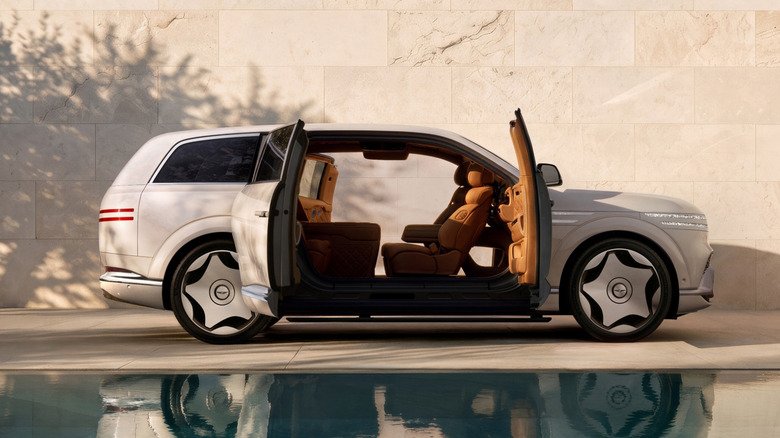
Genesis has revealed technical and production specifications for its upcoming flagship electric SUV, the GV90 NeoLun, marking Hyundai Motor Group’s most ambitious push into the top tier of the luxury electric vehicle market. The full-size SUV is scheduled to arrive in commercial markets in early 2027.
Built on the automaker’s dedicated eMP platform, the GV90 introduces structural engineering designed to support pillarless coach doors without compromising structural integrity. The entry architecture relies on a specialized dual-motion hinge system, which slides the rear door slightly outward before swinging it open.
This mechanical sequence allows the front and rear doors to operate independently. To offset the absence of a traditional central B-pillar, Genesis reinforced the cabin frame with integrated steel tubes, producing a concealed internal safety structure that is 50 percent thicker than conventional passenger vehicle frames.
Powering the 208.1-inch-long SUV is a dual-motor all-wheel-drive powertrain delivering 657 horsepower and 590 pound-feet of torque. The drivetrain is paired with an adjustable multi-chamber air suspension system that modifies ride height based on driving surfaces. An active rear-wheel steering system, capable of turning up to five degrees, further improves low-speed maneuverability. Energy storage is handled by a 123.5 kWh battery pack, the largest capacity unit ever fitted to a Hyundai Motor Group production vehicle.
The system delivers an estimated driving range of 311 miles on a single charge and supports 350kW DC fast charging, which replenishes the battery from 10 to 80 percent in approximately 22 minutes.
Inside the cabin, Genesis configured the front seating to swivel 180 degrees to face the rear passenger compartment. Beneath real wood veneer panels, the vehicle floor incorporates radiant heating elements.
Primary driver data is projected onto a 25-inch heads-up display instead of a standard instrument cluster. The digital cockpit also features a variable-size display that functions as a 23.6-inch screen during standard operation and expands to 24.6 inches when the vehicle is parked.
Equipped with virtual acoustics processing calibrated to replicate specific concert halls, a 25-speaker Bang & Olufsen Premier 3D sound system defines the cabin’s acoustic hardware. Overhead, the roof features an electrochromic glass panel with six individual opacity adjustment zones.
Five multi-tone interior color configurations have been confirmed for the vehicle, featuring upholstery and trim fabricated from cashmere, natural leather, treated woods, and polished stone accents ahead of its planned 2027 rollout.