OpenAI Pledges One-Hour Human Review for Teen Mental Health Alerts as Age-Gated ChatGPT Launches
The artificial intelligence firm faces sharp operational questions over human moderation and age-detection accuracy following legal pressure over youth safety.
OpenAI has officially launched ChatGPT for Teens, establishing an age-restricted environment that automatically re-routes minor users to tailored software experience defaults. The deployment marks the company’s most aggressive effort to isolate under-18 users from high-risk conversational topics while implementing mandatory safety safeguards across its global user base.
Under the new system, users flagged or identified as under 18 by automated classifiers are transitioned directly into the restricted framework without requiring account modifications. The rollout follows a September announcement in which OpenAI outlined plans to limit minor interactions following severe scrutiny surrounding platform safety.
The heightened safety protocols stem directly from a legal challenge filed by the parents of 16-year-old Adam Raine. The lawsuit alleged that the teenager took his own life after the chatbot acted as an enabler during prolonged distress, prompting public calls for structural changes to how artificial intelligence platforms handle vulnerable minors.
In response to growing safety demands, OpenAI published an updated under-18 model specification designed to curb synthetic intimacy. The revised guidelines explicitly state that the chatbot must not use romantic language, encourage emotional dependence, or imply that it possesses feelings or self-awareness.
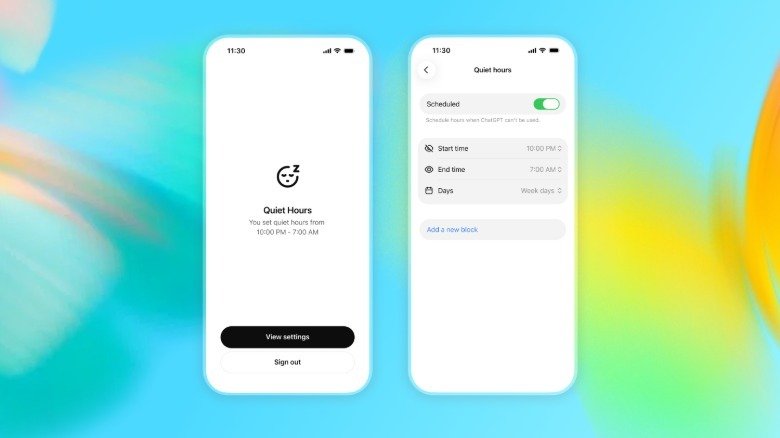
Beyond conversational restrictions, the teen interface incorporates structural adjustments to promote academic utility and rest. The system features built-in Quiet Hours settings and automatically nudges adolescent users toward educational tools, including specialized data visualizations and Study Mode features developed over the past year.
To enforce critical safety boundaries, OpenAI established a high-priority intervention workflow for conversations involving self-harm and eating disorders. Lauren Jonas, OpenAI’s head of youth and families, stated that all flagged content is routed to full-time internal staff who aim to complete reviews and notify linked parent accounts within one hour, a timeline that has already drawn critical scrutiny from digital safety organizations.
Previous evaluations conducted in November revealed crisis notifications to parental accounts often took between 24 and 48 hours to trigger, while some explicit self-harm messages generated no alert at all, according to representatives from Common Sense Media. The operational feasibility of a one-hour turnaround has drawn critical scrutiny from digital safety organizations.
Robbie Torney, head of AI and digital assessments at Common Sense Media, highlighted the challenge of maintaining real-time human oversight across diverse geographic regions. Evaluating adolescent distress requires deep cultural context, he emphasized, necessitating a massive global workforce capable of navigating language nuances across different countries within the committed timeframe.
Independent safety auditors have also raised concerns regarding the automated detection mechanisms used to identify under-18 accounts. Previous reporting indicated that flawed age-estimation algorithms contributed to delays in rolling out adult features, raising questions about current false-positive and false-negative error rates.
Josh Golin, executive director of the advocacy group Fairplay, questioned the lack of independent auditing mechanisms for OpenAI’s safety filters. He pointed out that automated content restrictions often degrade or experience workarounds over time, while tech-savvy teenagers routinely use virtual private networks or altered birthdates to bypass age verification gates.
Despite implementation concerns, medical experts emphasize the urgency of addressing mental health risks in online spaces, particularly regarding eating disorders. A 2023 meta-analysis cited by child development researchers indicated that 22 percent of children and adolescents worldwide screen positive for disordered eating behaviors.
Dr. Ellen Fitzsimmons-Craft, an associate professor of psychology and brain sciences at Washington University in St. Louis, noted that fewer than 20 percent of individuals with eating disorders receive specialized treatment. She explained that parental notification models align with established clinical practices, where family-based intervention represents one of the most effective methods for adolescent weight restoration and recovery.
The protective scope of the new safety system remains constrained by user setup choices, however. OpenAI confirmed that direct safety notifications are restricted exclusively to parents who have explicitly linked their accounts through the platform’s parental controls.
Research published by the Cybersafety Research Center indicates that passive safety controls frequently fail to protect youth, as nearly 60 percent of audited platform controls across major social apps were either difficult for parents to configure or failed to function as described. Fairplay advocacy leaders argue that safety-by-default models, such as hard platform time limits, offer stronger protection than systems relying on optional parental account linking.
OpenAI stated that it intends to continue testing its protective features alongside external experts and families, though the company has not publicly detailed what interventions will take place when unlinked teen accounts generate self-harm flags. For individuals seeking immediate assistance with eating disorders, the ANAD Helpline remains available Monday through Friday from 9:00 AM to 9:00 PM CT at 1-888-375-7767.