Google Reassigns Nobel-Winning AlphaFold Team to Gemini and Isomorphic Labs
Alphabet shifts key researchers behind its Nobel-winning biological AI to foundation models and commercial biopharma.
In a strategic pivot reflecting shifting priorities across the artificial intelligence sector, Alphabet has disbanded the original research group behind Google DeepMind’s landmark AlphaFold project. Key researchers and engineers responsible for the biology AI are being reallocated to focus on the company’s core generative model ecosystem, Gemini, as well as its commercial life-sciences spin-off, Isomorphic Labs.
The structural changes follow high-profile departures from the division. John Jumper, who served as a lead architect on AlphaFold and was named a co-recipient of the 2024 Nobel Prize in Chemistry alongside DeepMind Chief Executive Demis Hassabis, left the organization in June to join rival AI startup Anthropic. Multiple researchers who co-authored AlphaFold’s foundational papers also departed for Anthropic, while remaining team members have been absorbed into internal Gemini initiatives or transferred to Isomorphic Labs.
Pushmeet Kohli, Vice President of Research at Google DeepMind, noted that the division’s strategic orientation has shifted. He explained that while the unit spent nine years targeting distinct grand challenges with dedicated project goals, the institutional strategy has evolved. The realignment highlights broader tech industry trends, where major infrastructure providers are concentrating computational bandwidth and top engineering talent on foundational multimodal models rather than siloed academic research.
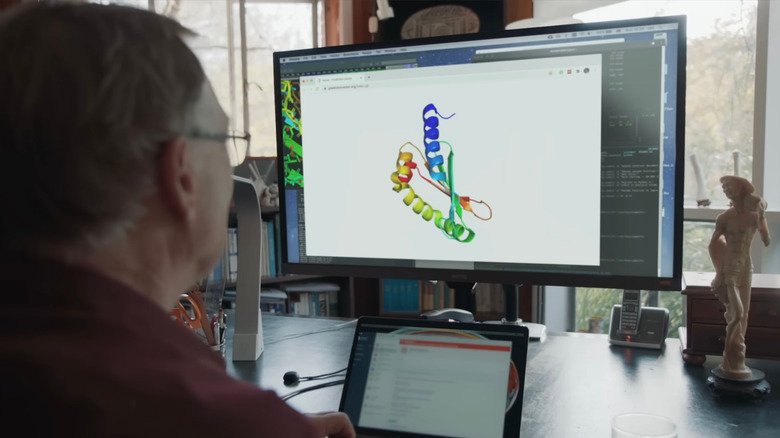
First launched in 2018, AlphaFold achieved a historic milestone in computational biology by cracking the 50-year-old protein folding problem. Biological functions depend entirely on how linear chains of amino acids twist into complex three-dimensional structures. For half a century, structural biologists relied on experimental techniques like X-ray crystallography and nuclear magnetic resonance spectroscopy, successfully solving approximately 170,000 protein structures over five decades. AlphaFold utilized that body of empirical data to train deep neural networks capable of predicting 3D molecular structures in minutes.
By 2021, DeepMind published AlphaFold’s underlying code and complete human proteome predictions in Nature, subsequently launching the public AlphaFold Protein Structure Database. Providing open-access data for more than 200 million predicted structures, the framework has been widely adopted by international research institutions to accelerate drug discovery, design novel vaccines, and analyze structural mechanisms tied to neurodegenerative conditions such as Parkinson’s and Alzheimer’s disease.