Why Abandoned Rooftop Satellite Dishes Cannot Catch Free Broadcast TV Without Hardware Swaps
Technical differences prevent satellite dishes from receiving local over-the-air signals directly.
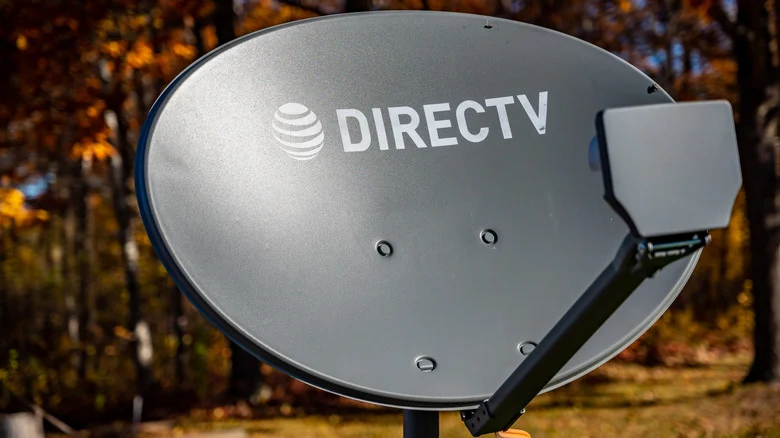
Millions of disused satellite dishes mounted on residential rooftops across the United States cannot directly pick up free local television signals, despite persistent cord-cutting assumptions that connecting their coaxial lines to modern TV sets will deliver broadcast networks like ABC, CBS, Fox, and NBC.
The limitation stems from fundamental hardware differences between space-based transmissions and terrestrial broadcasts. Satellite dishes from providers such as DirecTV and Dish Network rely on a low-noise block downconverter to collect high-frequency microwave signals sent from geostationary orbital satellites. Terrestrial television stations transmit across lower-frequency VHF and UHF bands from land-based broadcast towers.
Technical evaluations from consumer electronics specialist Solid Signal confirm that affixing standard antenna components directly to a dish reflector yields no functional reception benefit for terrestrial television. The curved metal reflector of a satellite dish is calibrated specifically to focus microwave frequencies onto its attached feed horn, so it cannot amplify terrestrial broadcast signals.
Homeowners can, however, repurpose the infrastructure supporting the obsolete dishes. The existing mounting mast bolted to a roof or fascia can serve as a secure installation point for a dedicated outdoor television antenna, eliminating the need to drill new exterior anchor holes. The pre-installed coaxial cable running from the roof into the residence can also be repurposed for an over-the-air setup.
Making that connection functional requires removing any satellite-specific splitters, diplexers, power inserters, or multi-switches along the cable run, as those proprietary components block the digital broadcast frequencies used by television tuners.
Signal reliability after converting the mount remains dependent on local terrain, building obstructions, foliage, and the distance to regional transmission towers. Digital tuners integrated into modern televisions require an unamplified or properly amplified terrestrial signal feed to decode over-the-air channels.
The technical utility of abandoned dishes differs outside the United States. In the United Kingdom, the subscription-free satellite platform Freesat delivers more than 100 television and radio channels through dishes originally aligned for pay-TV services such as Sky, requiring only a compatible tuner or television set.
Free-to-air satellite access in North America is limited primarily to unencrypted specialty programming. Satellites such as Galaxy 19 at 97.0°W transmit free Ku-band foreign-language, multicultural, and religious networks, though receiving those signals requires specialized free-to-air DVB-S2 receivers and properly aligned Ku-band hardware rather than standard domestic satellite equipment.