U.S. Soybean Production Doubles to 4 Billion Bushels Despite Shrinking Farmland as China Eyes Tariff Cuts
American farmers push yield efficiency to 4 billion bushels as Beijing considers easing agricultural tariffs.
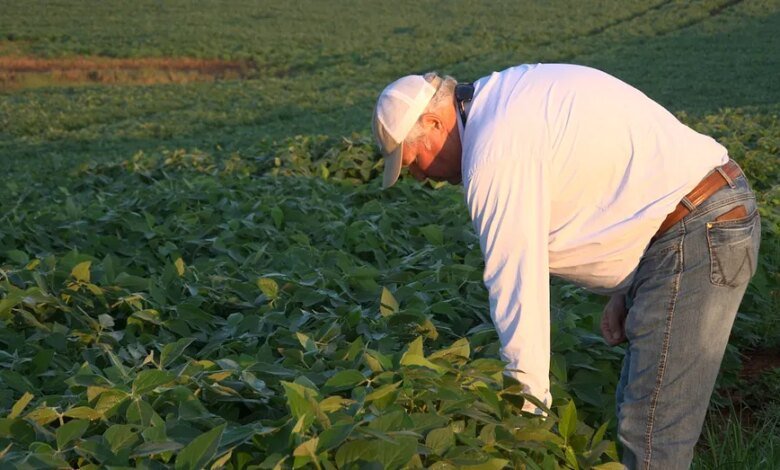
American soybean growers have doubled national production to roughly 4 billion bushels annually while operating on a shrinking agricultural footprint, even as the industry pushes for the removal of a 10 percent Chinese tariff that hampers trade against South American competitors.
Data from the U.S. Department of Agriculture shows American farmland contracted 7 percent between 2000 and 2024, falling from 943 million acres to 874 million acres. Over the same period, the country lost approximately 307,000 farms. Despite this structural decline, efficiency gains driven by precision agriculture, biotechnology, and optimized soil management have enabled farmers to expand total output from 2 billion bushels in 1990 to 4 billion bushels today.
China remains the largest international buyer of U.S. soy, importing the grain primarily to produce high-protein meal for domestic poultry and swine production. Under a bilateral agreement, Beijing committed in 2025 to purchase 25 million metric tons of American soybeans annually. Purchases initially lagged following tariff escalations during President Donald Trump’s administration, but shipments rebounded as market prices rallied.
“They need our soy protein to help grow and produce their meat protein that their people want,” said Caleb Ragland, chairman of the American Soybean Association. “We’re on a positive trend, but we still got a long ways to go to completely hit the targets that they’ve agreed to. Obviously, we’ve had some bumps in the road in our relationship, but they’re too big of a customer to just write off.”
China continues to impose a 10 percent tariff on all U.S. agricultural imports, though Chinese officials have held preliminary discussions regarding its removal. The tax has squeezed profit margins for American growers and positioned South American exporters—particularly Brazil, which surpassed the U.S. as the world’s leading soybean exporter—at a commercial advantage.
“I mean, that’s been a 10% tax that has made us uncompetitive when it comes to the cash price that the Chinese customers would pay for soybeans,” Ragland said.
To counter foreign competition and maximize crop value, U.S. producers rely on the Soy Checkoff program, created under the 1990 Farm Bill. Funded by a portion of crop sales, the checkoff supports market development across more than 90 countries and funds research into non-food commercial applications, including biofuels, Goodyear tires, artificial turf, and industrial foams.
“Because of the checkoff, there are thousands of new uses we get. Soy oil is in Goodyear tires and artificial turf, and soy foam is a great success story,” said Brent Gatton, chairman of the United Soybean Board.
Domestic supply chains move these high-yield harvests from rural farming communities directly into global trade channels. In Cadiz, Kentucky, seventh-generation farmer Barry Alexander plants soybeans on roughly half of the summer acreage at Cundiff Farms. Kentucky’s soybean harvest runs from September through October, with crops loaded onto local river barges before traveling down the Mississippi River to Gulf Coast export terminals in New Orleans.
While urban expansion continues to encroach on rural land nationwide, growers report that yield intensity per acre remains their primary defense against high input costs and land loss.
“Land is going away every day, and that’s one commodity they’re not going to reproduce,” Alexander said. “Whenever that land is gone and gone out of production, it’s no longer going to be farmland. The population is increasing, and the demand for food is increasing. We treat every acre individually, and we treat it to produce the most it possibly can.”