Elon Musk Signals Potential Trillion-Dollar Charity Commitment Following Nobel Laureate’s Challenge
Responding to Nobel laureate Daron Acemoglu, the tech executive suggests plans to distribute wealth amid AI advancement.
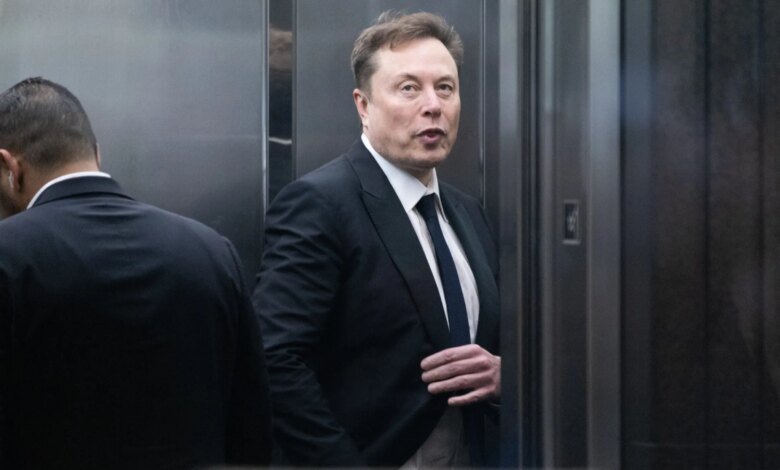
Tech billionaire Elon Musk has signaled a potential shift in his approach to wealth distribution, responding affirmatively to a challenge from economist Daron Acemoglu to pledge his fortune to charitable causes by 2036.
The proposal, posted publicly on social media platform X, urged Musk to align his asset management with his persistent forecasts that artificial intelligence will eventually render traditional money obsolete. Acemoglu, a co-recipient of the Nobel Prize in Economic Sciences, argued that committing an estimated $1 trillion net worth to independent charities within the next decade would validate Musk’s technological predictions while tempering global concerns over the concentrated political power of multi-billionaires.
In a direct reply on the platform, Musk indicated agreement with the underlying concept, stating that he plans to undertake something along those lines.
The exchange highlights an ongoing dialogue surrounding high-net-worth foundation management in the United States. Private foundations operated by ultra-wealthy executives are subject to federal tax rules requiring a minimum annual distribution of 5 percent of their net investment assets toward charitable purposes to retain tax-exempt status. However, public records show that foundation outlays can often remain tightly linked to corporate ecosystems.
By the close of 2025, filings indicated the Musk Foundation held roughly $14 billion in assets. According to reporting from The New York Times, a substantial portion of the foundation’s contributions has historically aligned with Musk’s localized business interests. In 2024, $370 million—accounting for three-quarters of the foundation’s total spending—went to a Texas non-profit directed by a top executive aide to operate an elementary school near Musk’s regional operational hubs.
Musk has previously expressed skepticism regarding traditional philanthropic frameworks. During an appearance on Nikhil Kamath’s WTF podcast in December 2025, Musk acknowledged a desire to assist humanity but noted that effective philanthropic execution remains exceptionally difficult.
He has also been openly critical of other major mega-donors, including MacKenzie Scott. After reports designated Scott as one of the largest individual donors in history following more than $26 billion in grantmaking out of her $35 billion net worth, Musk publicly agreed with social media comments arguing that her non-restricted giving model was actively harming global outcomes.
Under the conditions suggested by Acemoglu, any major technological donation pledge would require oversight by an impartial governing body tasked with directing capital exclusively to vetted, non-ideological charitable entities.