US Tech Leaders Urge Washington to Support Open-Weight AI to Maintain Global Edge
A coalition of leading American technology companies—including Nvidia Corp., Microsoft Corp., Meta Platforms Inc., and Palantir Technologies Inc.—is pressing Washington policymakers to actively support open-weight Artificial Intelligence models, framing the open-source ethos as essential for maintaining U.S. technological supremacy.
In a joint letter published Friday, industry leaders argued that relying exclusively on proprietary, closed systems risks stunting widespread innovation across the broader economy. Unlike traditional closed AI systems that operate as subscription-based digital black boxes, open-weight architectures allow software developers and enterprise businesses to download, inspect, and customize the model’s underlying neural parameters for specialized hardware and local deployments.
The strategic push comes amid heightened geopolitical competition over artificial intelligence hardware and software capabilities. Just last week, Chinese artificial intelligence startup Moonshot AI unveiled its open-weight Kimi K3 model, claiming performance parity with leading Western proprietary systems such as OpenAI‘s GPT series and Anthropic’s Claude. That release, alongside previous releases from Chinese labs like DeepSeek, sent shockwaves through global venture markets and prompted federal regulators in Washington to assess whether stricter export controls or technology restrictions are necessary.
By distributing powerful open models at fractionally lower operational costs, international competitors have threatened to capture global AI infrastructure adoption. In response, U.S. open-weight advocates argue that restricting open models in the name of national security could backfire, forcing software developers worldwide into competing foreign technological ecosystems.
In the tech sector, open weights represent a distinct middle ground between fully open-source software and heavily guarded proprietary code. While proprietary developers like OpenAI and Anthropic maintain tight control over their source code to monetize multi-billion-dollar training runs, companies like Meta and Nvidia benefit heavily from open ecosystem expansion. For Nvidia, wider adoption of open models directly accelerates demand for high-performance graphics processing units (GPUs) and specialized data center chips needed to fine-tune and run those models locally.
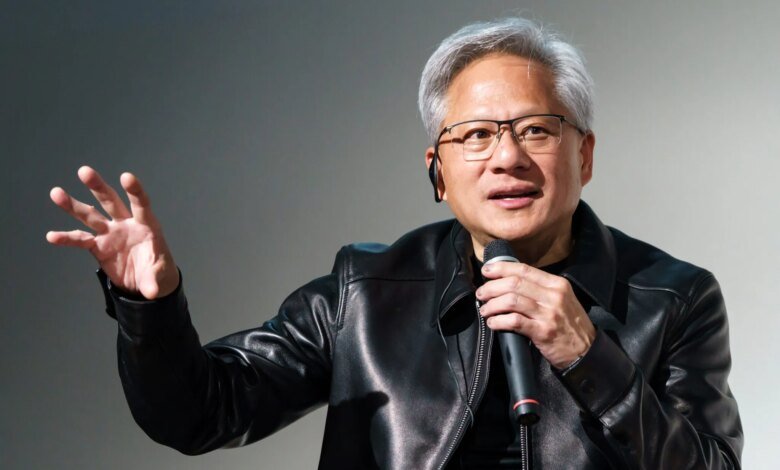
Nvidia Chief Executive Officer Jensen Huang highlighted the collective statement in his inaugural post on a newly established personal account on X, while Microsoft Chief Executive Officer Satya Nadella actively shared the document across social channels. The signatories emphasized that American competitiveness hinges on broad ecosystem adoption rather than isolated benchmark achievements.
“Our AI leadership will be judged not by one frontier AI model, but by whether the United States builds a strong, open ecosystem that diffuses into every sector,” the coalition stated in the letter, emphasizing that accessible models are vital for driving economic opportunity across non-tech industries.
As discussions unfold between tech executives and U.S. government policy advisors, the debate highlights an emerging divide within Silicon Valley itself—pitting those who advocate for tightly controlled, safety-vetted proprietary platforms against those pushing for open models to catalyze rapid software integration nationwide.