Modern Web Browsers Can Now Run Morrowind Natively via Open-Source OpenMW Engine
OpenMW-Web brings Bethesda's classic 2002 RPG to desktop browsers using local asset parsing and native engine rendering.
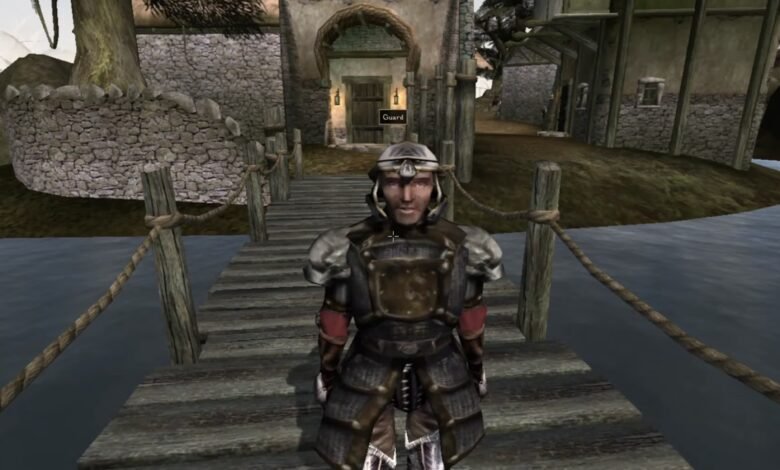
An independent developer has successfully ported OpenMW, the open-source engine recreation of Bethesda Game Studios’ classic 2002 role-playing game The Elder Scrolls III: Morrowind, to run directly inside modern web browsers.
Shared online under the pseudonym /u/Dumpster_Buddy, the project—dubbed OpenMW-Web—allows users to execute the full game client using local hardware resources. Unlike cloud gaming platforms that rely on remote server rendering or JavaScript-based x86 emulators, the web port compiles the engine directly for browser execution, enabling native rendering, physics calculations, and local input processing.
To demonstrate the engine’s functionality without infringing on proprietary copyrights, OpenMW-Web includes a self-contained demonstration environment accessible instantly upon loading the page. Accessing the full Morrowind campaign requires players to supply their own legally acquired game data files.
The application leverages browser-native file access APIs to read these assets directly from the user’s hard drive. No proprietary files or user data are uploaded to external servers during gameplay.
When supplied with original game archives, the browser deployment retains core engine features built into OpenMW, including dynamic shadow maps, detailed water shaders, controller support, and persistent state saving. Testing indicates optimal performance on desktop implementations of Chromium-based browsers, specifically Google Chrome, Microsoft Edge, and Brave.
Despite these technical milestones, the web build contains several operational friction points. Early user feedback notes inconsistent mouse tracking within in-game menu interfaces and inventory screens. The developer treats the project as an experimental proof-of-concept rather than a complete alternative to traditional native desktop installations.
The port builds on years of community effort surrounding OpenMW, a project originally launched to address performance bottlenecks, engine bugs, and platform limitations inherent to the original 2002 release. While OpenMW has historically targeted Windows, macOS, and Linux operating systems—alongside recent experimental builds for dual-screen handheld devices—the web port extends its reach to zero-install environments.
Future development targets for OpenMW-Web include integrating custom modification (mod) support and adapting the engine’s existing TES3MP multiplayer framework for browser sessions.