Why Legacy DeFi Protocols Are Shutting Down in 2026 Despite Strong Market Liquidity
Shift in institutional capital and fee sustainability forces legacy platforms to shutter.
Veteran decentralized finance platforms that navigated multi-year bear cycles, the 2022 collapse of Terra and FTX, and heightened regulatory scrutiny are confronting a stark new reality in 2026: enduring early-stage market cycles no longer guarantees long-term economic survival.
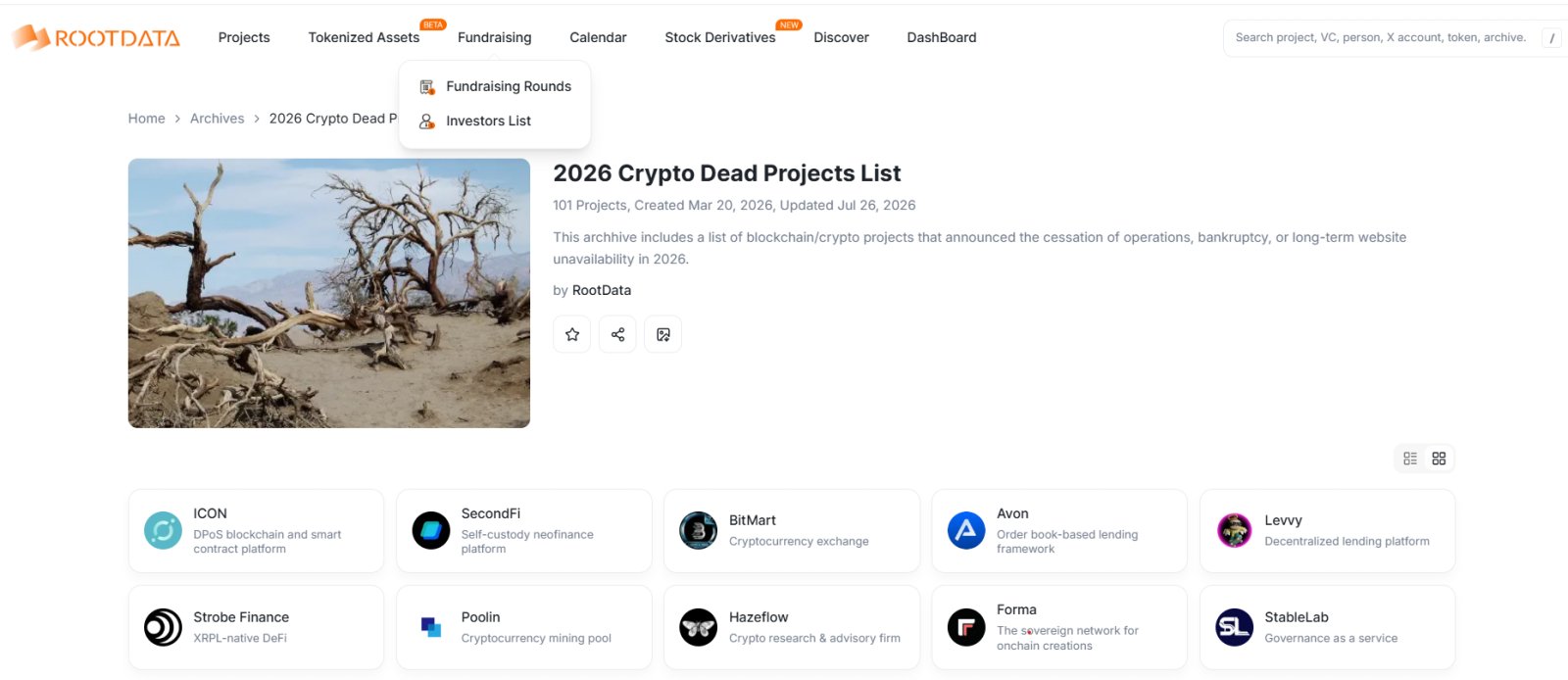
The recent shutdown of DeFi management dashboard Zapper, which operated for nearly seven years with backing from high-profile investors such as Mark Cuban, highlights a growing wave of closures across the sector. Data from tracking platform RootData shows that 101 cryptocurrency projects have ceased operations in 2026 as of July 26, with decentralized finance accounting for more than half of those failures.
The casualties span multiple blockchain ecosystems and specialized product categories. Bitcoin liquidity platform Botanix, Solana portfolio tracker Step Finance, analytics provider Parsec, and DEX aggregator Odos Protocol have all initiated or completed winding-down operations this year.
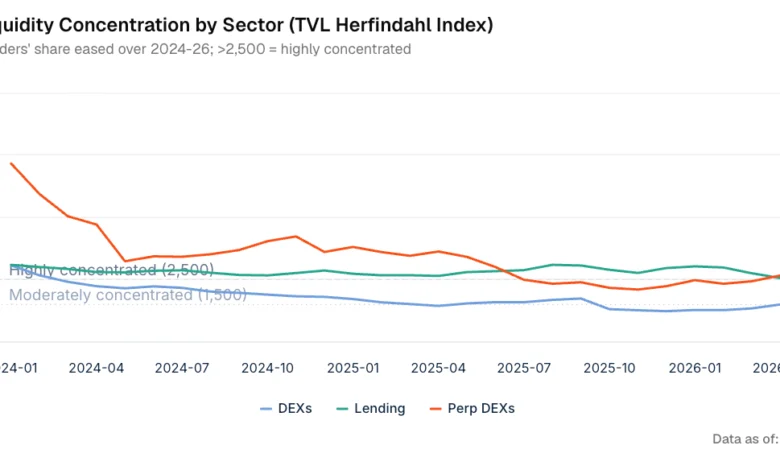
While early project failures in previous cycles were often driven by sudden liquidity drying up across the entire industry, current market dynamics point to structural shifts in where economic value is captured. Sector metrics analyzed by Artemis Research indicate that market concentration across decentralized protocols has actually declined since 2024. Primary sector leaders—including Uniswap in decentralized exchanges, Aave in lending markets, and Jupiter in perpetual derivatives—each command a smaller share of their respective market locked capital than they held two years ago.
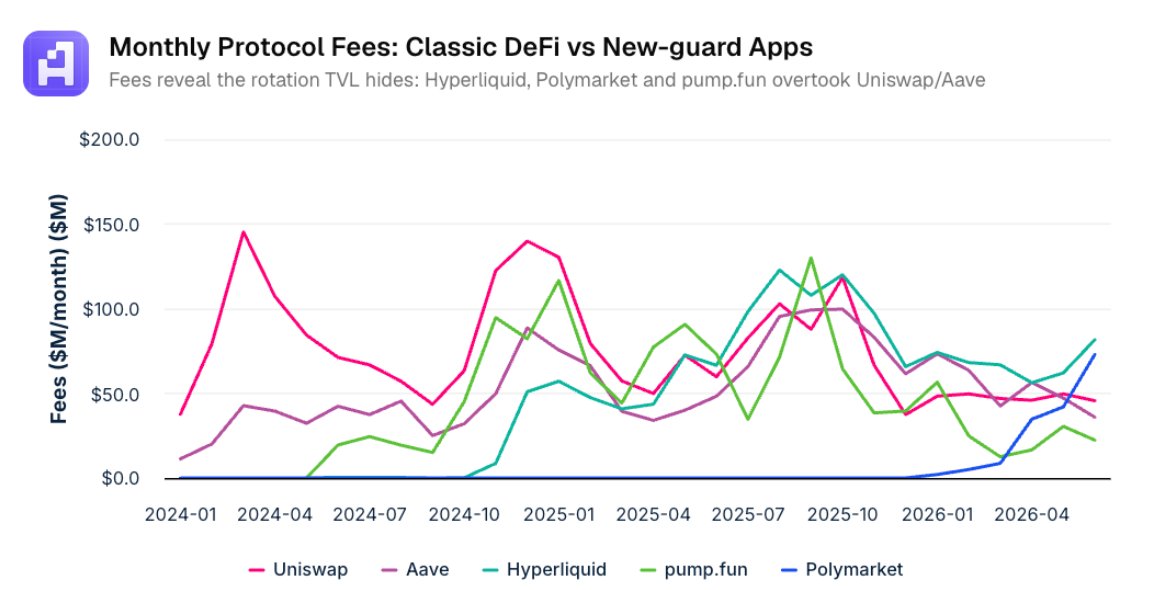
Instead of capital concentrating into a few dominant venues, onchain activity has fragmented across specialized ecosystems. According to Alex Weseley of Artemis Research, standard metrics such as Total Value Locked (TVL) fail to explain why established protocols are folding while total capital remains present in the system. Weseley noted that fee generation and revenue metrics provide a far more accurate gauge of operational viability, exposing underlying commercial pressures that raw capital deposits obscure.
Artemis tracking reveals that the number of DeFi applications generating at least $1 million in monthly fees peaked between 33 and 34 in late 2025 before contracting to roughly 25 or 26 during the first half of 2026. Protocols generating more than $10 million in monthly fees roughly halved over the same timeline.
Industry analysis indicates that institutional allocators and users have become far more selective, rendering short-term token incentive programs less effective at retaining liquidity than in past cycles.
Nicholas Cannon, chief business officer at risk firm Gauntlet, emphasized that overall demand remains robust, driven by expanding stablecoin supplies and broader adoption of underlying infrastructure by institutional financial services firms. However, market participation is increasingly concentrating around protocols offering clear distribution models, institutional compliance features, or novel technical primitives like agentic finance and asset tokenization.
Markus Levin, co-founder of blockchain infrastructure firm XYO, pointed out that increased market saturation has created a significantly tougher operating environment for platforms that rely heavily on basic aggregation interfaces without possessing proprietary distribution channels.
Capital deployment patterns in mid-2026 highlight a strategic pivot toward foundational infrastructure layers over application-level alternatives. In June, institutional lending platform Morpho raised $175 million to advance institutional credit access onchain. In July, agentic infrastructure provider Alpaca secured $135 million to build base-level systems for AI-driven financial applications.
Morpho Labs co-founder Merlin Egalite stated that the next growth phase relies on fintechs, banks, and consumer platforms embedding established smart contract infrastructure directly rather than building standalone protocol stacks.