Cursor Launches CFO Council to Benchmark Return on Enterprise AI Investment
Finance leaders assemble in San Francisco to establish operational standards and cost controls for enterprise artificial intelligence.

As enterprise spending on artificial intelligence shifts from experimental pilots to major corporate balance sheet items, AI software developer Cursor has launched a CFO Council designed to establish standardized frameworks for measuring the financial return on technology investments.
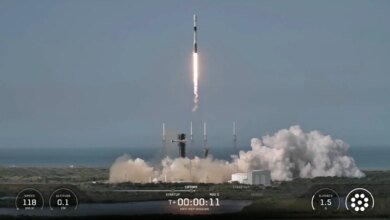
The initiative arrives as Cursor prepares for a $60 billion all-stock acquisition by SpaceX. The new council will gather quarterly in rotating business hubs, launching its inaugural meeting on August 18 in San Francisco. Its primary mandate is to build an operational playbook that bridges the gap between technical adoption and financial accountability.
While chief technology officers and chief information officers have historically spearheaded artificial intelligence integration, chief financial officers are increasingly held responsible for evaluating capital allocation. Cursor Chief Operating Officer Jordan Topoleski noted that enterprise clients frequently struggle to identify precisely where hardware and software spending generates exponential business value rather than incremental efficiency gains.
Rather than functioning as a standard advisory board, the council is structured as a working group to develop practical metrics. Planned outputs include enterprise productivity benchmarks, cost-control mechanisms for AI model usage, and a methodology for evaluating what the group terms “return on intelligence.”
The initiative has drawn financial leadership from both tech-focused companies and traditional industries. Corporate finance leaders joining the initiative include Michael Brophy of Natera, Bea Ordonez of Payoneer, Dinesh Jain of Firstsource, Matthew Wajner of First American Bank, Ed Grabscheid of JFrog, and Andrew Casey of Amplitude. They join previously announced members including Sonalee Parekh of SentinelOne, Madhur Deora of Paytm, and Aziz Megji of Asana.
The push to codify AI ROI comes as financial operations themselves undergo direct automation. Within Cursor, non-engineering departments—including internal finance teams—have become primary consumers of agentic workflow tools, using live-data canvases to build automated financial dashboards without traditional software development layers.
The focus on operational efficiency coincides with broader leadership changes across corporate finance departments. Financial services provider Daybright Financial recently appointed Wes Gilbreath as chief financial officer, transitioning 18-year CFO Matt Riordan into an operating CFO role to manage organizational continuity. Meanwhile, AiM Medical Robotics named Andrew Aberdale as president and CFO to oversee commercial strategy for its MRI-guided surgical systems.
Managing human capital costs alongside software infrastructure remains a persistent challenge for financial executives. Recent workforce data published by Gallup indicates that rising healthcare expenses and benefit dependencies have tied nearly a quarter of U.S. workers to their current positions, creating talent mobility constraints that finance leaders must navigate alongside technological transformation.