U.S. Restores Iran Blockade as Airstrikes Escalate, Threatening Global Energy Arteries
Washington ramps up military pressure after Tehran targets shipping in the Strait of Hormuz, shattering a short-lived interim deal.
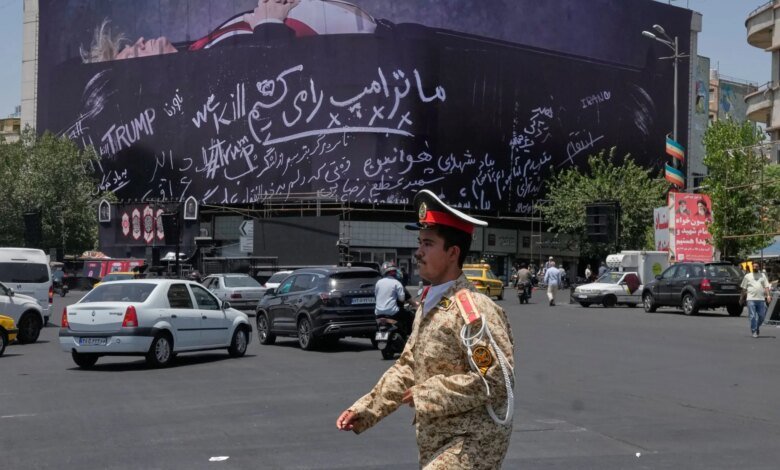
The fragile detente between Washington and Tehran collapsed on Wednesday as the United States reimposed a naval blockade on Iran and launched a series of intensified airstrikes, a move that signals a return to high-stakes geopolitical brinkmanship in the world’s most sensitive maritime chokepoint. The retaliatory campaign follows a string of Iranian attacks on commercial shipping attempting to navigate the Strait of Hormuz, the narrow waterway that serves as the primary exit for Middle Eastern energy exports.
The American strikes, which targeted military infrastructure across Iran, hit an army barracks and resulted in at least seven fatalities, according to Iranian officials. The human toll of the escalation is mounting rapidly; Iranian state media reported that more than 260 people were wounded in the latest wave of violence, marking one of the bloodiest days since the conflict began. The breakdown in diplomacy effectively shreds a short-lived interim deal that had briefly paused hostilities and offered a 60-day window for negotiations over Tehran’s nuclear program and regional security.
For the global economy, the stakes of this renewed friction are centered on the Strait of Hormuz, through which approximately one-fifth of the world’s oil and natural gas passes. When the U.S. and Israel first launched the war on Iran on Feb. 28, Tehran responded by effectively closing the passage, a move that sent the price of oil, fertilizer, and essential commodities soaring. While the interim deal allowed for some limited traffic via a route near Oman overseen by the U.S. military, recent Iranian attacks on those vessels have forced Washington’s hand.
The economic repercussions are already visible in the energy markets. Brent crude oil, the international benchmark, was trading above $85 a barrel on Wednesday. While this remains below the $120 peak seen during the height of the conflict, it represents a 15% increase from pre-war levels. Analysts with the International Monetary Fund have expressed concern that the global economy’s safety net is thinning. In a recent blog post, Azim Sadikov and Jean-Marc Natal of the International Monetary Fund warned that the surplus of oil that previously stabilized prices has been largely depleted. “As tensions flare again in the Strait of Hormuz, that room is now smaller and shrinking further as spare capacity has been deployed,” they wrote, noting that the world is now in a significantly weaker position to absorb further shocks.
The military escalation on Wednesday was notable for its intensity and timing. U.S. Central Command confirmed a wave of strikes against dozens of targets overnight, followed by rare daylight raids that suggest an increasing tempo of operations. Among the primary targets was Greater Tunb Island, a strategic outcrop in the strait. The island is one of three—alongside Abu Musa and Lesser Tunb—that Iran seized in 1971 from territories that would later form the United Arab Emirates. The UAE has long contested Iran’s sovereignty over the islands, and military analysts suggest that U.S. control of Greater Tunb Island would provide a decisive advantage in securing the waterway.
On the mainland, Iranian state television reported that at least 13 missiles struck a barracks housing the 388th Mechanized Infantry Brigade in Sistan and Baluchestan province. The brigade, which operates heavy armor and tanks, suffered casualties among both conscripts and career soldiers. Fatemeh Mohajerani, a spokesperson for the Iranian government, stated that more than 30 people have been killed in recent days, though she provided few specific details. Hossein Kermanpour of the Health Ministry highlighted the scale of the overnight injuries, which exceeded the counts from any previous round of recent violence.
The Revolutionary Guard has responded with a stark ultimatum, threatening to halt all energy exports from the Middle East if the blockade persists. “The export of oil and gas from the region will be either for everyone or for no one,” the paramilitary group declared in a statement. This threat of a total regional energy shutdown adds immense pressure to the Biden administration’s domestic rivals; President Donald Trump and the Republican Party are acutely aware that rising energy costs could jeopardize their efforts to retain control of Congress in the upcoming November elections.
Speaking to Fox News Channel on Tuesday night, Trump warned that the U.S. campaign would only intensify in the coming days, suggesting that infrastructure such as bridges and power plants could be targeted if Tehran does not return to the negotiating table. “You better make a deal, or you’re not going to have anything left,” Trump said. Already, U.S. forces have destroyed at least one bridge as part of the pressure campaign.
The conflict is also drawing in regional neighbors. Missile alert warnings were activated in Bahrain and Kuwait on Wednesday as they faced incoming fire from Iran, which hosts U.S. military assets. Jordan reported shooting down three Iranian missiles, while U.S. Navy Adm. Brad Cooper, the head of Central Command, confirmed that Iran had launched dozens of drones and missiles at Gulf Arab states. Iran’s UN ambassador, Amir Saeid Iravani, dismissed the U.S. justification for the strikes, labeling Washington as the “aggressor” in a letter to the United Nations leadership. As regional mediators scramble to revive talks, the reimposition of the blockade suggests that the path to a diplomatic resolution is narrowing, leaving the global energy market and regional stability on a knife-edge.