World Cup Prize Money Reaches Record $871 Million as Spain Secures $51 Million Champion’s Purse
FIFA's expanded 48-team tournament sees payouts surge, though rising travel costs and club soccer revenues continue to reshape international sports finance.
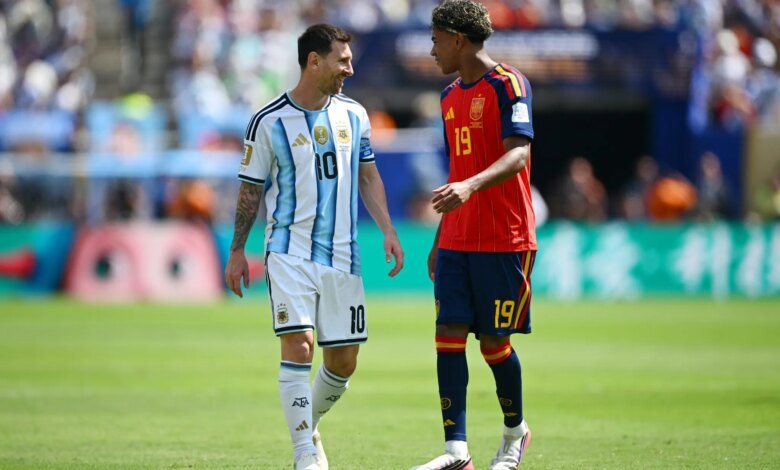
Spain’s triumph on the global stage has secured the nation not only sporting immortality but also a record-breaking $51 million payout from FIFA. The prize is the largest ever awarded to a World Cup champion, anchoring an unprecedented total prize pool of $871 million distributed among the 48 participating nations.
This massive financial package represents a significant escalation from previous tournaments. At the 2022 World Cup in Qatar, which featured 32 teams, the total prize fund stood at $440 million, with champions Argentina taking home $42 million. The expansion to 48 teams for the tournament hosted across the United States, Canada, and Mexico prompted FIFA to significantly bolster its financial commitments to national federations.
However, the road to this record payout was marked by intense negotiations. In April, FIFA injected an additional $100 million into the fund following heavy lobbying from European federations. These governing bodies argued that the vast geographical footprint of a three-nation tournament would lead to exorbitant travel and lodging expenses, potentially causing teams to lose money unless they reached the deep knockout rounds. Furthermore, teams playing matches in the United States faced complex tax obligations that were exempted by host partners Canada and Mexico.
To ease these financial pressures, FIFA guaranteed that all 48 participating teams would receive a minimum of $12.5 million. This baseline includes $10 million in prize money for competing in the group stage and an upfront payment of $2.5 million to cover preparation costs and training. Historically, upfront preparation payments have been utilized by FIFA to prevent pre-tournament disputes between players and their respective federations over unpaid bonuses—a recurring issue in past World Cups.
Despite the historic scale of the $871 million purse, international soccer payouts still struggle to compete with the runaway inflation of the club game. For context, the $51 million awarded to Spain is less than the transfer fee recently paid by English Premier League club Brighton & Hove Albion to secure 19-year-old Croatian defender Luka Vušković, who spent the majority of the tournament on the bench. It also falls short of the $115 million earned by Chelsea for winning the revamped Club World Cup in the United States, where FIFA had to guarantee massive payouts to attract elite European clubs.
Beyond the champions, the remaining prize money is distributed based on tournament progression. The runner-up receives $34 million, while third-place England takes home $30 million, and fourth-place France earns $28 million. Teams eliminated in the quarterfinals receive $20 million each, followed by $16 million for the Round of 16, and $12 million for the Round of 32.
To further offset logistical burdens, FIFA is mandated to cover business-class return flights for a 50-person delegation from each country, alongside full board and lodging starting five days before a team’s opening match until one day after their elimination. FIFA also provides domestic travel and a dedicated fleet of transport vehicles. Federations remain responsible for securing comprehensive insurance policies and covering incidental hotel expenses.
While FIFA pays the prize money directly to national governing bodies rather than individual players, how those funds are distributed varies by country. In the United States, a landmark 2022 equal pay agreement brokered by the U.S. Soccer Federation dictates that the federation retains 20% of the World Cup earnings, while the remaining 80% is pooled and split equally between the men’s and women’s national teams, establishing a global precedent for gender equity in sports compensation.