Apple Prepares Sweeping Mac Overhaul with OLED Touchscreens and Next-Gen Silicon
Upcoming updates across MacBooks and desktops will feature M-series chips, A19 Pro processors, and OLED touchscreens.
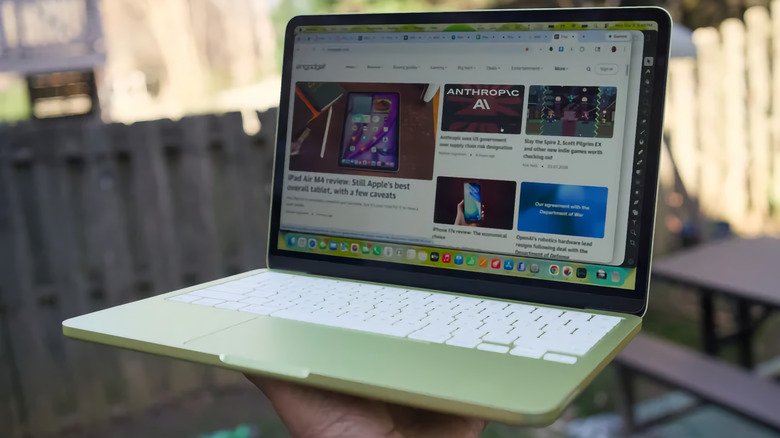
Apple is preparing a comprehensive hardware overhaul across its entire Mac computer lineup over the coming years, featuring next-generation custom silicon, expanded organic light-emitting diode (OLED) displays, and the introduction of touch-capable laptop screens. Reports indicate that the tech giant plans to upgrade almost every portable and desktop Mac, starting with near-term chip updates and culminating in major architectural redesigns.
Among the most notable additions is a planned update to the entry-level MacBook Neo. The prospective laptop will reportedly adopt the A19 Pro processor originally engineered for the iPhone 17 Pro, marking a deeper convergence between Apple’s mobile phone silicon and its computing hardware. The refreshed MacBook Neo is expected to ship with higher baseline memory configurations and additional exterior color choices.
In the immediate schedule, hardware revisions are slated to begin with updates to the desktop iMac and the standard 14-inch MacBook Pro. According to industry reporting from Bloomberg, these models are targeted for chip upgrades transitioning to the M5 processor family, with the entry-level 14-inch laptop eventually incorporating the M6 architecture.
Positioned between late fall and early 2027, Apple is expected to introduce a high-end portable device designated as the “MacBook Ultra.” Built around the performance-focused M5 Pro and M5 Max chips currently utilized in top-tier MacBooks, the new model is expected to feature a touch-enabled OLED display alongside tailored software modifications within macOS to accommodate touch interactions.
The integration of OLED screens reflects a broader panel technology migration across Apple’s ecosystem. Following the adoption of OLED displays in the iPad Pro line, display upgrades are projected to expand to the iPad Mini before arriving on professional MacBook notebooks, 2028 revisions of the MacBook Air, and eventually the all-in-one iMac desktop line.
Looking further into 2027, the consumer laptop segment will see revisions to both the 13-inch and 15-inch MacBook Air models, which are expected to integrate M6 processors. Concurrently, desktop updates for the Mac Mini and Mac Studio are in development. Internal testing currently includes Mac Mini builds operating on M5 Pro and M6 platforms, while prototype Mac Studio units utilize M5 Max and M5 Ultra hardware.
A total design overhaul of the 14-inch MacBook Pro is also underway, slated to introduce the seventh-generation M7 processor family alongside higher-tier M7 Pro and M7 Max variants for professional workflows.
These upcoming product shifts arrive amid shifting market conditions for personal computing hardware. Following price adjustments across several Mac models in mid-2025, persistent global supply pressure on memory components and potential shifts toward hardware subscription models could influence final consumer pricing across the revised lineup.