Gulf Sovereign Wealth Poised for Multi-Billion Dollar Payday in SpaceX’s $1.77 Trillion IPO
Early bets on Elon Musk’s aerospace giant pay off as Gulf states seek to secure digital infrastructure amid regional instability.
As Elon Musk’s SpaceX prepares for a historic stock market debut, Gulf sovereign wealth funds and private investors are positioned to reap massive financial and strategic rewards. The company is targeting a valuation of nearly $1.77 trillion, a move that validates the early-stage bets placed by regional power players long before the aerospace giant became a global leader in satellite technology and artificial intelligence.
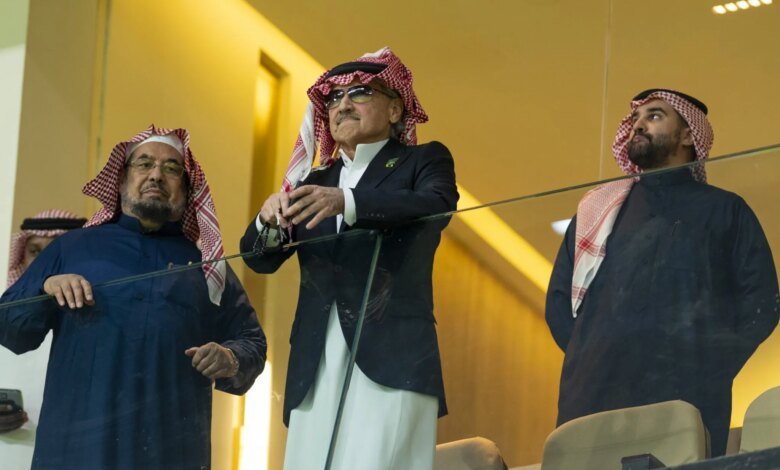
The upcoming initial public offering (IPO) involves the sale of 555.6 million shares at a fixed price of $135 each. Among the most prominent individual beneficiaries is Saudi Arabia’s Prince Alwaleed bin Talal. Often referred to as the “Warren Buffett of Arabia,” Alwaleed holds a 0.63% stake in SpaceX. At the projected valuation, this holding would be worth approximately $10.6 billion, providing a significant boost to his investment vehicle, Kingdom Holding Company.
This windfall arrives at a critical juncture for the region. While International Monetary Fund (IMF) data suggests the Saudi economy remains resilient, the Fund recently lowered its 2026 GDP growth forecast for the Kingdom to 2%, down from a previous estimate of 3.1%. The revision reflects the ongoing strain of regional conflict and the challenges of diversifying an economy traditionally dependent on petrodollars. For Gulf sovereign wealth funds, which hold both direct and indirect exposure to SpaceX, the IPO offers a timely injection of capital to balance sheets affected by shifting oil dynamics and the costs of regional instability.
The investment is as much about national security as it is about financial returns. SpaceX’s merger with xAI in February transformed the entity into a multifaceted powerhouse covering rockets, satellite internet, and advanced AI. A key component of its IPO filing includes plans to launch a constellation of up to one million data center satellites. This orbital infrastructure aims to bypass terrestrial constraints, utilizing solar power and laser optical communication to generate energy far more efficiently than ground-based systems.
For Gulf states, this technology offers a solution to a growing vulnerability: the physical fragility of digital infrastructure. Recent drone strikes on Amazon Web Services (AWS) data centers in the UAE and Bahrain, coupled with the ongoing blockade of the Strait of Hormuz, have highlighted the risks to subsea cables and land-based servers. Research from the Stimson Center has previously noted that maritime corridors are just as vital for data as they are for energy, making Starlink’s satellite network an essential backup for critical industries during regional outages.
Beyond the aerospace sector, the UAE is deepening its economic ties with the United States. Khaldoon Al Mubarak, managing director of Mubadala Investment Company, recently visited Washington to advance a $1.4 trillion investment commitment. This includes a $4 billion joint venture between Emirates Global Aluminium and Century Aluminium to construct a primary aluminum smelter in Oklahoma—the first such facility built in the U.S. since 1980. Additionally, the UAE recently received its first shipment of Nvidia chips to power its 5GW Stargate AI campus, further cementing its role in the global AI supply chain.
The broader financial landscape in the Middle East is also shifting toward resilience. A report from UBS indicates that 82% of regional family offices plan to adjust their asset allocations this year, with a heavy focus on AI, healthcare, and infrastructure. This proactive stance is mirrored in the sovereign debt market; Bahrain recently issued a $1 billion 10-year dollar bond, marking the first such issuance from a GCC nation since the outbreak of the Iran war in February. The bond saw high demand, with orders peaking at $3.2 billion, signaling investor confidence in the region’s ability to navigate current geopolitical headwinds.