Tragedy in the Coral Triangle: Renowned American Marine Biologist Kent Carpenter Slain in the Philippines
The 73-year-old Old Dominion University professor was killed during a home invasion while on a research assignment.
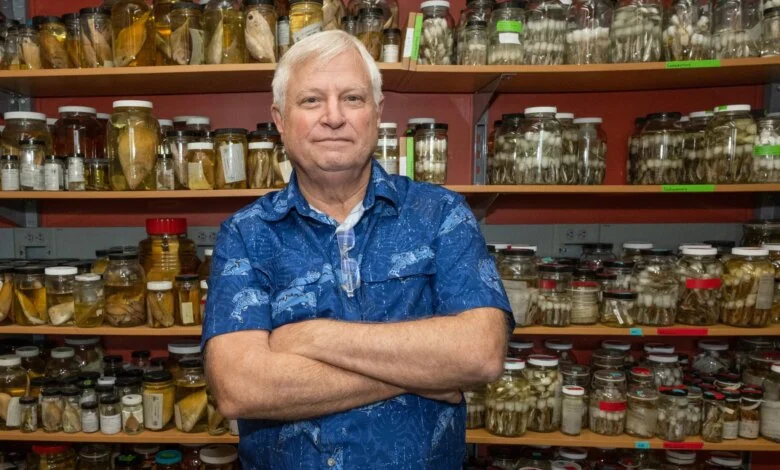
The international scientific community is mourning the loss of one of its most dedicated ecological defenders. Kent Carpenter, a distinguished 73-year-old American marine biologist whose pioneering research helped safeguard some of the ocean’s most vulnerable habitats, was shot and killed on Sunday night during a home invasion in the central Philippines, local authorities reported on Tuesday.
The attack occurred in the coastal town of Sibulan, located in the central Philippine province of Negros Oriental. Carpenter was at home with his Filipina companion when three masked men forced their way into the residence. According to national police spokesperson Col. Allen Rae Co, one of the intruders drew a firearm and shot Carpenter in the head, killing him instantly. The assailants ransacked the home, stealing a laptop, a backpack, and an unspecified amount of cash before fleeing the scene.
Regional police spokesperson Lt. Col. Joem Malong told The Associated Press that Carpenter’s companion sustained unspecified injuries during the encounter and is currently receiving medical treatment. As local authorities launch a comprehensive investigation, detectives are working to establish a motive for the violent home invasion and identify the perpetrators.
The regional police department has vowed to deploy all available resources to solve the crime. “We assure the victim’s family, the community and our foreign visitors that this case is being treated with utmost urgency and no effort will be spared until justice is served,” regional police director Brig. Gen. Romano Cardiño said in an official statement. The U.S. Embassy in Manila did not immediately respond to requests for comment regarding the tragedy.
A Legacy Rooted in the Center of Marine Biodiversity
Carpenter’s connection to the Philippines was both deep and historic, tracing back to his service as a Peace Corps volunteer in the archipelago during the 1970s. That early experience sparked a lifelong passion for the region’s rich aquatic ecosystems, eventually leading him to become a leading global authority on the Coral Triangle—a vast marine area spanning the tropical waters of the Philippines, Indonesia, and neighboring nations that is widely considered the global epicenter of marine biodiversity.
Since 1996, Carpenter had served as a biological sciences professor at Old Dominion University in Norfolk, Virginia. He was in the Philippines on an extended research assignment and had been planning to retire this coming September. Over his decades-long academic career, his work bridged the gap between academic research and real-world environmental policy, shaping marine conservation strategies on a global scale.
“He dedicated his career to expanding our understanding of the world’s bodies of water and protecting some of its most vulnerable ecosystems,” Old Dominion University President Brian Hemphill said in a statement, describing the killing as both sad and devastating. “His scholarship and passion impacted and inspired many individuals locally, nationally, and internationally.”
The Fight Against Extinction Risks
At the core of Carpenter’s academic portfolio was his work in marine conservation biology, where he focused extensively on assessing the extinction risks to fish species and plants. His research provided critical data used by international bodies to classify threatened species and establish marine protected areas, particularly in developing coastal nations where local economies depend heavily on healthy fisheries.
Carpenter was also an outspoken voice on the existential threat that climate change poses to marine life. In a 2010 interview with The Associated Press, he warned that unchecked global warming could lead to the complete eradication of the planet’s coral reefs within a century—a loss that would trigger devastating economic and ecological consequences worldwide.
“You could argue that a complete collapse of the marine ecosystem would be one of the consequences of losing corals,” Carpenter warned at the time. “You’re going to have a tremendous cascade effect for all life in the oceans.”
An Indelible Impact on Philippine Science
In addition to his tenure in Virginia, Carpenter maintained deep academic ties to local institutions in the Philippines. He worked as a lecturer and long-term collaborator at Silliman University, located in the nearby city of Dumaguete in Negros Oriental. His death has prompted widespread mourning among Philippine environmental groups and biodiversity research centers.
In a statement honoring his memory, Silliman University praised Carpenter as an exceptional scientist who had actively collaborated with their institution on marine research initiatives since 1976. “Dr. Carpenter made ground-breaking contributions that transformed global understanding of Philippine marine biodiversity,” the university said.
As investigators in Negros Oriental continue to piece together the events of Sunday night, colleagues and former students worldwide are remembering Carpenter not only as a brilliant researcher, but as a vital advocate for the preservation of the oceans he spent his life studying.