Data Challenges the ‘China shock 2.0’ Narrative as EU Industry Pivots
Trade data suggests European industrial panic may be misdirected despite Volkswagen crisis.
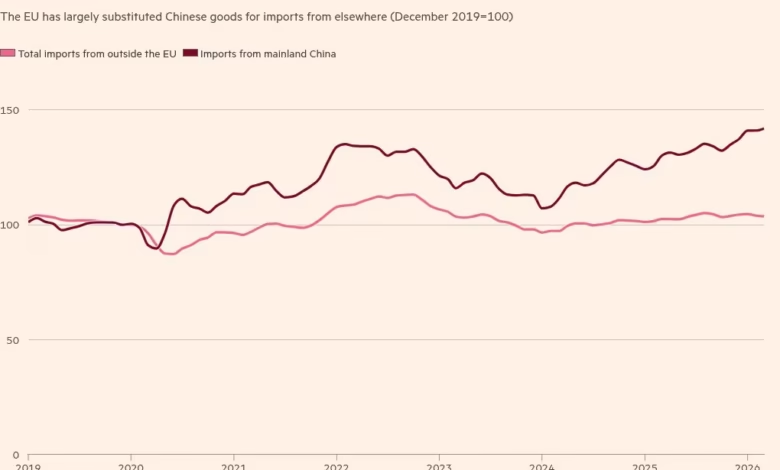
European capitals are increasingly gripped by the specter of a “China shock 2.0,” a fear that state-subsidized competition from Beijing is poised to dismantle the continent’s industrial base. This anxiety is driving intense political efforts within the European Commission and among EU member states to devise a restrictive new strategy.
The narrative is fueled largely by the crisis at Volkswagen, where the automaker faces the prospect of shuttering four factories in Germany and shedding 100,000 jobs. Berlin and Paris are increasingly vocal about the threat, with French economic planning authorities recently proposing a 30 per cent euro-renminbi devaluation to counter Chinese market gains.
However, trade data suggests this panic may be misdirected. Analysis from Gavekal indicates that while Chinese imports have surged, they are largely displacing imports from traditional partners like the United States and the United Kingdom, rather than cannibalizing domestic European production. Cedric Gemehl, an analyst at Gavekal, notes that EU imports as a share of GDP remain at pre-pandemic levels, suggesting no aggregate increase in the threat to domestic producers.
This shift contrasts with the original “China shock” of the early 2000s, which saw a broad decline in Western manufacturing employment following China’s entry into the World Trade Organization. Today, the European trade surplus remains robust once energy trade fluctuations are excluded.
European exporters are also demonstrating significant pricing power. While export volumes have remained relatively stable since the pandemic, export unit values have continued to rise. This suggests an industrial ecosystem that is successfully undergoing a technological and structural transition toward high-value-added production rather than one facing a terminal competitiveness crisis.
In the electric vehicle sector, which has become the focal point of the trade dispute, the data reveals a nuanced exchange. The EU is largely importing lower-cost Chinese models while successfully exporting premium, high-value vehicles back to China. According to Gavekal research, the value of EU electric vehicle exports to China is actually growing, even as the bloc faces increased import penetration in the mass-market segment.