Five Dead and Hundreds Displaced After Magnitude 5.5 Earthquake Strikes Central Peru
Vulnerable adobe housing blamed for widespread destruction in rural Andean communities following overnight tremor.
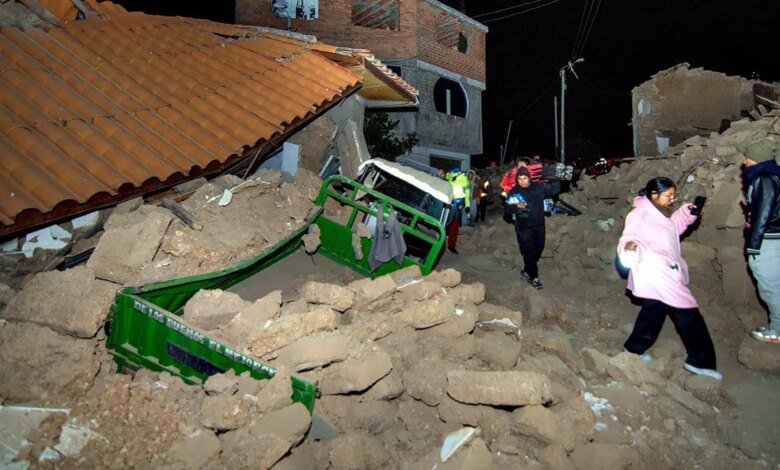
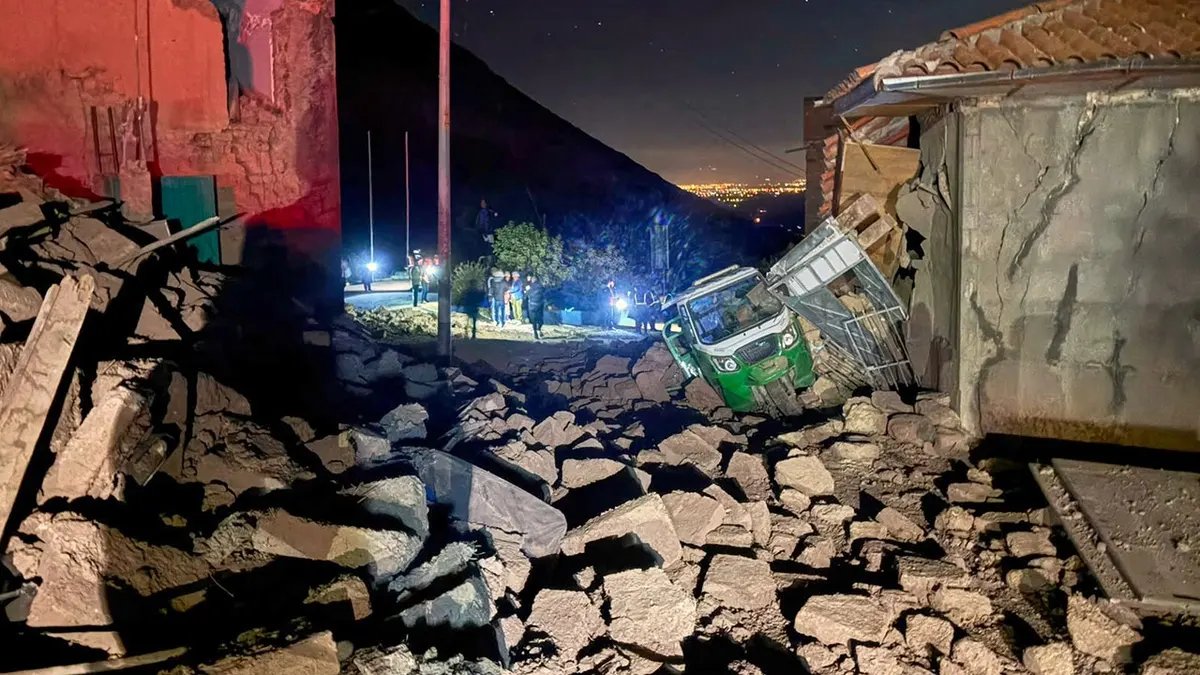
A moderate but highly destructive magnitude 5.5 earthquake has struck Peru’s central Andes region, killing at least five people, injuring dozens, and leaving hundreds of residents homeless.
The tremor, which occurred on Saturday night at approximately 9:20 p.m., was centered near the town of Sicaya, according to the U.S. Geological Survey. Despite its relatively moderate magnitude, the shallow depth of the quake caused severe localized shaking, devastating several farming villages.
Peru’s National Civil Defense Institute reported that at least 20 people sustained injuries, while emergency teams continue to search for an unspecified number of missing residents. More than 300 people have been displaced as rescue workers navigate blocked roads and unstable structures to reach remote settlements.
The high level of destruction from a moderate earthquake has highlighted the vulnerability of rural housing in the Andes. Local officials pointed out that the widespread use of traditional adobe construction was a primary factor in the collapse of homes, a local church, and a convent.
“My home has been destroyed,” said Hermenegilda Guamalato, a resident of the hard-hit community of Chongo Bajo, who was forced to seek emergency shelter in the neighboring province of Huayucachi with her three children.
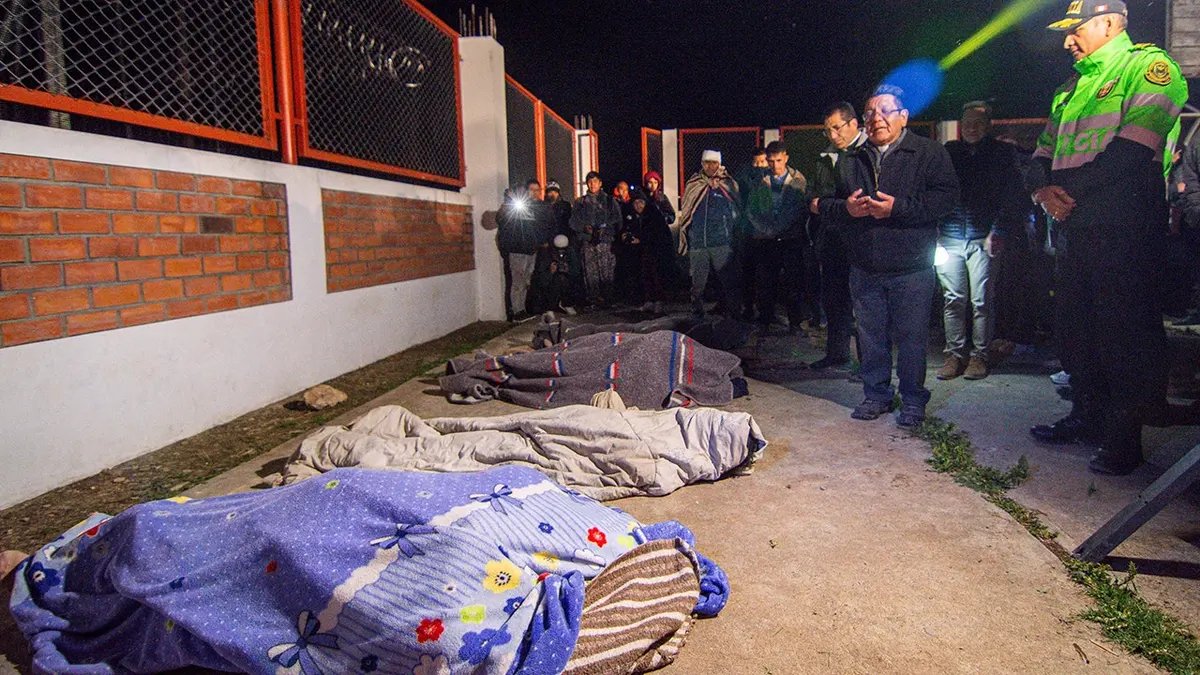
In the farming village of Pumpuya, families spent the night outdoors wrapped in blankets, watching neighbors dig through the rubble of collapsed structures. Emergency response efforts were led by Luis Vásquez, head of the local civil defense office, who noted that these rustic building materials contributed significantly to the scale of the disaster. Sun-dried adobe bricks, while thermally efficient and inexpensive, lack the tensile strength to withstand horizontal seismic forces unless reinforced with modern materials like mesh or concrete columns.
While Peru has updated its seismic building codes for modern urban centers, many rural Andean communities still rely on unreinforced masonry and earth-based structures due to economic constraints and cultural traditions.
Geologically, Peru is situated along the seismically volatile Pacific Ring of Fire, an area of intense tectonic activity where the Nazca Plate subducts beneath the South American Plate. This geological setup subjects the country to frequent tremors. The vulnerability of the region’s infrastructure has been a long-standing concern, recalling the devastating 2007 Pisco earthquake, a magnitude 7.9 event that claimed nearly 600 lives and destroyed entire coastal towns.
Emergency crews, supported by local volunteers, are continuing search and rescue operations in the affected areas, while humanitarian agencies distribute tents, blankets, and food to those left homeless by the disaster.